Ukraine must avoid emotional confrontation with Trump, restore strategic dialogue with Washington, and strengthen European support to secure vital military assistance, protect lives, and safeguard national interests.
Ukrainian-American relations are experiencing one of their most serious crises in recent years. It would be a mistake to downplay the scale of this crisis. After all, it is not Washington or Trump who pays the highest price for the deterioration of the strategic partnership with the United States, but Ukraine — our people, children, and military personnel. This was reported by ZN.ua.
The White House chief’s latest decisions to ease the enforcement of the Graham sanctions law have understandably and justifiably caused disappointment. Instead of the expected increase in economic pressure on Russia, the Kremlin is being given additional room to maneuver. This is particularly dangerous amid Russia’s continued terror campaign against Ukrainian cities and energy infrastructure.
I believe Trump is making a desperate bet on a strategy of engagement, seeking to persuade Putin to end the war primarily through negotiations rather than coercion. The idea itself is workable, but we have been down this road before and know where it led.
If Trump’s gamble pays off, we could see a ceasefire on hybrid terms, without reliable guarantees that Russia will not resume hostilities.
If it fails, this strategy will recede into the background of international politics for a long time, and its proponents will receive a sobering lesson. This would become a serious argument against attempts by other European capitals to adopt a similar approach. In particular, political forces such as Marine Le Pen’s National Rally in France and the Alternative for Germany party will lose one of their key arguments in favor of rapprochement with Moscow: the claim that it is possible to reach an agreement with Putin without forcing him to change his behavior.
The failure of the strategy of engagement would strengthen the case for returning to a strategy of pressure — seriously and for the long term.
Given the complexity of the broader geopolitical context, Ukraine must not be guided by today’s emotions and outrage, but must think strategically.
Difficult negotiations require cool-headed calculation, the ability to listen, an understanding of the other side’s motivations, and the capacity to anticipate consequences many moves ahead. The more challenging the partner, the higher the standards of professionalism required of Ukrainian diplomacy. Not every opinion, even a justified one, needs to be expressed publicly. This is especially true when doing so could close channels of negotiation or jeopardize specific defense agreements.
We must not confuse diplomatic restraint with political weakness. We can remain steadfast in defending our national interests while avoiding unnecessary confrontation.
We must recognize that, despite the extensive support of our European partners, Europe is not yet capable of fully replacing American capabilities in air defense, intelligence, military technology, and critically important weapons systems. Therefore, preserving strategic relations with the United States is not a matter of political sympathies. It is a matter of national security and saving human lives.
That is precisely why I am concerned about the dangerous trend toward personalizing relations with Washington. It increasingly seems that, instead of painstaking diplomatic work, we risk becoming trapped in a logic of personal political confrontation. Demonizing Trump, as well as fostering a negative image of the United States as a whole, works against Ukraine’s national interests.
A similar approach has already damaged our relations with some European partners. But applying it to the United States would be a strategic mistake on an entirely different scale.
Trump is not Orbán. And the United States is not a country whose support Ukraine can afford to take for granted or disregard.
It is equally dangerous to tie the prospects of Ukrainian-American relations to the outcome of the upcoming midterm elections to Congress. Regardless of the results, Donald Trump will remain president of the United States. Even if the Democrats win a majority in one or both chambers of Congress, key foreign policy decisions will continue to depend largely on the White House. Therefore, betting on his political weakening instead of seeking common ground with the current administration is extremely risky.
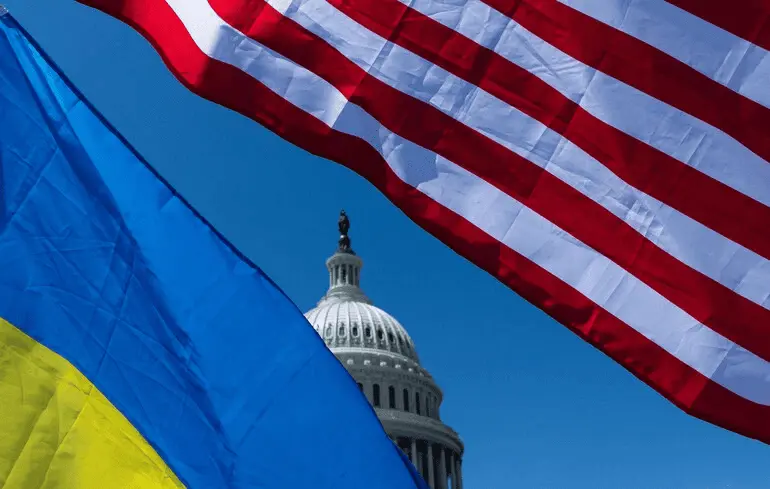
At the same time, bipartisan support for Ukraine in Congress remains an extraordinarily important asset. Despite the White House’s decisions, the response from American lawmakers has demonstrated that Ukraine retains support from both parties. Our task is to preserve Ukraine as a shared strategic interest for both American parties. We must not turn support for Ukraine into an issue of partisan confrontation within the United States.
What Should Be Done?
First, restore a full-fledged strategic dialogue with the White House, engage systematically with both parties in Congress, and ensure continuous, practical cooperation between defense and security agencies.
Relations with the United States need to return to systematic, institutional diplomacy that goes beyond phone calls and personal meetings between presidents. Ukraine and the United States once had an entire network of working mechanisms, including the Strategic Partnership Commission, its specialized working groups, and other bilateral formats. In 2018, for example, working groups were established within the Commission to address security and countering Russian aggression, the rule of law and humanitarian issues, the economy, and energy. In 2021, the two sides agreed to resume the Commission’s work and strengthen its role. Where are these mechanisms today? Why are we not making full use of them?
It is time to finally appoint Ukraine’s ambassador to the United States. As a professional, I do not find the arguments that we should supposedly wait for the elections before deciding on an ambassadorial candidate convincing. Ukraine needs permanent channels of engagement with the State Department, Congress, the Pentagon, the Treasury Department, and other American institutions. Sanctions policy, military assistance, joint defense production, energy security, and long-term security guarantees for Ukraine must be discussed regularly.
The strategic partnership between the two countries must not depend exclusively on moods, political statements, or agreements reached at the highest level. Personal dialogue between the presidents is important, but it must be underpinned by systematic work involving ministries, parliaments, intelligence agencies, experts, specialized institutions, think tanks, civil society, the media, and the diaspora.
Second, Trump’s decision places additional responsibility on the European Union. If concessions to an aggressor begin to be seen as a tool for resolving economic problems, this will set a dangerous precedent for European populists and political forces aligned with Moscow. The EU must maintain sanctions, step up efforts to combat sanctions evasion, use frozen Russian assets to benefit Ukraine, and expand its own defense production.
A just and lasting peace is possible only when the cost of continuing the war for Putin becomes higher than the cost of ending it. Europe must demonstrate strategic maturity and ensure that economic difficulties or Trump’s antics do not become an excuse for appeasing the aggressor.
We need a stronger Europe alongside the United States, not a Europe in place of the United States.
At last, the time has come to persuade Washington to abandon its traditional approach of providing Ukraine with measured support — helping it enough to avoid defeat, but not enough to secure strategic success. In my view, this is one of the fundamental problems in our relations with the United States.
American assistance has been and remains critically important. However, its scale and the restrictions attached to it have not always matched Ukraine’s actual needs. The task of our diplomacy is to change these calculations by demonstrating that Ukraine’s victory and the defeat of Putin’s aggressive ambitions serve the long-term interests of the United States itself.
In this context, I would like to ask about the current status of the implementation of the groundbreaking and historic “minerals deal” and its potential to improve Ukrainian-American relations under these challenging circumstances.
Today, Ukraine must grit its teeth, keep its emotions in check, and demonstrate the highest possible level of diplomatic professionalism.
We must not fight against the American president, but fight for American support for Ukraine. Presidents come and go, but the vital partnership between our peoples endures.
At this decisive moment, the European Union must maintain sanctions, Congress must preserve bipartisan support, and Ukrainian diplomacy must sustain dialogue with the White House and ensure effective transatlantic coordination.
After all, the main measure of our diplomacy’s effectiveness is not the number of high-profile statements or rounds of applause, but its ability to protect Ukrainian cities with adequate air defense systems, secure reliable intelligence for our troops, save lives, and move toward a just and lasting peace.