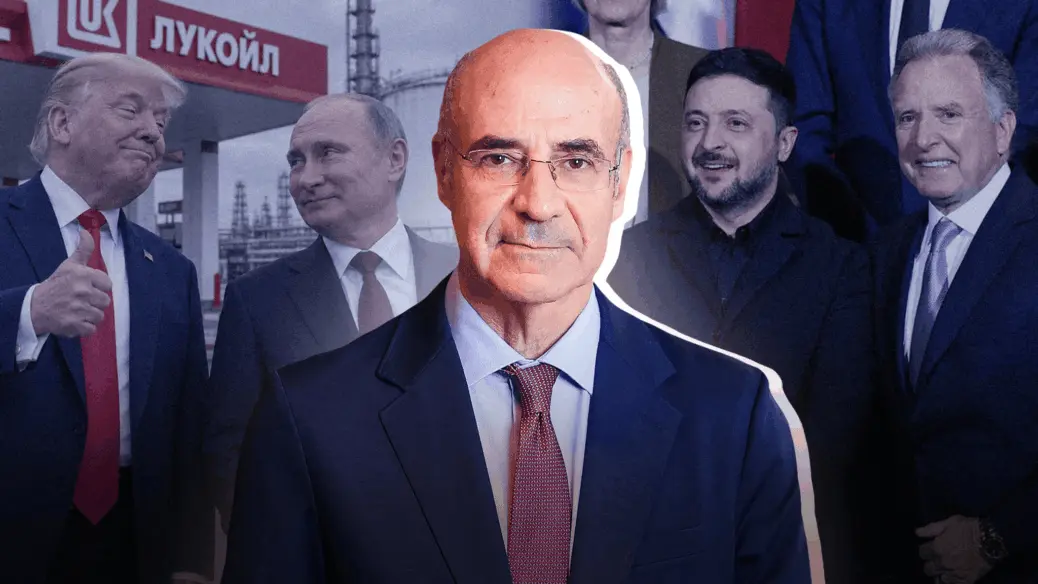
William Browder explains how Trump’s deals benefit Putin, why Ukrainian strikes are damaging Russia’s economy, what Europe can do to support Ukraine, and whether an air truce is possible.
Russia continues to lose money due to Ukrainian strikes on oil refineries, while Vladimir Putin is gaining new opportunities to make money thanks to Donald Trump’s policies. Meanwhile, agreements between Washington and Moscow could have far broader implications than they might seem at first glance.
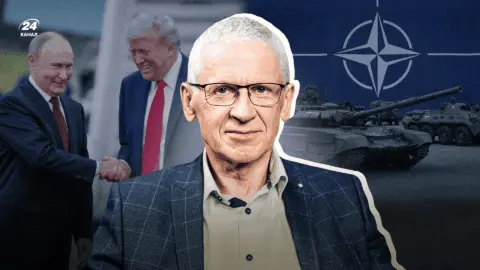
In an exclusive interview with 24 Kanal, William Browder, CEO of Hermitage Capital Management, assessed the so-called “diesel deal” between the US and Russia, explained how Ukrainian drones are hitting the Russian economy, and predicted how the war might end. According to Browder, Trump is doing Putin a huge favor while receiving Lukoil assets, Nord Stream, and other benefits that have not yet been publicly disclosed.
Why Does Browder Believe Trump Has Been on Russia’s Side From the Start?
Negotiations between Steve Witkoff, Jared Kushner, and President Zelenskyy took place in Norway. At the same time, we saw the US shift in Russia’s favor, with the conclusion of a diesel deal and the lifting of sanctions on Russia’s energy sector. How do you assess this? Have we definitively lost the support of President Trump and the United States?
I’m sorry to say this, but Ukraine has never had President Trump on its side since he came to power.
Ukraine received support from the United States from the beginning of the war. In fact, the US supported us under different presidents and during various conflicts with Russia, dating back to 2014.
However, in 2024, when Donald Trump came to power, he clearly took Russia’s side.
This was evident in the shocking decision to halt military aid to Ukraine, effectively cutting off all support. It was also clear during the Oval Office meeting, when Trump and JD Vance began shouting at Zelenskyy.
Moreover, Trump has never criticized Putin or imposed additional sanctions on Russia. So this is nothing new.
I think many people, both inside and outside Ukraine, hoped that there was some grand strategy behind all this. But the reality is much simpler: Donald Trump is on Putin’s side and wants to do business with Russia.
When I talk about business, I don’t just mean the United States’ desire to cooperate with Russia. Trump personally wants to do business there, or his family members and friends do. Ukraine is, to some extent, an obstacle to such cooperation. That is why Trump is trying to “resolve the situation” so he can finally get down to business and make money.
The “Diesel Deal,” Frozen Assets, and Hidden Business Interests
Let’s focus on business deals, as some truly astonishing proposals are emerging: resuming Russian gas and oil exports to Europe, selling Lukoil’s foreign assets, and unlocking up to $100 billion in Russian assets, a significant portion of which is reportedly held in Belgium. Could the US risk giving up all its leverage in negotiations with Russia before any deal is even reached? Are they really prepared to offer $100 billion in exchange for nothing more than an energy truce?
Let’s take a broader look at the situation. The United States has three, perhaps four, sources of leverage.
The first and most important was financial and military assistance to Ukraine. The US has stopped providing it, losing approximately 80–85% of its leverage over Ukraine.
The second source of leverage is intelligence sharing, which is still ongoing. There is also Starlink and the supply of weapons to Ukraine under the PURL program, through which Europeans pay for the weapons and Ukraine receives them. So approximately 85% of the US’s leverage has already disappeared.
What leverage do the Europeans have? They continue to pay for weapons for Ukraine through the PURL program, and together with the United Kingdom, they hold 95% of frozen Russian assets.
Furthermore, Europe is deeply concerned about its own national security if Ukraine can no longer hold Russia back. So when Trump, Witkoff, or Kushner talk about handing over $100 billion or €100 billion in Russian assets, it is worth remembering that this is not their money to dispose of as they please.
These funds are held in Europe. Similarly, when they talk about giving up territory, it is not their territory to hand over to anyone. It is Ukrainian land.
So the main sources of leverage the Americans have left are intelligence sharing, Starlink, and continued deliveries of weapons already paid for by Europe. It seems they are beginning to use these tools as a means of pressure.
But is that enough to force Ukraine or Europe to capitulate? Would anyone really agree to say, “Fine, let Russia have what it wants”? I know for certain that this will not happen.
If Ukraine surrendered, the consequences would be catastrophic. But Ukraine is not going to capitulate, and neither is Europe. So all these proposals coming out of the White House are more like fantasies. I do not believe they will be implemented.
At the same time, there have already been some consequences. For example, Starlink speed restrictions have created real problems on the battlefield. The US has also halted deliveries of missiles that had already been paid for. And we do not know for certain whether intelligence sharing is continuing.
But even these steps will not force Ukraine to surrender. That is why I believe all this is part of a constant stream of proposals coming out of the White House that have an almost kleptocratic character. I do not believe any of them will ever be put into practice.
In your opinion, has President Trump become a Russian asset after reaching a diesel fuel deal with Putin?
President Trump is an asset only to himself. He is trying to profit from deals that have nothing to do with US national interests, the security of Europe or the world, or, of course, helping Ukraine. He simply wants to do business. It is as simple as that.
You mentioned the deal involving Lukoil, which we already know about. There is also a proposal to resume Russian gas supplies through Nord Stream. An American company wants to buy the pipeline from the consortium.
In addition, there are reportedly around 20 more deals proposed by Russia’s negotiator, Kyrylo Dmytriev. We do not yet know the details, but we will learn more about them in due course. All of this is being done to serve the business interests of people connected to the Trump administration.
These deals serve no one’s interests but their own. That is why they want to push them through. However, the world is far more complicated than they seem to think. To use Trump’s own terminology, which he used to lecture Zelenskyy in the Oval Office, he has no cards. He does not have enough leverage to impose these kleptocratic deals on Europeans or Ukrainians.
John Bolton recently stated that Trump now owes Putin a favor because Putin helped him address domestic political problems in the US by selling him diesel fuel. Do you agree with this assessment? Does Putin now have leverage over Trump?
I see it somewhat differently. In my view, it is Putin who has found himself in a difficult position. As you know, Ukrainian drones have destroyed around half of Russia’s oil refining capacity. This is causing serious damage to Russia.
The strikes on Yandex data centers, as well as on Wildberries and Ozon warehouses, are equally painful for Putin. All of this is inflicting significant losses on the Russian economy.
Russia is simply too large a country to provide sufficient air defense to intercept all Ukrainian drones. They will continue to penetrate Russian territory and inflict economic damage.
At the same time, Putin is making no progress on the battlefield. If Ukraine continued these strikes, Putin could eventually be forced to agree to an air truce. That would be a catastrophe for him, because the front line is not moving.
Essentially, he would be left in a war that he started but could not finish. And the future of Russian leaders who find themselves in such a situation does not look promising.
That is why I believe Putin approached Trump and said, “I need help.” That is how they came up with this diesel deal, which changes virtually nothing. The amount of fuel involved is insufficient to affect diesel prices in the US.
Moreover, I am not even sure Russia has enough diesel fuel to sell in the required quantities. However, the deal has laid some groundwork for so-called arrangements that the Americans could use to pressure Zelenskyy into halting strikes on Russian oil refineries.
Trump now has what appears to be an argument he can use to increase pressure on Zelenskyy and Ukraine. So I see the situation in exactly the opposite way: Trump is the one doing Putin a huge favor.
What does Trump get in return? Lukoil’s assets, Nord Stream, and probably around 20 other deals that we do not yet know about. In my view, this is the kind of deal that is unfolding right now.
Did Putin Ask Trump to Protect Russian Oil Refineries From Ukrainian Drones?
Do you believe Vladimir Putin approached Donald Trump to ask for help protecting Russian oil refineries from Ukrainian drone attacks?
Yes, I do. I think that is exactly how it happened. In my view, Putin initiated the call because he needed help. In return, he is offering money to Trump or people in his inner circle — family members, friends, or other associates.
I believe that is the essence of the deal currently taking shape.
Can Europe withstand Trump’s pressure and help Zelenskyy not only remain at the negotiating table but also strengthen Ukraine’s position even without American support?
The negotiating table itself does not matter right now. No negotiations of any real significance are taking place at present. In effect, the suspension of US intelligence support and problems with Starlink are leading to more Ukrainian deaths.
What can Europe do in this situation? Its options are limited. But is that enough to force Ukraine to surrender? No. I believe capitulation would be a hundred times worse than any suffering Ukraine is enduring now.
Europe could help Ukraine by confiscating more than €200 billion in frozen Russian assets and establishing a fund to provide Ukraine with the economic resources it needs to defend itself. Europeans could also supply Ukraine with ammunition and air defense systems, if these are available.
However, such weapons are in limited supply, as most of them are manufactured in the United States. Europe must now consider how to achieve greater strategic autonomy from the US.
The shocking and controversial shutdown of Starlink has shown that this system cannot be relied upon for security. Europe must develop an alternative, and I hope this happens as soon as possible.
If Elon Musk can influence Europe’s national security, that is unacceptable. Europeans must find a way to end this dependence. Ultimately, the situation is very unpleasant, but that does not mean Ukraine is losing. It simply means that Ukraine will have to endure greater hardship for as long as this situation continues.
Ukraine must continue to make Putin feel the pain, including economic pain, as it has done so far.
Is there a chance to change the situation and turn President Trump around to Ukraine’s side?
I think domestic politics in the US could have some influence on this. According to my data, 85% of Americans support Ukraine, while only around 5% support Vladimir Putin. American politicians, both Republicans and Democrats, support Ukraine.
Therefore, Trump will face considerable pressure from Congress, both the current and the next one, to continue supporting Ukraine.
Will he listen? Trump has considerable freedom of action and can make decisions independently of Congress. However, he will find himself in an extremely difficult position, as Congress could block many of his legislative initiatives requiring its approval because of his stance on Ukraine.
This is a fundamental issue for many American politicians on both sides of the political divide. That is why support for Ukraine will remain an important issue in US domestic politics.
What Can Europe Do Without the US?
Meanwhile, Russian dictator Vladimir Putin has proposed holding a summit with President Trump and Xi Jinping on the sidelines of the APEC summit in China on November 18–19. They plan to discuss Ukraine without the participation of Ukrainian President Volodymyr Zelenskyy. Is this another attempt to strike a deal behind President Zelenskyy’s back?
They can make whatever deals they want, but it is like playing a board game. If Ukraine is not involved and has the resources to defend itself, they can fantasize all they want about how they would like the world to look. But implementing such agreements requires the consent of all parties involved.
That is why I believe this is more of a problem for Trump himself, as he tries to find a way to secure new economic deals with China. Perhaps he is willing to sacrifice Taiwan for the sake of doing business with China, just as he is trying to give Ukraine away in exchange for agreements with Russia. But I do not think this will produce the outcome he wants.
These three men cannot decide Ukraine’s fate on their own. Of course, they can inflict even more suffering on Ukraine. The US and Trump appear to have already played all their cards. China could theoretically increase its support for Russia, although it has not stayed on the sidelines in the past either.
Ultimately, however, none of them can determine the fate of Ukrainian territories through their own decisions or agreements. If they believe they can, they are labouring under a major illusion.
If the United States completely cuts off support for Ukraine, including intelligence sharing, which even Europe would find extremely difficult to replace, will Ukraine be able to hold out without American assistance? And can Europe make up for that support?
I think Ukraine will be able to hold out, but that does not mean it will not have to pay an enormous human price. At the same time, that price will probably be significantly lower than the cost of capitulating to Russia.
We have seen what happened in Bucha and Irpin. Ukraine does not want to experience anything like that again, nor should it have to, and no one should expect it to agree to such an outcome. But that does not mean there will be no further civilian casualties in Ukraine or that Russia will not try to subject Ukrainians to an incredibly harsh winter.
We only need to look at previous wars. When Russia intervened in military conflicts, it employed scorched-earth tactics. We saw this in Grozny, Chechnya, and in Aleppo, Syria. But there is a fundamental difference between those cities and Ukraine: Ukraine has its own means of fighting back. Therefore, Ukraine must respond to Russian actions, including by inflicting economic damage on Russia. And that makes a significant difference.
I do not know whether Putin can withstand this kind of pressure. In my view, events over the past two weeks provide some indication of just how painful Ukrainian strikes have become for him. He does not want to admit it, but Russia is suffering serious losses. Ukraine must continue to put pressure on Putin and inflict even greater damage on Russia to strengthen its position at the negotiating table and reject all this nonsense and the kleptocratic deals Trump is pushing.
What Is Putin’s Position, and How Realistic Is a Ceasefire?
What is Putin’s current economic situation? How long can Russia continue its war against Ukraine, even with, as you put it, “its man” in the White House?
Trump is not actually helping the Russian economy. The United States has never been a major buyer of Russian goods and does not buy Russian oil. So it cannot be said that American money is propping up Putin. Russia generates most of its revenue from other markets.
If Europe maintains sanctions, tightens them, and imposes restrictions on buyers of Russian oil, this could further reduce Putin’s economic capacity to wage war.
Applying more than €200 billion in frozen Russian assets to support Ukraine would put additional pressure on Russia. Ukrainian strikes on data centers, oil refineries, and oil terminals are also inflicting even greater economic damage on Russia.
This is not a confrontation between an all-powerful Russia and a helpless Ukraine. Ukraine is holding on and demonstrating to the world the capabilities of modern military technology and genuine military expertise.
Putin thought he would win in three days. More than four years have passed, and he has still failed to achieve his goals. We have seen Ukraine written off prematurely time and again. There is no reason to do so now.
Of course, the cost of the war will be enormous, and Russia’s crimes will be difficult to forgive. But Ukraine is capable of continuing the fight, and it will do so.
And finally, how close are we to the end of the war? Have prospects for ending it emerged, or have we moved further away from that goal because Trump is making deals with Putin? How do you assess the current stage of the war in light of the diesel deal and the partial easing of sanctions?
I believe Putin’s appeal to Trump with this absurd diesel deal has demonstrated the Russian leader’s weakness. This suggests that we may be approaching not the end of the war, but a transition to a new phase of it.
Perhaps this will be a phase of an air truce. If Ukraine continues to inflict damage on the Russian economy, Putin will eventually have to say, “Fine, we will not attack your civilians if you stop destroying our economy.”
I believe we were already moving toward such a short-term compromise before Trump intervened. And the possibility of achieving it remains — with or without the US president’s involvement.
Is a ceasefire on the ground realistic at this stage of the war?
No. I think the most realistic goal right now is an air truce. It will take more time to achieve a cessation of hostilities on the ground.
My prediction is that this war will end along the lines of the Korean War: a comprehensive peace treaty will never be signed. The intensity of the fighting will gradually decrease as both sides increasingly recognize that they have reached a stalemate.
However, such a stalemate is possible only if Ukraine continues to inflict serious economic damage on Russia, including by striking its economic infrastructure.