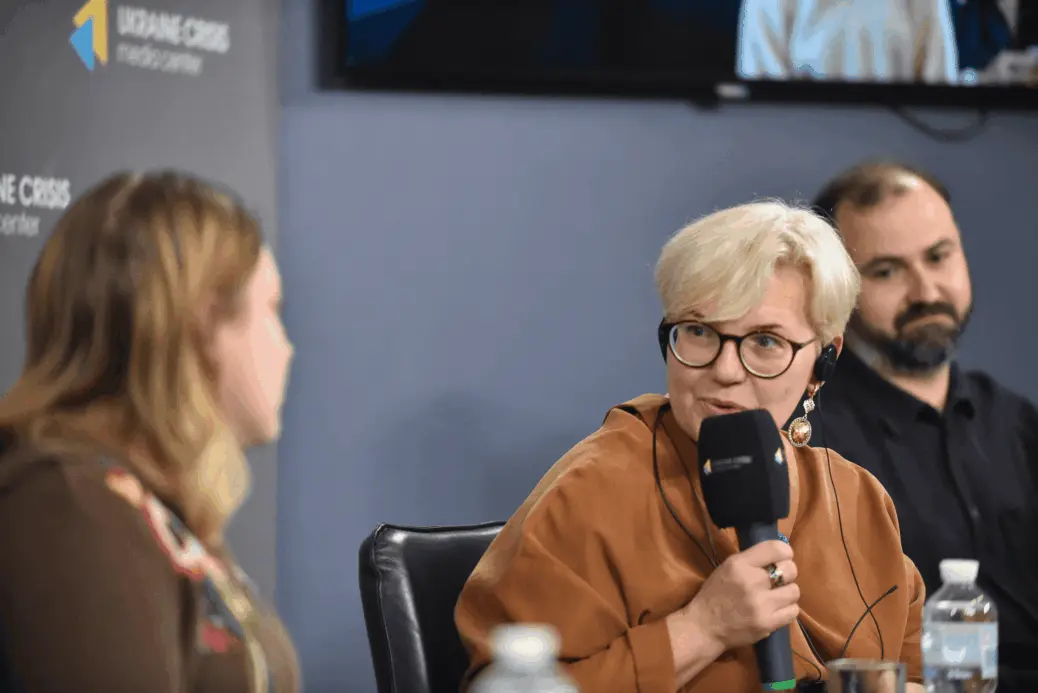
In a new UCMC interview, the creators and stars of The Last Message documentary discuss the war through the story of a fallen Ukrainian soldier and his American cousin.
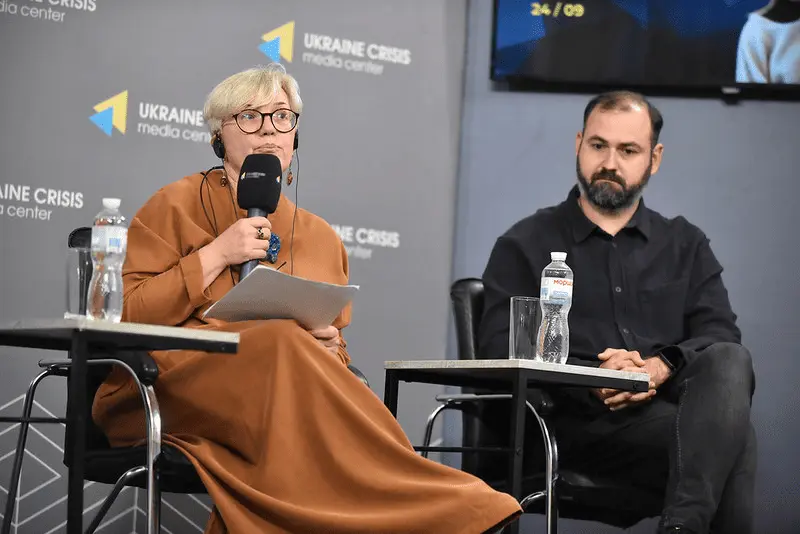
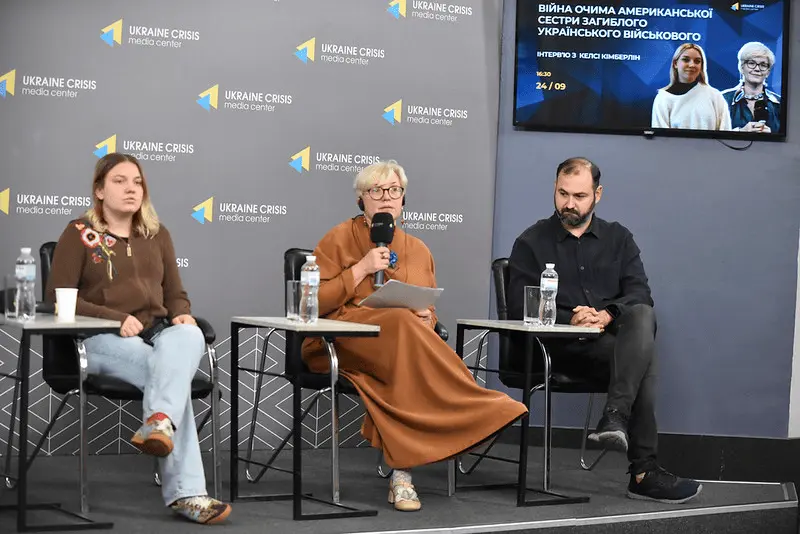
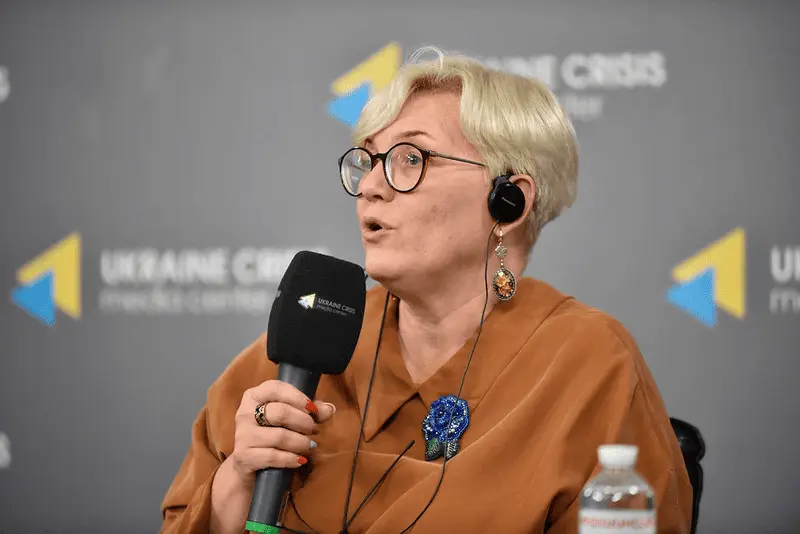
Tetyana Troshchynska: Greetings, everyone, in Ukraine Crisis Media Center. My name is Tetyana Troshchynska, and today we have a very interesting event. We have lots of guests today, and we are going to talk about the film The Last Message. We are going to talk about the war through the eyes of Andrii Rachok’s cousin, not only hers, because we also have the creators of the film with us.
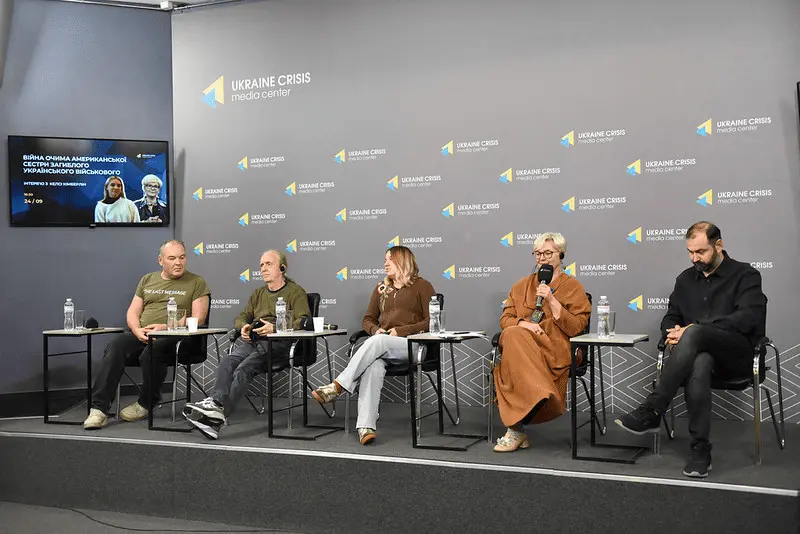
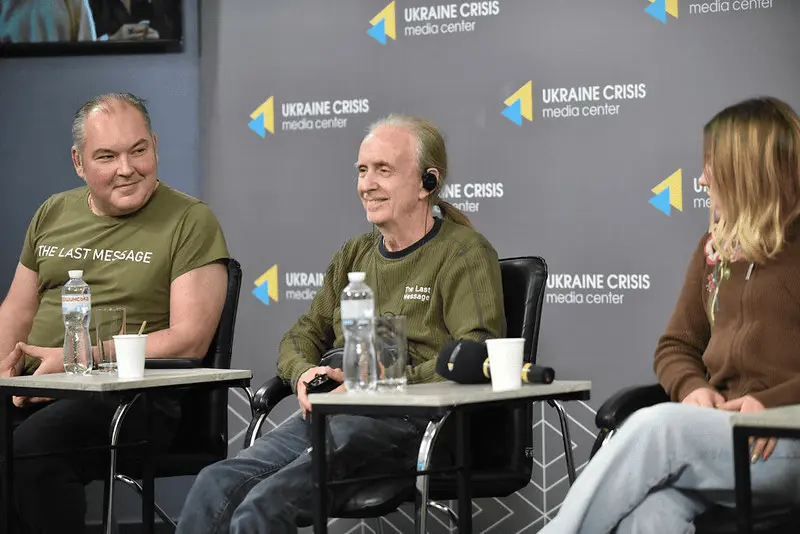
Kelsie Kimberlin, she is an American-Ukrainian singer and activist. Greetings! And also next to Kelsie, we can see Brett Kimberlin, her father, who participates in many of Kelsie’s trips to Ukraine.
And next to Brett, Andrii Semerkhanov, producer, and next to me, Oleksii Liebiediev, the director of the documentary.
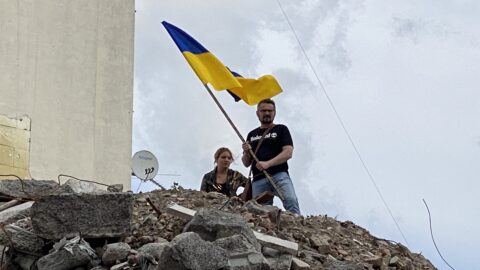
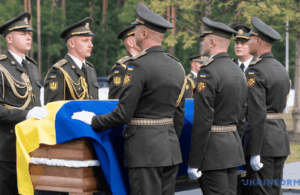
For those who haven’t seen the film yet, this film is about Kelsie’s journey to the place where her 21-year-old cousin, Andrii Rachok, is buried, who voluntarily mobilized, was enlisted in the army, and died in the battle for Avdiivka.
And that is the journey, probably the journey which shows Ukraine and many people who fight for their freedom now in Ukraine. Maybe you found something new in Ukraine, and we are going to talk about this with the creators of this film.
So, let me start with a question to you, Kelsie. I know that just a few days ago you arrived in Ukraine, and you had a very long way here, a very difficult one, and there is probably jet lag as well. And also, the period is not the best, but how do you feel these days?
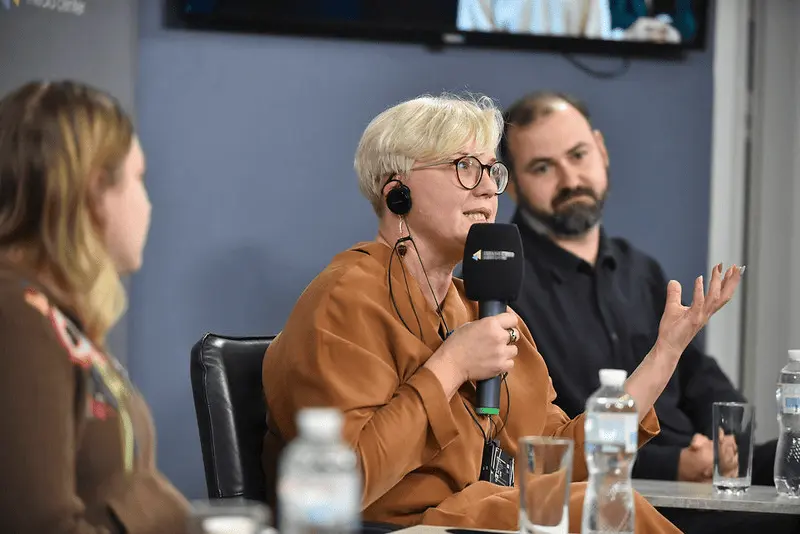
Kelsie Kimberlin: Well, yeah, so I actually arrived yesterday around, like, 5:00 a.m., so I am very, very tired and jet-lagged, but I’m here. And talking about the journey and doing the premiere yesterday, I’m very happy and surprised at the same time with the turnout.
I think anytime that you make something like this and you put yourself out there and you’re vulnerable, you always think that no one’s going to show up and no one’s going to like it. And so I was pleasantly surprised, but also very shocked, but also very honored and happy to see that.
At first, I thought no one was going to show up. I thought it was going to be about five people.
Tetyana Troshchynska: I think that was impossible, because for us as Ukrainians, it is important to see the support. And that is the story, the story of your cousin, and therefore, this is a natural interest. And I think that it’s also worth mentioning what kind of connection your family has to Ukraine.
Kelsie Kimberlin: So, my mom was born and raised here her entire life. She moved as an adult when she met my dad. Actually, my dad and my mom met in Marupul, of all places. And my cousin that the film is about was born and raised here as well.
So, my roots come from — I’ve spent pretty much every single summer in Ukraine since I was born. Most of my summers were three months here. And I used to complain about coming to Ukraine sometimes as a kid, you know, when you started realizing there’s, like, social media and TV.
Because where my mom was born and raised, we still had an outhouse. The showers — if you wanted hot water, you had to boil it on the stove to put it into, like, a tin bin. And I look back on those childhoods, and I’m like, I’m so lucky that I got to experience something like that. No one else will ever get to experience something like that.
I think the saddest thing about, like, the roots and, like, just my mom being born and raised here — it’s very funny, I’d call her very Americanized now — but it’s a sad thing to say that, like, lots of parts — I think a lot of people can relate to this — a lot of villages are gone. And, like, I’ll never be able to get to show my future husband kind of where I grew up.
Tetyana Troshchynska: That is indeed very sad, and also very sad when we compare some warm memories from your childhood with something that you can see now when you’re traveling around, and the decision you made when you decided, when you understood that your cousin was gone.
So, let me actually ask Brett, let me ask your father, Brett. How did it happen? Kelsie said that she wanted to go to Ukraine, and you know that the war is going on here, and you know there are lots of attacks here, and you know that this trip can be difficult or even dangerous. So, how was it?
Brett Kimberlin: Well, Kelsie’s actually been coming to Ukraine since she was born. But even after the war started, prior to making the movie, she was involved with a lot of music videos about the war, and she had a lot of support here in Ukraine from fans and from the army.
And so when her cousin was killed in the battle for Avdiivka, she decided that it was important for her to come here to find answers to why he enlisted at 20 years old. And she wanted to be able to sing her song that she wrote about him. It’s called “Star,” and she was having difficulty doing that in the studio. So she said, “Let’s go to Ukraine.” And I said, “Fine, let’s go.”
And the whole team got together and provided all the logistics and the security, and we went all along the front, from Kherson to Kharkiv to Pokrovsk. And it was really quite an experience, just hearing all the stories from all the people there.
So we went without fear. We went with commitment and intention. And that was the main thing that we wanted to do: tell the story of the people that we met and tell the story of Andriusha.
And, you know, by the end of the trip, we realized that every person in Ukraine is actually a star, and that every person in Ukraine has a similar story. And so that’s why it’s important to get this message out, or this movie out, to so many people around the world. And that’s why I think it’s resonating.
Tetyana Troshchynska: Indeed, because as a person who saw the movie, I can say that all your heroes, they are just heroes. Each in their place, each in their role, they do different things. They are directors of hospitals and also defenders, and those are simple but very touching words.
And the song you’re mentioning, and the song which Kelsie sings in the end, that is a spoiler, and probably I shouldn’t spoil it because our audience may want to see the movie. But I think that at this point, we have to tell more about Andriusha. And once again, I would like to remind you that it is Andrii Rachok, and it is important to mention his name. Kelsie, maybe you can tell us more about your cousin.
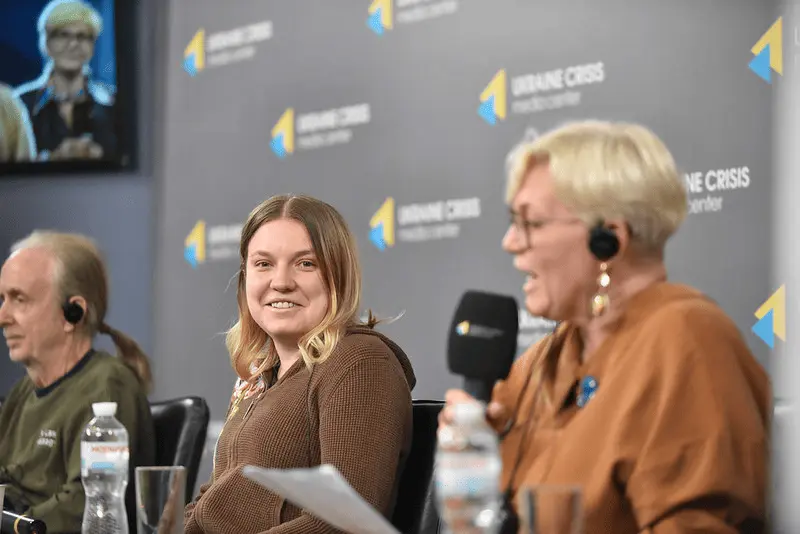
Kelsie Kimberlin: So, my cousin was probably the funniest person you’d ever meet. And it’s honestly kind of funny that he even, like, joined the military. Not in a funny way, but, like, no one would have ever seen that coming, knowing him.
He was also a caretaker. His mom died when he was really young, and his dad left, and so he kind of became the sole caretaker of his younger brother and his grandparents, and solely, like, the one who was going and making sure there was food on the table, making sure everyone was taken care of, making sure the house was clean. So he grew up very fast.
But he was always just taking care of everyone. Like, I tell the stories as well. I have a scar right here on my head from when I fell into a metal bed in Ukraine when we were playing this game we used to love to play as kids.
And I don’t know if anyone knows, if you go back to the villages and you grow up in a—if your mom grows up in a small village, everyone knows everyone. And so there’s this thing called basically a three-day party. When you come there, everyone brings food, everyone’s rotating in and throughout the house. There’s going to be people sleeping in the cornfield, the raspberry fields, whatever. Somebody’s grandpa is gonna be somewhere halfway off a stool, you know. And it’s a three-day, like, you sleep or not.
Tetyana Troshchynska: And you never know who is related to whom.
Kelsie Kimberlin: Exactly. You don’t know who you’re related to, who you’re not related to. So that was something that I actually miss a lot.
Actually, my little cousin talked about it the other day. He was like, “When the war’s over, can we do one of those?” And I was like, “You know, I wish,” ’cause our village is destroyed now.
But we were having one of those. We just arrived in town, I think we were on our second night, and it was the middle of the night, and us kids were definitely not supposed to be up, but we were, because everyone’s out, you know, outside partying.
I cracked my head open, and my mom was, you know, you know, as moms do when they come and see their family after a long time, she was a little — she was a little drunk. So my cousin was the one who actually, when I cracked my head open, put me in, like, the tin with some water, and he’s actually the one patching my head up for hours and holding it and grabbed our parents.
So he is probably the reason to this day that my head got put back together. And he’s younger than me, ’cause I’m 27.
And so that’s what I mean by he was always just a caretaker, and he always cared about everyone. He was very sensitive, very funny.
I remember one time he got in really big trouble because I don’t know where we found this. We were walking through other people’s fields, when you’re definitely not supposed to be doing that, and he found a bow and arrow, like a real bow and arrow, like handmade.
And my parents screamed so loud at him, and we were basically trying to shoot the apricots off the trees when they were too high for us to get with the bow and arrow.
So that describes who he is as a person in general.
But he was also very stubborn, like me. That was our one issue, of why we didn’t meet, is both of us have this very big stubborn gene in us that we all need to get over as our family members. I think we all have it. I don’t think it’s passed down.
Tetyana Troshchynska: I think that the memories from childhood, from our teenage years, are something that stays with us forever, even though it is painful, very painful to remember that. And you understand that it will never happen again.
But let’s speak about the film. Of course, I will try not to spoil it, because I hope that more people will watch it. And with this, I would like to ask Oleksii Liebiediev, the director, what was important for you to show?
Because, in fact, it is an observation of Kelsie’s experience of this trip. And this trip is a bit different from what she did before, from her music videos, even though they were also in de-occupied territories such as Bucha and Izium.
Oleksii Liebiediev: When we started working on this documentary, our creative team worked a lot with Kelsie in Ukraine, as you mentioned, and that was an absolutely different type of work.
But when we found out that Kelsie planned to come to Ukraine, we decided that we needed to make a documentary about it in order for more people to know about Andrii Rachok. Not only we have to know about it; all of Ukraine, all the world has to know about it, because it is important to show.
And what Brett actually said, that everyone in Ukraine is a star.
And that is important, important to show through Andrii’s story, to show the heroic actions of Ukrainians.
And one of the, so to say, biggest topics we wanted to show is that for the Western audience, war is just numbers. Numbers from the news, numbers from the articles. But in fact, there is something behind these numbers, and that are human lives, heroic acts and sacrifices.
And therefore, through all these novels, through all these people, places which Kelsie visited, we wanted to show different layers of the war: humanitarian issues, medical issues, military issues, children, of course, and many others, and the key things which are happening in Ukraine.
And this documentary had a very difficult story because my co-director, Mr. Voloshyn, he is in the US, and he was filming Kelsie a lot in the US, and we were editing it in different places. And we were on the trip with Kelsie.
But what you were saying, what you were asking, so what did we observe the most? And I probably said it to Kelsie as well: it is important for us to see how her perception of everything around her changes when she sees everything from the inside.
Because Kelsie actually dedicated, and the foundation, they dedicated lots of time and effort in order to cover what is happening in Ukraine. But when you see it yourself, that is absolutely different.
And of course, when you can see such a big number of tragedies and sometimes even positive, very human things during such a short trip, your perception changes.
And maybe I think that maybe we can say that one of the main objectives we wanted to show is to give different audiences the opportunity to understand that in order to help Ukraine in this war and in general, you do not need to be a serviceman. And there are lots of things you can do. There are lots of professions, efforts, and volunteers who can help, and you can at least help draw attention, and at most, you can contribute something personal to this.
Tetyana Troshchynska: You know, in the film there is a very touching, painful scene. And as a person who has experienced a recent loss, my son, I understand what it is like when you come to a grave. I think that was painful for me, and I think it is going to be painful for the audience who will see it. It was also painful for you, but, you know, I was impressed by the bravery to show it to people.
And I have a question for you, Oleksii, and then a short question for you, Kelsie. That is a very personal, intimate thing, but you decided to keep it because you understood that it was emotionally important.
Oleksii Liebiediev: Well, this is the most intimate and very personal part, but it is also a culmination, because a documentary — and documentary as a genre, especially when it comes to war and losses — is always something that requires compromises, compromises involving moral and ethical considerations.
Something that you can show and what you cannot show, and something that we want to convey and what kind of result we want to achieve at the end of the day.
So, of course, I can just imagine, even though all of us have seen how difficult it was for Kelsie when the team was around. And we tried, and actually, we edited it in a way — and you can see that it was made with just one shot. That is observation. That is something that in the film industry is called a true documentary, when there is no editing. That is a real observation of the emotions.
For Kelsie, it was, of course, very difficult, and I think I already said that I’m very sorry because she went through this. She went through this with cameras on.
But even at the beginning of this journey, we talked about it, that the main thing is that we have to deliver this message about her cousin, about Andrii Rachok, and about his heroic act. And that is the reason why sometimes, in these kinds of difficult scenes, they give us the result we need. In this case, I think that that is something that Andrii would care about.
Tetyana Troshchynska: Yes, Kelsie, indeed, I’m very impressed with your bravery and, I don’t know, maybe your desire to share this pain with a worldwide audience. Did you feel that this “Last Message” was the last message your brother heard when he was there?
Kelsie Kimberlin: Sorry, can I have the last part again? The last question.
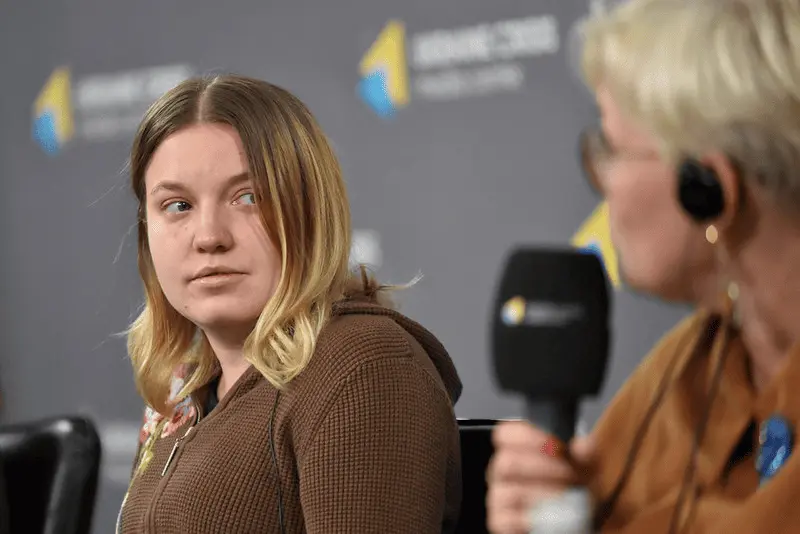
Tetyana Troshchynska: Did you have the feeling that you had fulfilled the last obligation towards your brother and that your brother, maybe at this point, heard you?
Kelsie Kimberlin: Honestly, so actually Oleksii and I were talking about that. Someone said this quote to me, I can’t remember exactly: “Heroes never die, they live on.”
So, I think that the point of this movie is that his legacy is going to live on forever, and his name’s not just going to be another name. And that was a big part of it all.
I think a big issue, too, was, as Oleksii said, that we had to have raw emotion. And a lot of people like to look at Ukraine as, like, territory, and not many people — a big part of this was having people look at people, not having areas of Ukraine looked at as territory.
And that was a big part of this message, was putting faces to the names of these places that people were saying they should give up to do a ceasefire, which is ridiculous.
I think a big thing for me, too, was actually the grave scene and showing that. That was really hard. That was the first time I ever saw the grave.
So, when you’re watching the documentary, that really is the first time I’m ever seeing it. There wasn’t any moment off camera where I got to see that grave myself without a camera there. So everything you’re seeing is raw emotion.
And there were some parts of me when I was a little angry about what was being filmed. But when I look back on it, I think it was really hard for me even to watch that scene myself. I still cry during it.
But I think that it was really important that that was filmed because it showed just raw, authentic emotion and how it actually is and how life actually is. And it’s not scripted, and it actually shows the pain and what every single person in Ukraine has gone through at least once.
And it was very vulnerable, but I think that a lot of people like to put on these hard fronts and not show actually what happens. And that’s actually what happened, and it was really hard, but I’m really glad that it was filmed at the end of the day, and I’m happy that people got to see that.
Tetyana Troshchynska: As a Ukrainian, I would like to thank you for that, because not everyone is, in fact, ready to share these kinds of things. But, you know, they are probably the ones which are the most touching for the people for whom they are just names from the news.
With this, I suggest we change the topic and talk more about maybe, I don’t know, like the festival part of this movie.
So, as far as I know, you have, like, awards. And what’s next for it in Ukraine? So, for those who are watching us, where can they see the movie? And, of course, we had a premiere here today.
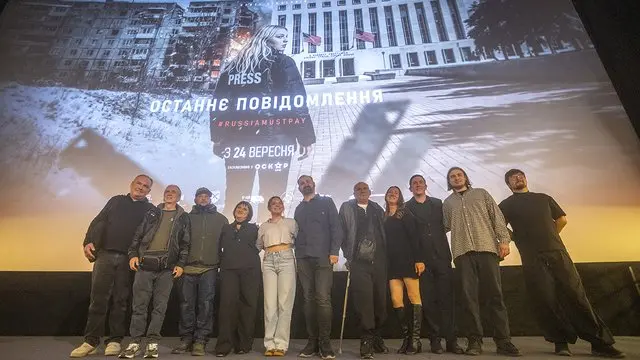
Andrii Semerkhanov: Thank you. Very good question. Yesterday we presented this movie in Ukraine, and that was also a very, very important event because, as you remember, Kyiv was attacked by drones yesterday, and we were actually worried about how everything would go.
But between the massive attack during the day and the ballistic attacks at night, at the time when we were inviting guests to see the movie, we didn’t have any kind of attacks. Nobody was telling us to leave, and there were no security measures we needed to undertake. So that was a kind of magic.
Yes, you said it. That is magic. And, you know, our angels who watch us from heaven, they were watching us. They helped us make it happen as we planned it.
Because unfortunately, not only Andrii, but some of the people who are in our movie or who helped with our movie, unfortunately, they are not with us anymore as well. And we planned to invite them, and when I was calling everyone, well, you know, it turned out that some of the people would never be able to see us.
But speaking of festivals, you know, we actually thought about festivals from the very beginning. We applied through the Freeway system, and sometime later we started to get feedback. And in half a year, somehow we got around 50 different awards for this movie from different festivals abroad, from different parts of the world: Cannes, India, Japan, Oslo, the UK, the USA, and many others. Yes, there are various festivals. Some of them are big, some of them are not, but nevertheless, 50 is a big number.
And those are just 50% of the applications we made, so we will have some more awards. And that is one thing.
And the second thing is that when receiving such feedback, we understood that we need to promote this movie. And therefore, we contacted the agency 42West, which helped Mr. Nobody Against Putin, and they were ready to work with us in order to make our movie as popular as possible.
And we applied for a documentary nomination in the US, and also for the soundtrack and track as a separate song, and also the soundtrack, so three nominations.
And while we were in the process, we found out that we can actually apply from Ukraine as a foreign feature-length documentary, because our documentary is 87 minutes. And we did that as well.
And we are in the top five films. Very powerful, very good films. None of them are documentaries, but nevertheless, very good competition. And we were considered among the top five, and then three more were added, and one of the eight documentary films won and is now the candidate that was submitted from Ukraine.
But nevertheless, for us it was a good experience, an experience of how to talk about ourselves. And therefore, we organized the premiere presentation of this film in Ukraine because we thought that actually our message is for the Western audience.
And we were actually very surprised that, in a very short time, we were able to make a dubbing and translate it for the Ukrainian audience. And, you know, for me it was such a big pleasure that some people in the audience were laughing, in some cases they were crying, sometimes they were surprised. And, you know, this film showed a very big range of human emotions.
And then we understood that, you know, it is something that not only foreigners or Americans can understand, or people from the UK and Canada can understand, but also Ukrainians.
And that was another miracle and another thing which we found out yesterday. And, you know, we will do our best in order for this film to be seen by as many people as possible.
But at this point, it is being shown at the Oscar network, Oscar Gulliver, a few times a day, and also at Oscar Smart Plaza. And after the 9th of October, it will also be shown in Los Angeles at Laemmle Royal, which is a very famous theater with a long history. So we invite you, you’re welcome to see this movie. And to be continued.
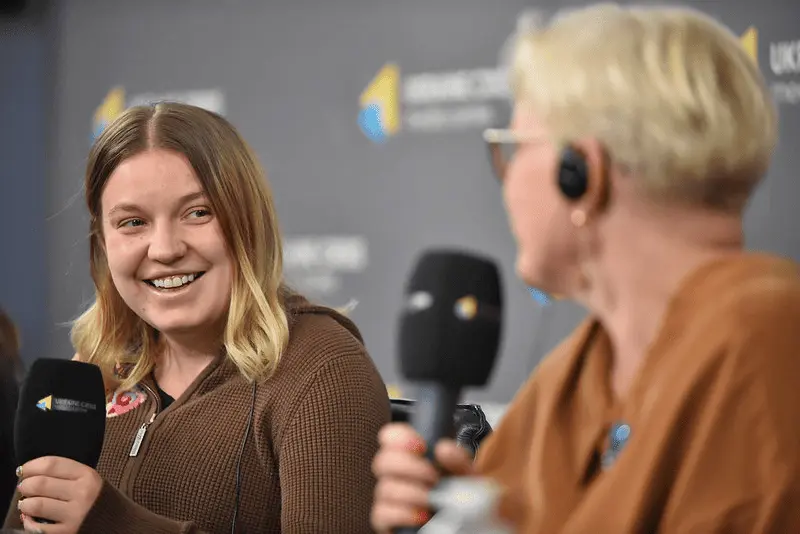
Tetyana Troshchynska: You know, quite often I can see that for people who reside in different countries, in other countries, not in Ukraine, it is hard for them to understand how the Ukrainian army works, who the defenders are. Ordinary people who were cashiers in supermarkets, they can be teachers in schools, maybe they are operators or directors of movies, or also drivers. By the way, drivers were the first ones who were mobilized in 2022 into the Armed Forces of Ukraine.
So these are civilians, the operators, the cameramen from your wedding or someone else. So that is, on the one hand, an amazing thing, but on the other hand, it is something that people who are used to professional armies are not used to. They are used to the fact that there should be professional soldiers who have to fight for freedom.
Did you get the answer, Kelsie, as to why ordinary people, why your cousin, an ordinary boy, defended this country, and why we continue defending this country?
Kelsie Kimberlin: So, at first, I’d like to say that I didn’t really understand why he joined. I was pretty upset with him, and I won’t lie, there’s always a little part of me that is still a little upset, you know, ’cause he’s not around anymore. But I think that’s something anybody who’s lost anyone in this lifetime thinks that way. But at the same time, you’re also proud of them.
But I do understand, and I look back on my journey of going there, and I look at all these people, and I think about all the people I traveled to — to come yesterday to the film was, you know, that’s their home, that’s their right, and they’re proud.
And I think about it, too, it’s like, why would I leave my home and my animals behind, you know, just because somebody else wants to take my place, you know?
And it gave me a really big understanding, and honestly, I think it’s really beautiful — a sense of community, a sense of pride, and the passion. And I can’t really describe it to you as well into words. It’s more of a feeling that you get once you, like Oleksii said, you never really understand fully or truly until you’re there in the moment.
And you can’t really put it into words more than that. Like, you get it now, and you understand. But you also see, like, you know, everyone, they have these beautiful communities, and they were born and raised there, and that’s their home, and that’s their right, and they should have that right.
And I get it now. I get it, too, because I think I’d do the same thing. And I think I’d get angry, you know, I’d probably go and fight too. Be like, “What do you think you’re doing? To kick me out of my home? How dare you?” You know, it’s also called being stubborn.
Tetyana Troshchynska: You know, there is a part where your hero is fixing the vehicles. He lost his legs in this war, and he says, “Give us lots of weapons and don’t be afraid of Russians.”
You know, that is a very simple, on the one hand, very simple kind of message, but on the other hand, it is very complicated because, you know, it’s difficult to make decisions. The politicians are discussing what they can afford and what they cannot afford.
But, you know, this kind of “Don’t be afraid of Russia,” I think that is something that Ukraine shows, and that is something new for the world as well — that Russia is probably something you shouldn’t be afraid of.
And for you, it is important to bring to justice all those who sponsor these terrorists, the ones who caused your loss. And I would like you to tell us about your situation with the court.
Kelsie Kimberlin: So, my dad can explain that better than me because he knows the actual logistics of how to explain it legally. Ukraine is fighting for the free whole world. And a lot of people, some people haven’t gotten on that train of understanding that. This is literally World War 3, believe it or not, and it’s our first modern war.
And if we’re looking at it, you know, people want to say, as the simplest way of saying it is, “Oh, we need to make decisions to send them weapons or not send weapons.” Well, you should, because you’re going to come running here to Ukraine to ask, “How do I fight this war and how do I do this?” Because you guys have been doing it for so long.
And what, you know, Ukraine, of course, is going to help you. But, like, what if they laughed in your face and said, “I don’t know. We needed to make some decisions and talk to our politicians”? That’s how I’d like America to look at it that way, too. You know, and here, Dad, do you want to explain a little bit more? Because you have the logistics.
Brett Kimberlin: Well, it all comes down to accountability. I mean, I think that’s what Andrii would want because, even though he’s not with us anymore, he’s continuing to fight through Kelsie and through Kelsie’s voice and through this movie.
But also, you know, Kelsie, the amazing thing about this film is that Kelsie took her grief and didn’t just wallow in that grief. And instead, she took action.
And she took action first by doing the movie and getting this message out. But secondly, once she went back to America — well, first of all, she met with Oleksandra Matviichuk, who is the Nobel Prize winner from Ukraine. And she interviewed her and became friends with her.
And Oleksandra said, “Look, you know, this is a war crime. We know this is a war crime.”
And there’s a statute in America that’s called the State Sponsors of Terrorism Act that can be used by Americans to hold Russia, Iran, North Korea, and the Revolutionary Guard accountable for the killing of your cousin.
And so Kelsey went back and talked to lawyers and filed the first-ever lawsuit in America against those countries for the killing of Andriusha. And this is a landmark case that will pave the way for any American who has lost a close relative in Ukraine to hold those countries accountable.
And there’s an interesting fact about this statute in America. America has paid out over $10 billion under this statute in other cases where terrorists have attacked Americans or American relatives in other countries, such as Hamas or Syria or Sudan or North Korea.
And so this will be the first case in Ukraine, and so it’s really an important thing.
And the other interesting fact is that these terrorist countries do not respond to these lawsuits, so they go into default. And the Department of Justice has a special fund to pay the judgments.
So these people that have sued under this act have received tens or hundreds of millions of dollars, literally, because of these judgments.
And so, you know, when Kelsie gets the judgment in this case, she will use that to help Ukrainians. And so it’s holding Russia accountable, Iran accountable, North Korea accountable, the Revolutionary Guard accountable, and then she can use that money to help Ukraine. So it’s just an amazing turn of events.
Kelsie Kimberlin: If you want to know, like, a simple case that’s similar to it is a bunch of 9/11 families. They had victims in their families, if you want to know exactly kind of how it works.
So, if anyone knows about 9/11 in the United States, a bunch of the families recently just did the exact same thing, and they just all got money from it.
And so if you want to look up a similar case of how it would work, anyone can also join this lawsuit. So, let’s say, like, an American who lost a family member, or they’re American-Ukrainian, can join this lawsuit, and it can become almost like a staple, basically, around the world.
And to show, like, hey, it’s not just Ukrainians too. Like, hey, Americans, we have the same thing that’s happened, and I feel like that kind of joins two worlds together and makes people start to care more, and it might actually get us more involved too. So it’s a movement I think, as an example.
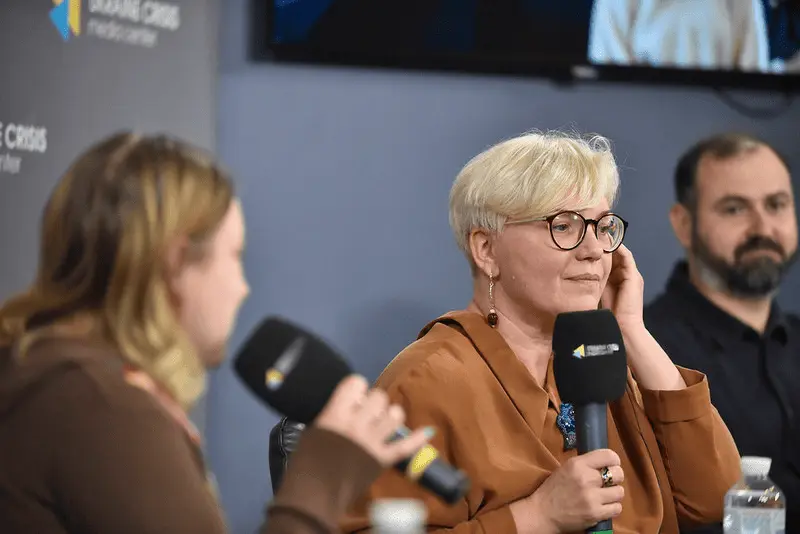
Tetyana Troshchynska: Kelsie, thank you very much for talking about accountability and meeting Oleksandra, because those are the actions that show that it is not enough to experience grief. There should be accountability.
And in this case, it’s kind of obvious — crimes, terrorism against Ukraine, the crime of aggression. And those are the things we have to be talking about.
So I think that with this, we can wrap up. And if any of you who is next to me on the stage would like to say something important to our audience at the end of this conversation, you’re welcome.
Kelsie Kimberlin: Thank you for this interview, and please watch The Last Message and let me know what you think. But also, thank you, and thank you for watching.
Brett Kimberlin: I just want to say we’re going to have a screening at the America House in Lviv on the 29th, and the American Embassy has been very supportive of this film, so we’re very grateful to them. So please, if anybody is in Lviv, come to see it on the 29th.
Andrii Semerkhanov: We would like to thank everyone who supports us, who continues supporting us, and who will support us in the future. You’re welcome to see our film wherever you are, in Ukraine, in the US, or in other parts of the world.
And we really hope that this film will be something you will remember, and that it will not just be a movie you will remember, but also that it will be something that will mean something to you. But also, that is the documentary which will help you to act. Thank you.
Oleksii Liebiediev: Well, I would also like to thank everyone who talks about this documentary. And I think that for everyone, not only those who work on documentaries, it is important for us that the information about what is happening in Ukraine is spread around the world.
And it is important for each and every Ukrainian and for the world to understand where the truth is, and for this truth to be delivered to every citizen of the world.
Tetyana Troshchynska: Thank you, Oleksii, Kelsie Kimberlin, Brett Kimberlin, and Andrii Semerkhanov. They were our guests. My name is Tetyana Troshchynska, journalist. Thank you very much for joining us at the Ukraine Crisis Media Center. Thank you.
Tags: Andrii Rachok Kelsie Kimberlin Russia–Ukraine war the last message The Last Message Documentary Ukraine documentary ukraine war Ukrainian Soldiers