Ukrainian women avant-garde artists are featured in In the Eye of the Storm, showcasing their bold modernist works, blending tradition with innovation, despite repression and historical challenges.
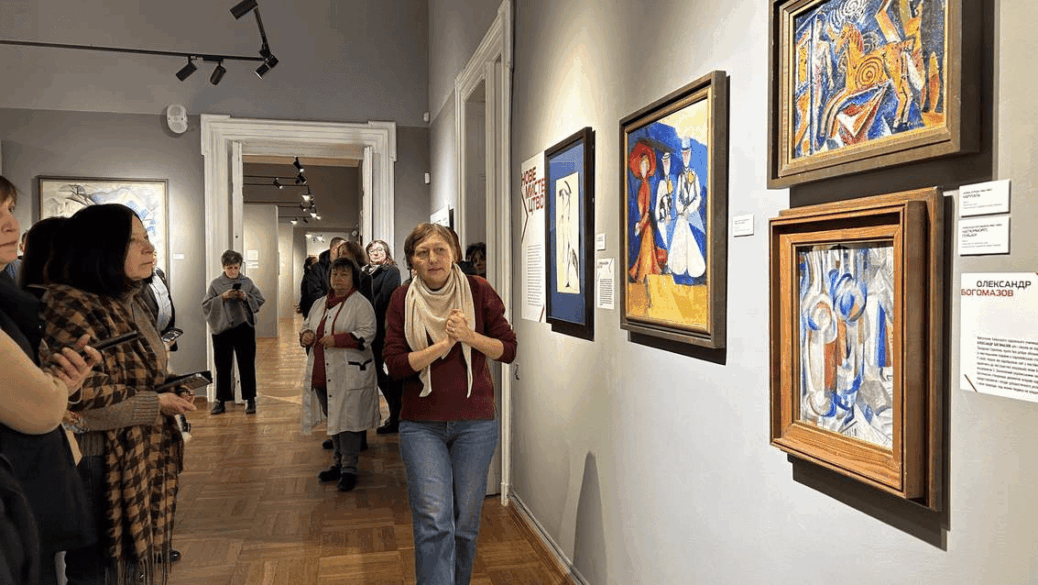
At the Andrey Sheptytsky National Museum in Lviv, a large-scale exhibition “In the Eye of the Storm. Modernism in Ukraine 1900–1930s” is currently underway. The exhibition is based on Ukrainian modernist art from the collections of the National Art Museum of Ukraine, the Museum of Theater, Music, and Cinema Arts of Ukraine, the National Museum of Decorative Arts of Ukraine, and the Andrey Sheptytsky National Museum in Lviv.
The project is not only an artistic event but also a way to preserve works of Ukrainian modernism during the full-scale war, as these pieces were evacuated from Kyiv.
The works of artists who long remained in the shadow of imperial and Soviet narratives have already been seen in Madrid, Vienna, London, Cologne, Bratislava, Brussels, and Łódź. In 2023, the exhibition received the Apollo Magazine Awards recognition as Project of the Year and was covered by The Times, The Guardian, and The Art Newspaper.
“In the Eye of the Storm” is not only about the bold artistic experiments of the early 20th century but also about the stories of artists who were either destroyed, appropriated, or forgotten. They created during times of revolutions, loss of statehood, repression, and terror, yet they shaped the modern Ukrainian cultural identity.
The exhibition in Lviv can be seen until May 10. It presents a unique collection of artists who worked at the beginning of the 20th century; each of them is exceptional and worthy of both major exhibitions and extensive monographs.
ZAXID.NET highlights the female faces of the Ukrainian avant-garde.
Oleksandra Exter
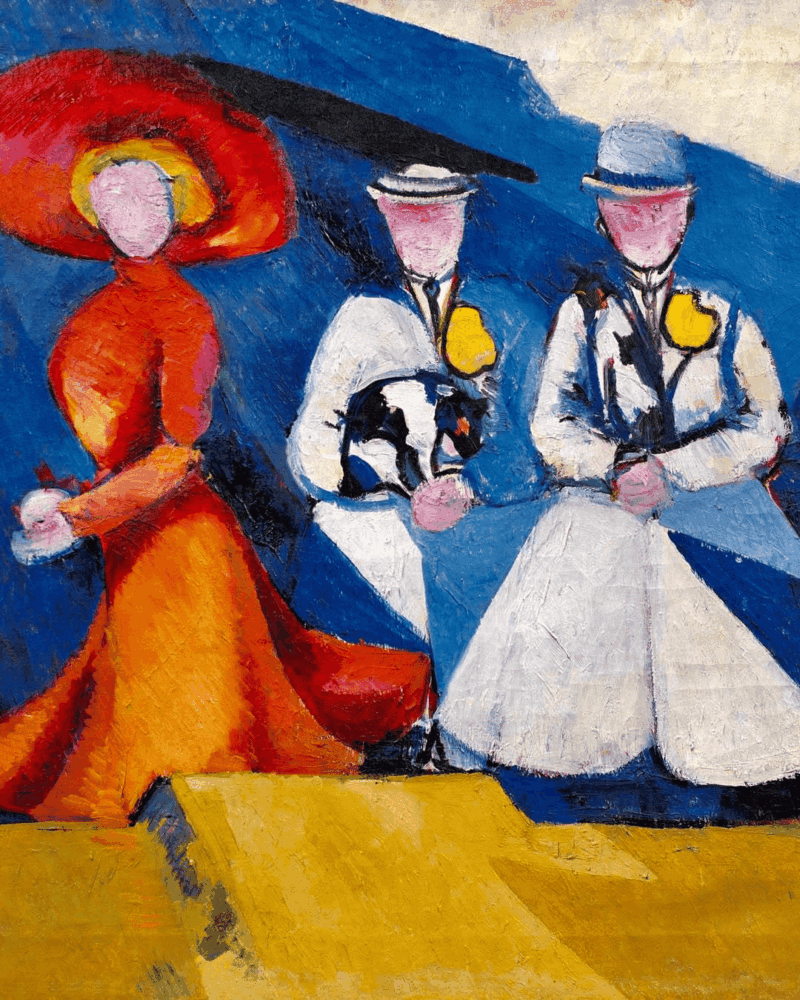
Oleksandra Exter (née Hryhorovych) was born on January 12, 1882, in Białystok (now Poland). The family of the future cubo-futurist and stage designer moved to Kyiv. At the Kyiv Art School, Oleksandra’s teacher was Mykola Pymonenko. She studied alongside Alexander Archipenko and Oleksandr Bohomazov. She married the well-known Kyiv lawyer Mykola Exter.
Oleksandra Exter studied in France at the Paris Academy of Fine Arts. She interacted with Pablo Picasso and Guillaume Apollinaire.
Exter returned to Kyiv, where in 1918 she established a studio of painting and decorative arts, including embroidery.
From 1925, Oleksandra settled in Paris, where she designed books, created interiors, and taught at Fernand Léger’s Academy of Contemporary Art. Her works are featured in the Paris Museum of Modern Art, among others. However, she bequeathed her works and archive to her friend, the artist Simon Lissim, who lived in New York. As a result, most of Exter’s legacy ended up in the United States.
Her first exhibition in Kyiv took place in 2008. In 2023, Marina Tsvetaeva Street in Kyiv was renamed Exter Street.
Exter was one of the central figures of Cubo-Futurism and Constructivism, art movements that broke the conventions of traditional painting and opened new formats of visual thinking. She was also a reformer of stage design.
Exter combined Ukrainian color and motifs with the European avant-garde, yet for a long time she was referred to as a Russian artist (some sources still do). However, she is gradually being recognized as Ukrainian.
Sofia Nalepynska-Boichuk
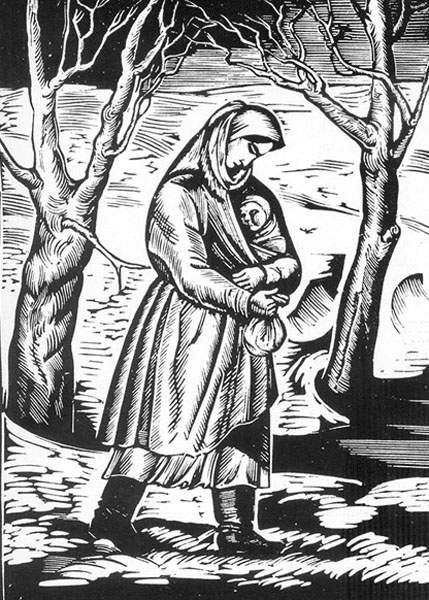
Sofia Nalepynska-Boichuk was born on July 30, 1884, in the city of Łódź (according to other sources, in Warsaw). Her father was Polish and her mother French, yet Sofia was destined to become a Ukrainian artist and a representative of the Executed Renaissance.
She received her education at the art school of the renowned impressionist Jan Ciągliński in Petersburg.
In Paris, Sofia Nalepynska met Mykhailo Boichuk while studying at the Ranson Academy. They later married. Sofia learned the Ukrainian language and moved to Ukraine with her husband. At first they lived in Kyiv, and later in Lviv, where Sofia worked at the National Museum (1911–1912).
From 1925 to 1929, she taught at the Kyiv Art Institute and became a member of the Association of Revolutionary Art of Ukraine.
Sofia Nalepynska-Boichuk worked in easel and book graphics, illustrating, among other works, “Kateryna” by Taras Shevchenko. She also worked in painting.
She was the author of unrealized designs for paper currency during the period of the Ukrainian Revolution of 1917–1921.
In 1937, she was arrested in connection with the case against her former husband, Mykhailo Boichuk.
Sofia Nalepynska-Boichuk was executed on December 11, 1937.
Olena Kulchytska
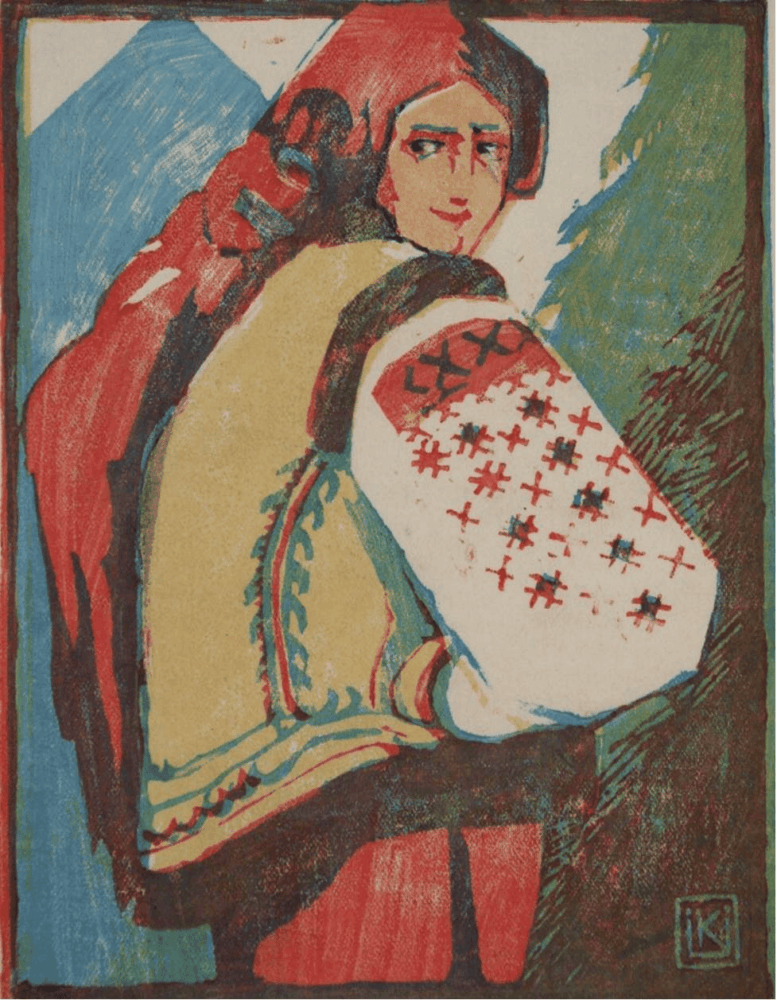
Olena Kulchytska was born on September 15, 1877, in Berezhany in the Ternopil region. She received her education in Lviv: first at the school of the Sakramentki convent, then at the School of Art and Industry and in the studio of artists Stanisław Batowski-Kaczor and Roman Bratkowski. Later, she graduated from the School of Art and Industry in Vienna, where Gustav Klimt had also studied. At that time, this was the only school where women could study.
The artist returned to Lviv, where her first solo exhibition took place in 1909.
Kulchytska worked in painting, engraving, ceramics, metal art, sculpture, enamel, furniture and interior design, clothing design, and other fields.
She was also an illustrator; among her well-known works are “Fox Mykyta” by Ivan Franko and “Shadows of Forgotten Ancestors” by Mykhailo Kotsiubynsky. During World War I, Kulchytska worked in a hospital and later moved to Vienna.
In the 1930s, Olena Kulchytska published four art albums — “Folk Architecture,” “Hutsul Region,” “Legends of the Mountains and Forests,” and “Architecture of Old Lviv.”
From 1939, the artist worked at the Lviv Museum of Ethnography.
After World War II, she headed the Department of Graphics at the Ukrainian Polygraphic Institute but later lost her position.
Olena Kulchytska died at the age of 89 on March 8, 1967.
Yaroslava Muzyka
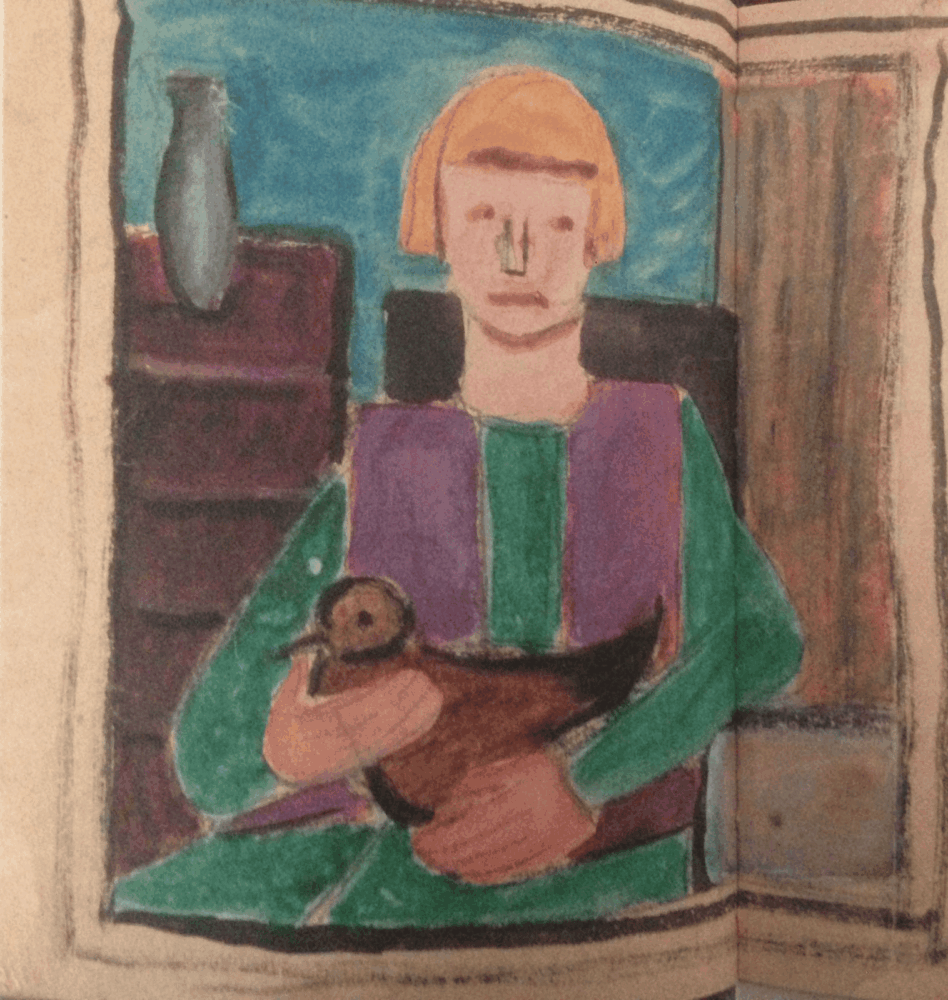
Yaroslava Muzyka (née Stefanovych) was born on January 10, 1894, in the town of Zaliztsi in the Ternopil region.
In 1902, her family moved to Lviv and settled in a building of the Shevchenko Scientific Society; on the floor above was the studio of Ivan Trush. When Trush left the studio, it was taken over by Mykhailo Boichuk, who had returned from Paris. Meeting Boichuk convinced Yaroslava to study art. She studied at the private Free Academy of Fine Arts founded by Leonard Pidhoretskyi, took drawing and painting lessons from Vladyslav Vitvytskyi, and later began educating herself, relying largely on notes from conversations with Mykhailo Boichuk.
In 1924, Yaroslava married Maksym Muzyka, who at the time was the vice-rector of the Secret University in Lviv. The artist then began working in the restoration department of the National Museum.
In 1935, she went to Paris to study, choosing the private academy of André Lhote.
Yaroslava Muzyka mastered the technique of traditional icon painting, which she combined with the latest trends of modern art, allowing her to develop her own artistic style.
After World War II, Yaroslava Muzyka was repressed and sentenced to 25 years in corrective labor camps for “membership in the OUN” and “collaboration with the Nazis.” She served six years. After his wife’s arrest, her husband Maksym Muzyka hid the works of Boichuk and his followers that had been kept at home. After returning, the artist continued to conceal Boichuk’s legacy.
Yaroslava Muzyka died on November 23, 1973, in Lviv and was buried at Lychakiv Cemetery. She was rehabilitated in 1994, on the 100th anniversary of her birth.
Margit Selska
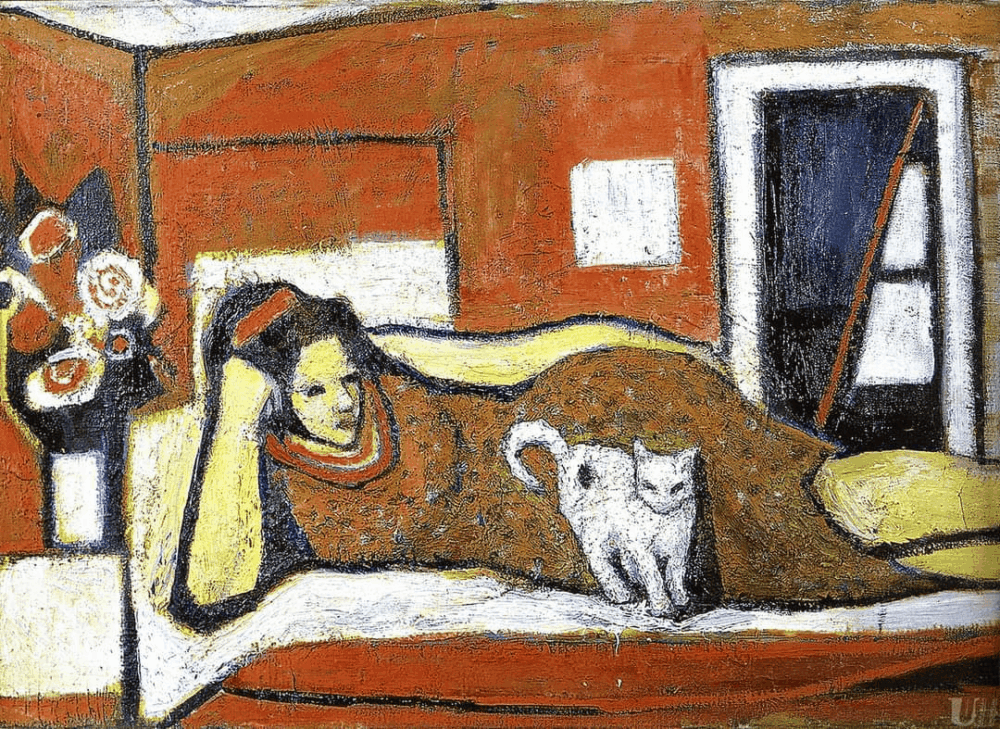
Margit Selska (née Reich) was born on May 26, 1900, in Kolomyia. In 1918, while still a gymnasium student, she began attending the Free Academy of Arts in Lviv. Later she studied at the Lviv School of Art and Industry (now the Ivan Trush College), then at the Kraków Academy of Fine Arts, the Vienna Academy, and in Paris, in the studio of Fernand Léger, where she interacted with Amédée Ozenfant, Le Corbusier, Piet Mondrian, Sonia Delaunay, and Oleksandra Exter, among others.
In 1920, she met the artist Roman Selskyi. They married in 1931.
Margit Selska made her debut with an exhibition at the Paris Salon des Indépendants in 1926. The following year, her first solo exhibition took place in Lviv.
During World War II, from 1942, she was a prisoner of the Janowska concentration camp. Friends and her husband helped her secretly leave the camp and travel to Warsaw. In 1943, she returned to Lviv, where she lived under a different name and with forged documents until the end of the war.
Margit Selska became a representative of the movement known as Ukrainian colorism.
She died on February 2, 1980, in Lviv and was buried next to her husband, Roman Selskyi, at Lychakiv Cemetery.
Hanna Sobachko-Shostak
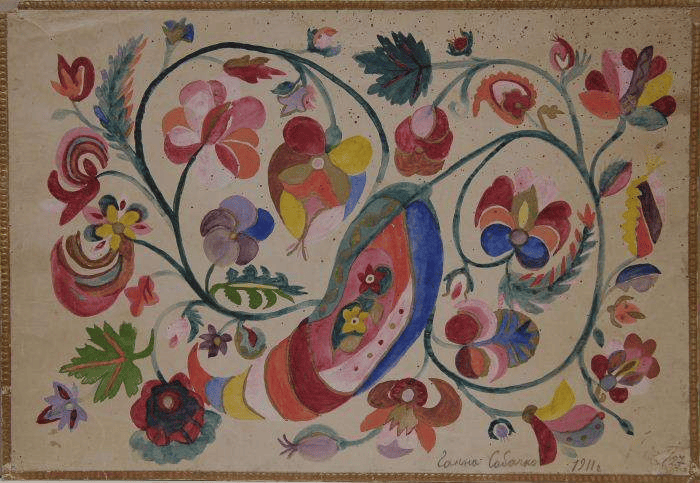
Hanna Sobachko-Shostak was born on December 15, 1883, in the village of Skoptsi (now Veselynivka, Kyiv region). She completed only two grades of a parish school, but her talent was recognized thanks to the support of Anastasiya Semygradova and Yevheniia Prybylska, who noticed Hanna’s unique artistic vision.
From 1911, Hanna worked in weaving and embroidery workshops, creating imaginative floral compositions distinguished by their dynamism, brightness, and abstract motifs. Her works were exhibited in Kyiv, Kharkiv, Paris, Berlin, and New York. However, during the Soviet era, she was labeled a “folk art master,” which downplayed her contribution to the artistic avant-garde.
Her first and only solo exhibition, “Flowers of Ukraine,” took place in Kyiv in 1964.
Hanna Sobachko-Shostak passed away in the fall of 1965.
Tags: art history cultural revolution EMPR media feminist art gender equality modern art Ukrainian women women artists



![Outdoor photo exhibition by Ukrainian photographer Oleksandr Hlyadelov on the fence of France’s Ministry for Europe and Foreign Affairs in Paris. :contentReference[oaicite:1]{index=1}](https://empr.media/wp-content/uploads/2026/02/photo-480x270.png)