Russia convicted 26 Ukrainian civilians in July, including a minor, while dozens more faced detention on politically motivated charges across occupied Ukrainian territories.
Of the 26 residents of the occupied territories whose convictions under politically motivated charges became known in July, at least six are over 55 and at least five are under 25. One of them is a minor: Yevhen Zhadan from Donetsk was sentenced to nine years in a juvenile correctional facility on charges of alleged high treason and preparing to commit a terrorist attack. It is unknown when the boy was detained. In February this year, Russian authorities added Zhadan, who was 16 at the time, to the register of extremists and terrorists. This was reported by mipl.org.ua.
The oldest person convicted on politically motivated charges in July was 66-year-old Oleksandr Hlukhoiedov from Crimea. He was sentenced to 18 years in prison on charges of “high treason” and “illegal acquisition and possession of explosives.” Russian repressive agencies claimed that the Security Service of Ukraine (SBU) had recruited Hlukhoiedov to provide information about the redeployment of Russian ships in Sevastopol and the movements of Russian military personnel.
The Russian “appeals court” increased the prison sentence of 68-year-old Halyna Bekhter from Melitopol district from 11 to 12.5 years following a prosecution appeal. Bekhter was convicted in March this year for allegedly transferring money to support the Armed Forces of Ukraine. Earlier, media reported that, according to the woman’s cellmates, her dementia was rapidly progressing in prison. In particular, Bekhter stopped eating independently, forcing the women detained with her to feed her.
Alarming reports have also emerged about the condition of 71-year-old Halyna Dovhopola from Crimea, who has been imprisoned for almost seven years. In July, journalist and former Russian political prisoner Vladyslav Yesypenko, who corresponds with her, reported that the woman had suffered a stroke. Dovhopola was sentenced to 12 years in prison for allegedly cooperating with Ukraine’s Defence Intelligence. Yesypenko had previously reported that Dovhopola could barely move around on her own due to a hip joint condition.
52-year-old Ibrahim Kudjanov from the Svatove district of Luhansk region died in Russian captivity. The man’s relatives, who told the Media Initiative for Human Rights (MIHR) that he had a disability and required inpatient treatment, said he was abducted directly from a hospital in early 2024 and was later released home to await his sentence due to his health condition. In 2025, Kudjanov was sentenced to 5.5 years in prison for allegedly having previously participated in the “terrorist” “Aidar” battalion. That same year, his younger son Artem was sentenced to 12 years in prison for “espionage.” He had been abducted in 2022, when he was 19. Artem Kudjanov remains imprisoned.
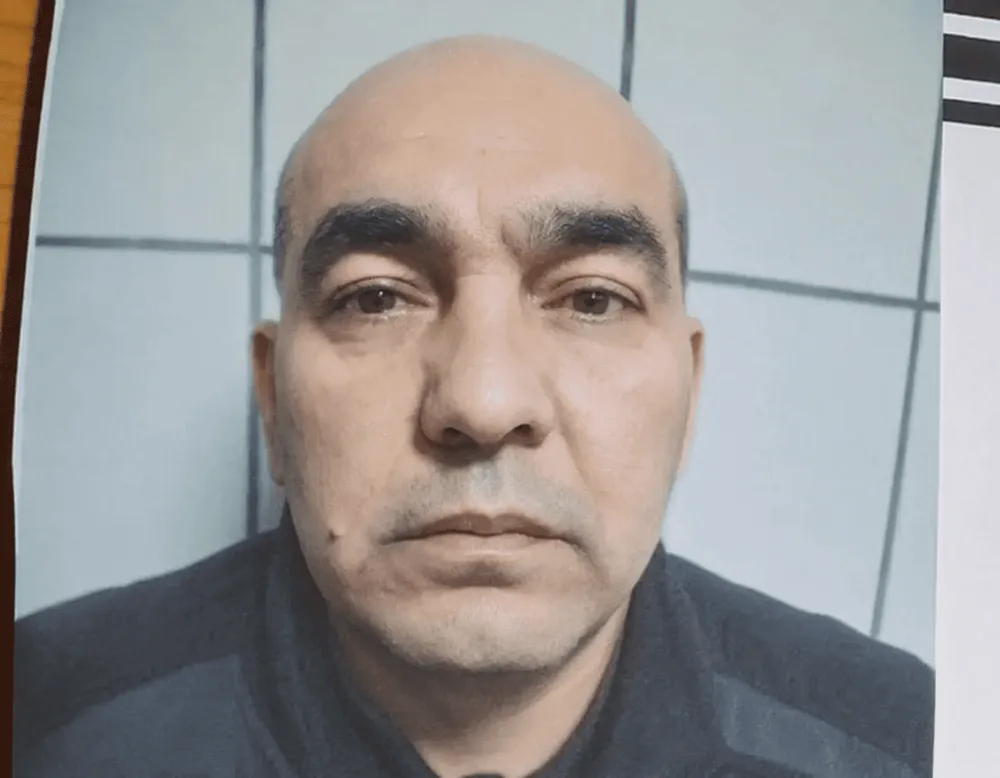
In July, the full prison term of Serhii Buhaichuk from Rivne, who was convicted in Russia on fabricated charges back in 2018, came to an end. However, he was not released. Activist Olha Bendas, who was waiting for Buhaichuk outside the prison colony in Tula, said that a Ukrainian flag was planted among the man’s personal belongings. During the “seizure,” the word “Azov” was written on the flag. The guards allegedly beat the man in an attempt to force him to sign a seizure report. Buhaichuk, who had previously pleaded not guilty at the “trial,” also refused to sign the report.
According to Bendas, in front of her, Buhaichuk was dragged out of the prison colony and taken to what later turned out to be a detention center for foreign nationals, where former Ukrainian prisoners are held in captivity without any fixed release date or until new criminal cases are fabricated against them.
MIHR Managed to Identify Most of the Convicted Individuals
In July, 20-year-old Viktoriia Maksymenko from Mariupol was sentenced to 13 years in prison for allegedly cooperating with Ukrainian intelligence services. Twenty-one-year-old Mykyta Kovalchuk from Makiivka was sentenced to 23 years. He was accused not only of passing information but also of helping organize the bombing of a vehicle carrying Russian military personnel.
Pavlo Hortenko, 23, and Yevhen Chukhnо, 24, from Zaporizhzhia region were sentenced to 15 and 20 years in prison, respectively, for allegedly attempting to blow up a railway track. The young men were tried as “members of a terrorist organization.”

Fifty-five-year-old Volodymyr Zosich from Crimea and 59-year-old Maryna Kovalenko from Luhansk region were also convicted of cooperating with Ukrainian intelligence services. Zosich, who was additionally accused of allegedly storing explosives at home, was sentenced to 17 years in prison. Kovalenko, who was also abducted in Crimea, was sentenced to 13 years.
A 56-year-old woman from Crimea and two men, aged 58 and 63, from Zaporizhzhia region were convicted for transferring money to support the Armed Forces of Ukraine. The woman’s name could not be established; it is only known that she is a resident of Bakhchysarai district. She was sentenced to 15 years in prison for allegedly transferring about UAH 11,000.
Vitalii Ilyin from Dniprorudne and Viktor Nikitenko from Pryazovske, Zaporizhzhia region, were each sentenced to 12 years in prison: the former for transferring UAH 1,000, and the latter for transfers totaling approximately UAH 1,500 and purchasing military bonds worth nearly UAH 500,000. The Interior Ministry’s wanted-persons database states that Ilyin disappeared in December 2024, while Nikitenko disappeared in March 2025.
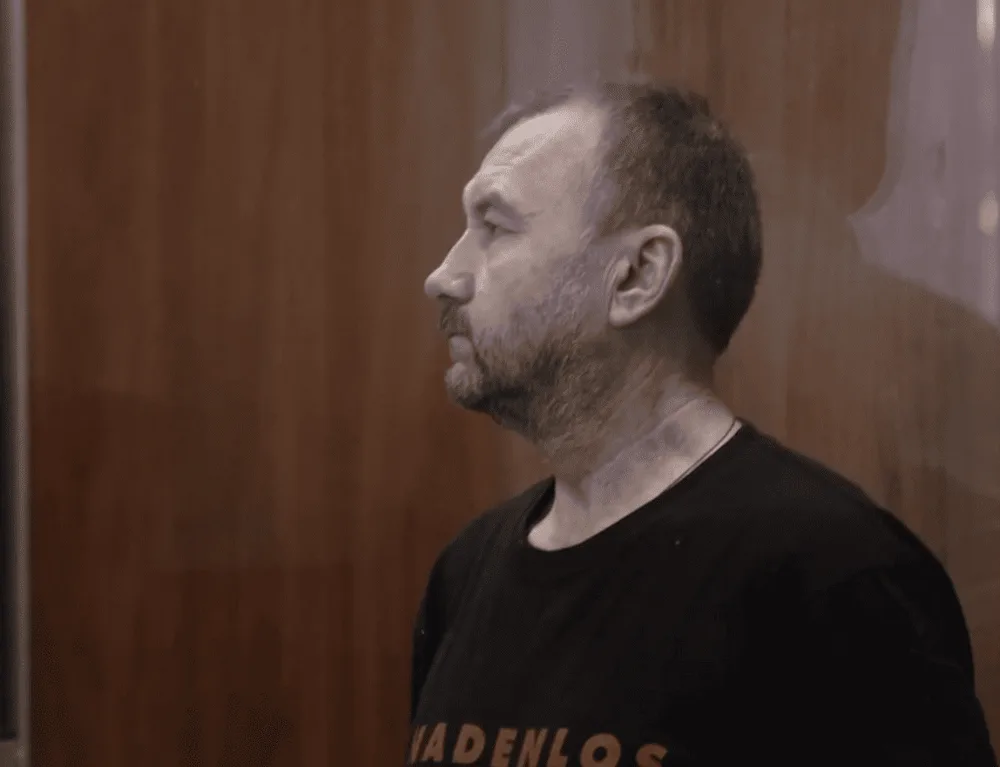
For allegedly cooperating with Ukrainian intelligence services, 36-year-old Oksana Ptakhina from Melitopol was sentenced to 18 years in prison, while 36-year-old Artur Didenko from Oleshky and 40-year-old Roman Riabchyk from Melitopol were sentenced to 13 years.
Riabchyk was also accused of posting public calls on Facebook to kill Russian military personnel.
According to Russian repressive agencies, Ptakhina joined a “terrorist organization” that included one of her relatives. She allegedly also recruited another relative to cooperate with it. The woman and the man were allegedly involved in passing information about the locations of Russian troops and military equipment.
Oksana was added to Russia’s register of extremists and terrorists along with her brother, 38-year-old Oleksandr, but nothing is known about his case. Oleksandr Ptakhin is not listed in the Interior Ministry’s wanted-persons database, while Oksana is. She was abducted in late spring or early summer 2023.
A man from Tokmak was also sentenced for allegedly passing information about the locations of Russian troops and military equipment. The occupation court and the FSB directorate in Zaporizhzhia region gave different dates of birth for the man — 1972 and 1973 — and did not disclose his first name. However, in a video of the verdict announcement released by the “court,” his surname can be heard as Ulanov. The Memorial project, which supports political prisoners, identified the man sentenced to 12 years in prison as 52-year-old Anatolii Ulanov and noted that he has a disability.
Another six men convicted in July were allegedly involved in preparing terrorist attacks on orders from Ukraine’s Defence Intelligence. Four of them were also tried on charges of “high treason.” Forty-three-year-old Illia Mezhankov from Horlivka was sentenced to 22 years in prison, while 44-year-old Denys Zhyrakov from Melitopol was sentenced to 24 years. Two other men from Crimea, who have not yet been identified, were sentenced to 21 and 22 years in prison, respectively.
The names of two other “terrorists” have not been disclosed. They were men from Kherson region, born in 1977 and 1979, who were sentenced to six and 6.5 years in prison for allegedly storing and handing over weapons, ammunition and explosive devices to “other members of a sabotage and reconnaissance group” to carry out attacks on members of the occupation administration, including “Governor” Volodymyr Saldo.
In June, the same court in Rostov that sentenced the unnamed men began “hearing” the case against Kherson residents Oleksandr Kruchynenko and Mykola and Serhii Semeniuk, who are accused of plotting attacks on Saldo and others. Available information about the case indicates that at least two other defendants were allegedly directly involved in preparing the “terrorist attacks.”
“Memorial. Support for Political Prisoners” reported that another “terrorism” case involving residents of Kherson region was submitted to the court in April, separate from the case against Kruchynenko and the Semeniuks. Its defendants are Viktor Vysotskyi and Serhii Aleksiyenko. The Interior Ministry’s wanted-persons database lists Viktor Vysotskyi, born in 1979, and Serhii Aleksiyenko, born in 1977, both from Kherson, as missing since June 28, 2022 — the same time that the Semeniuks and Kruchynenko were abducted in the city.
Thirty-one-year-old Oleksandr Mytiuk from Rubizhne and 50-year-old Oleh Doroshenko from Oleshky were sentenced to 5.5 and six years in prison, respectively, for allegedly having participated in the “Azov” nationalist battalion before the full-scale war. An unnamed 38-year-old Crimean resident was sentenced to nine years on similar charges.
“Mediazona,” citing Russia’s Southern District Military Court, also reported that a 44-year-old man named Serhii Piskun was sentenced to 16 years in prison for serving in the “Donbas” battalion in 2018–2019. MIHR was unable to find any additional information about the defendant or the verdict. Russia designated “Donbas” as a “terrorist organization” in 2025.
One sentence related to social media activity is known: 50-year-old Mykola Semiletov from Crimea was sentenced to four years in prison for allegedly calling for the destruction of the Crimean Bridge and the killing of Russians and their leaders. Until recently, sentences for “anti-Russian” posts and comments on social media accounted for perhaps the largest share of punishments under “political” charges.
New “Political” Cases in the Occupied Territories
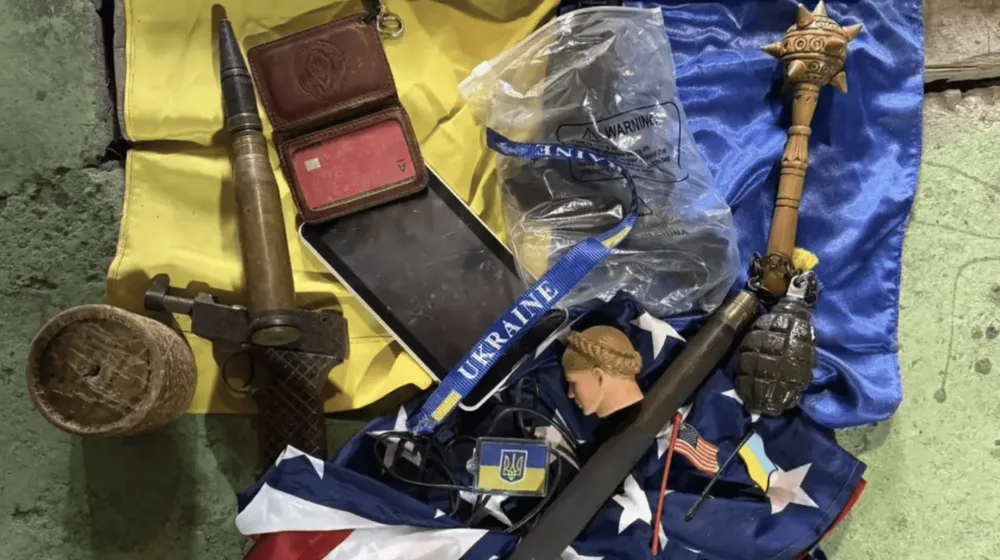
There were also many people among those detained on “political” charges in July who had allegedly incurred the Russian regime’s disfavor through disloyal posts and comments on social media. A 27-year-old woman and a 44-year-old man in Crimea were detained for allegedly calling for the destruction of Russian military personnel, military facilities and equipment. The report about the man said that “items bearing Ukrainian symbols, as well as U.S. flags and chevrons” were found in his garage. Another Crimean resident, aged 25, was detained for allegedly approving of the terrorist attack at Crocus City Hall in Moscow and Ukrainian strikes on Russian oil refineries.
A resident of Melitopol was also accused of allegedly calling for the killing of Russian military personnel, while a resident of Yasynuvata allegedly spread his “extremist” calls to all Russians. Russian authorities also searched for another resident of the occupied part of Donetsk region as a suspected administrator of a Telegram channel that published the aftermath of Ukrainian shelling. Since summer 2025, Russian authorities have begun prosecuting people who publish such material.
Russian authorities said they detained, on suspicion of allegedly passing information to Ukrainian intelligence services, men aged 43, 55 and 56 from Kherson region; men aged 49, 57 and 63 from Luhansk region; Crimean residents aged 30 and 35; an unidentified woman from Donetsk region; and a man from Pokrovsk named Vladyslav Akimov.
Regarding the latter, Russia’s state-run news agency TASS claimed that he was a deserter from the Ukrainian Armed Forces who had been coerced through blackmail into spying in Donetsk “under the guise of a refugee.” The agency openly stated that the “spy” was detained during a “filtration” procedure and that he was not the first person to suffer such a fate.
The cases involving residents of Luhansk region stand out from the patterns typically used by Russian authorities in fabricating “political” cases. At the same time, the occupation FSB directorate stressed that the cases are unrelated.
For example, a 63-year-old resident of Stakhanov allegedly recorded conversations of Russian military personnel in his bathhouse, where he had installed listening equipment.
Meanwhile, a 49-year-old resident of Luhansk allegedly joined the occupation Interior Ministry on instructions from the SBU in order to monitor its activities from within. This is at least the second case involving a former employee of the occupation police in Luhansk region: in March, 32-year-old Ruslan Domariov, a former Ukrainian patrol officer from Rubizhne who joined the occupation police, was sentenced to 20 years in prison.
A similar case involved Valentyn Pashkevych from Kherson, who was sentenced to 13 years in prison in June for allegedly passing information to Ukrainian intelligence services. Ukrainian investigative authorities suspect him of working for the occupation police in Kherson region.
A 34-year-old woman was detained on suspicion of allegedly passing information about military facilities in Crimea to Ukrainian intelligence services. She was also accused of allegedly transferring money to support the Armed Forces of Ukraine. A 59-year-old resident of Yalta was also detained on the occupied peninsula. She allegedly stored explosives that were used to blow up the vehicle of an officer of Russia’s Black Sea Fleet in 2024.
A 28-year-old resident of Kherson region was also detained on suspicion of preparing a terrorist attack involving explosives. In July, the FSB also reported the arrest of four men in Zaporizhzhia region — Artem Davydov, Maksym Potseluiev, Anatolii Rudenko and Dmytro Nosenko. They allegedly shot dead three Russian servicemen on the territory of the Zaporizhzhia Nuclear Power Plant in 2022.
The Russian repressive agency’s statement said that the men had been detained as early as May. At the same time, Rudenko and Nosenko, both from Enerhodar, were added to the register of extremists and terrorists back in 2025. Moreover, both were sentenced to 19 years in prison in March 2026 for allegedly serving in “Donbas” from 2017 to 2020. It is more likely that these are the same individuals, rather than people who simply share the same hometown or surnames.
No information about Artem Davydov and Maksym Potseluiev could be found, apart from the fact that a person named Maksym Potseluiev did indeed live in Enerhodar.
This material was published with the support of the European Endowment for Democracy (EED). Its content does not necessarily reflect the official position of the EED. The information and views expressed in this material are the sole responsibility of its authors.
Tags: human rights occupied Ukraine political repression Russia-Ukraine War Russian repression Ukrainian Civilians Ukrainian Political Prisoners