
A visit to the Chornobyl exclusion zone and confinement shows the current state of the plant, the impact of drone attacks, and working conditions near the sarcophagus of Reactor Unit 4.
On February 24, 2022, employees of the Chornobyl Nuclear Power Plant and National Guard troops protecting it were among the first to see the invading forces.
The plant is located just 16 kilometers from the border with Belarus, so Russian troops quickly entered the territory of the Chornobyl Exclusion Zone and occupied it.
In early April of the same year, the plant was liberated by Ukrainian forces. However, while retreating, the Russians took 169 National Guard troops prisoner and stole expensive equipment worth over $100 million.
Before 2022, visitors could access the Chornobyl Exclusion Zone even as tourists, and it was a fairly popular destination. After the invasion, access to the plant has been closed, and it is impossible to enter without a special permit.
However, shortly before the 40th anniversary of the Chornobyl disaster, Ukrainska Pravda, together with Greenpeace, managed to visit the plant and enter the ominous fourth reactor unit.
Here is what they saw there.
The April sky is tightly covered with gray clouds. Darker and lighter ones overlap, dropping sleet onto the ground. The wind tries to cut through several layers of clothing to sting any exposed skin. Empty space all around.
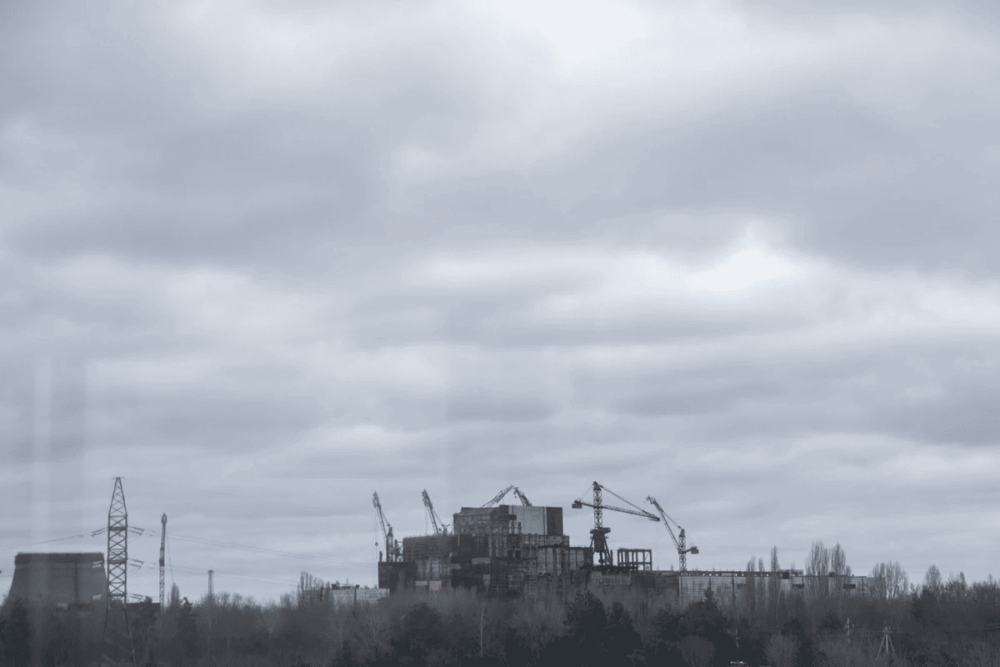
On the horizon stands the rusted and abandoned fifth reactor unit of the Chornobyl Nuclear Power Plant. It was supposed to be launched into operation in late 1986, but after the explosion at the fourth unit, construction was never completed. For 40 years, it has stood out in the open, surrounded by the skeletons of rusted cranes.
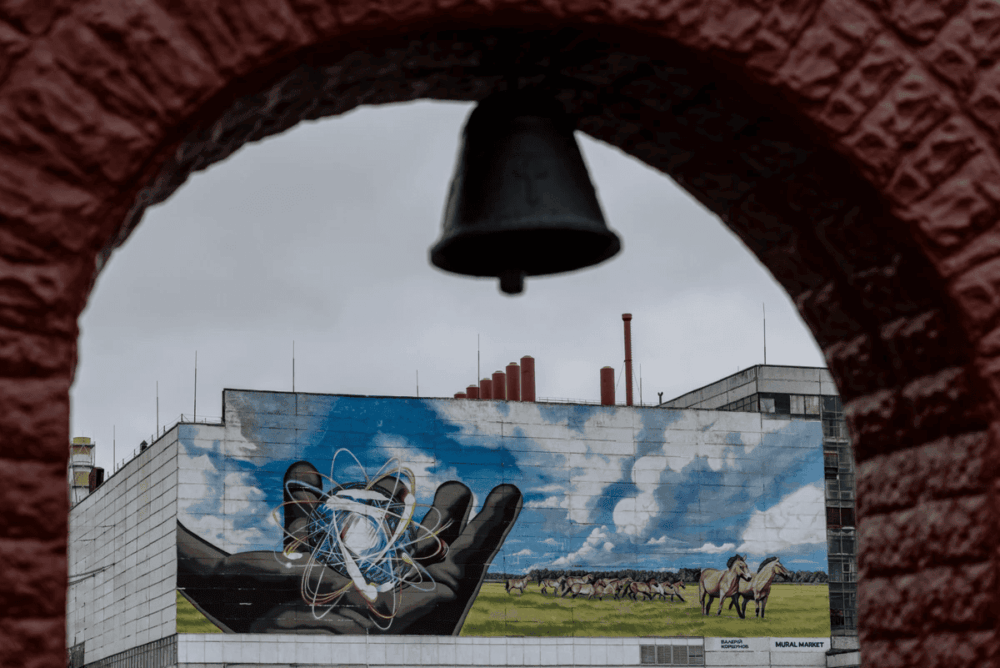
Behind us is a memorial to those who died nearly half a century ago while trying to extinguish the fire at the nuclear reactor. Ahead is the main building of the plant. Gray concrete against a gray sky is broken by a massive mural depicting a human hand with a peaceful atom in the foreground and Przewalski’s horses in the background.
Forty years ago, due to the policies of the Soviet Union, one of the largest man-made disasters in human history occurred here: Russia (or rather, the USSR) concealed flaws in the RBMK-1000 reactors, covered up earlier, smaller-scale incidents, and the experiment that led to the explosion of the fourth reactor unit was poorly planned.
When the reactor was effectively “breathing” into the outside world, the Soviet authorities chose not to inform their citizens about the potential risks, instead going ahead with the International Workers’ Day parade in Kyiv, just about 100 kilometers from the site of the explosion.
Later, during the investigation, the leadership placed the blame solely on the plant personnel. And the damage caused by the tragedy remains difficult to fully calculate to this day.
However, even 40 years after the tragedy, Russia still does not leave Chornobyl in peace. As we stand in line for a dosimeter, a siren wails — drones are flying over the Chernihiv Oblast, likely heading in our direction.
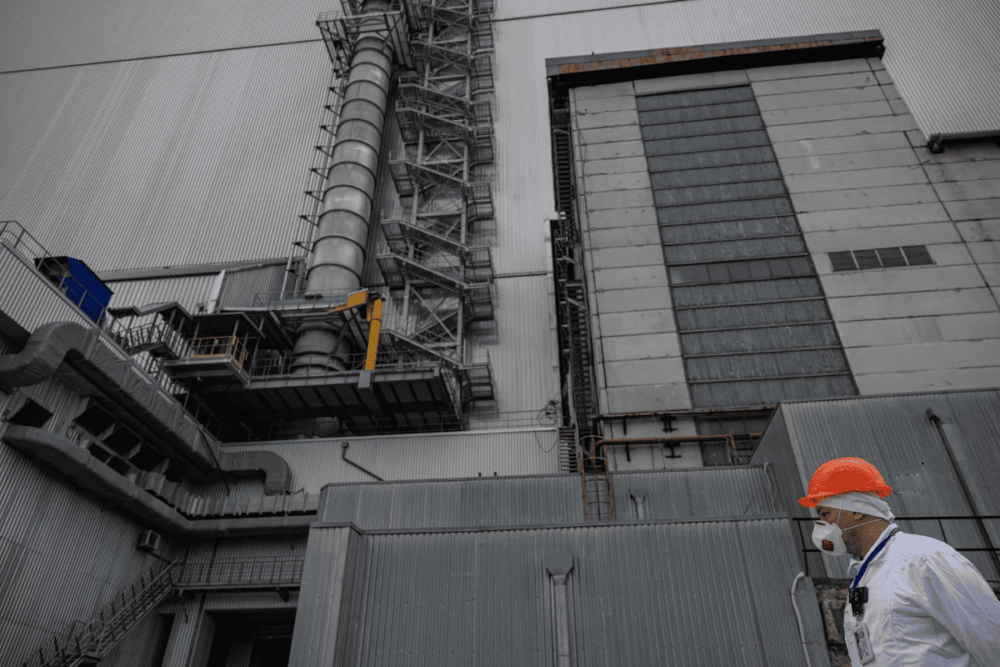
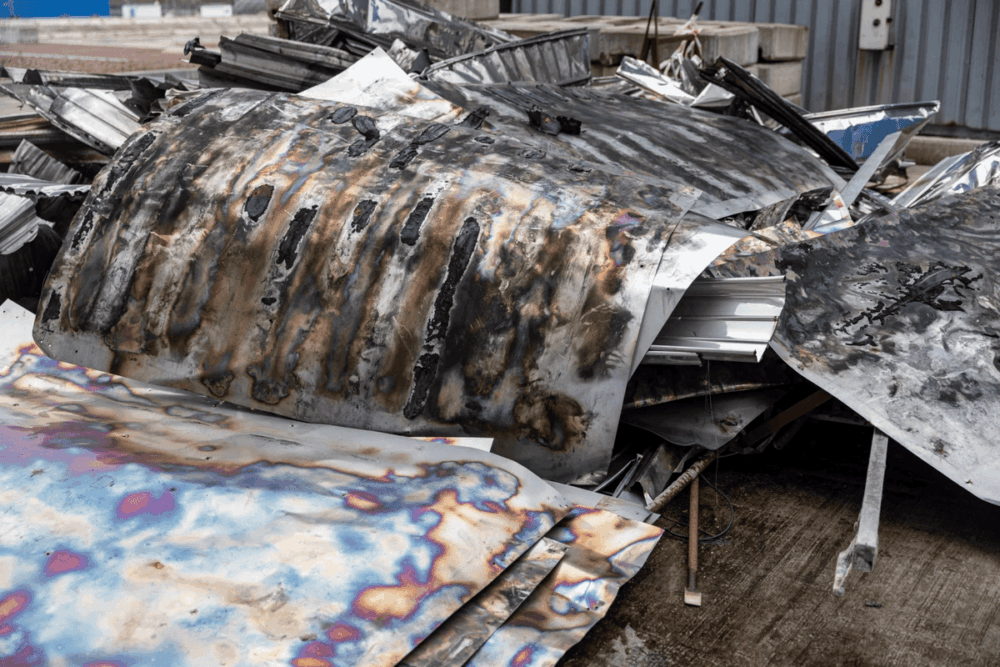
In fact, one of the “Shahed” drones attacked the New Safe Confinement (NSC — or, as some call it, the Arch) on February 14, 2025. As a result, a 15-square-meter hole was punched in the NSC. The layer of materials beneath the metal shell, which was meant to protect the outside world from the sarcophagus and the sarcophagus from the outside world, began to smolder. Firefighters had to cut into the structure to extinguish the fire. As a result, more than 300 smaller holes were added to the original large one, allowing snow and water to get inside.
From a distance, however, the damage is not visible: the confinement looks like a large arch covering the reactor of the Chornobyl Nuclear Power Plant. According to the original plan, over the next hundred years, several generations of plant workers were supposed to dismantle the sarcophagus and the radioactive debris that part of the fourth reactor unit had turned into, using special cranes.
Now, engineers must figure out how to reseal the confinement to maintain stable temperature and pressure inside. After all, foreign experts and workers are unlikely to agree to work under Russian drones that periodically fly over the exclusion zone.
According to optimistic forecasts from the management of the Chornobyl Nuclear Power Plant, restoring the confinement’s airtightness could take several years: the work will have to be carried out at significant heights and under the influence of radiation.
Getting under the arch, to the sarcophagus, is not that easy either. First, you have to pass through the so-called “golden corridor” — a long passage that connects all four reactor buildings of the Chornobyl Nuclear Power Plant.
But before that, you need to change clothes: access to contaminated areas is allowed only in clothing that never leaves the plant’s premises.
The changing room feels more like a hospital: bare walls, narrow metal lockers. The space is flooded with a pale white light that makes your eyes ache — you constantly want to turn up the brightness.
First, we change our shoes: we leave our own at the entrance and put on local flip-flops. Then we undress at the lockers, leaving only our underwear. In the next room, we are issued two sets of trousers and shirts. On top — jackets; on our heads — caps and helmets. Fresh socks and replacement shoes. Everything, except for the blue jackets, is the same stark white as everything around us.
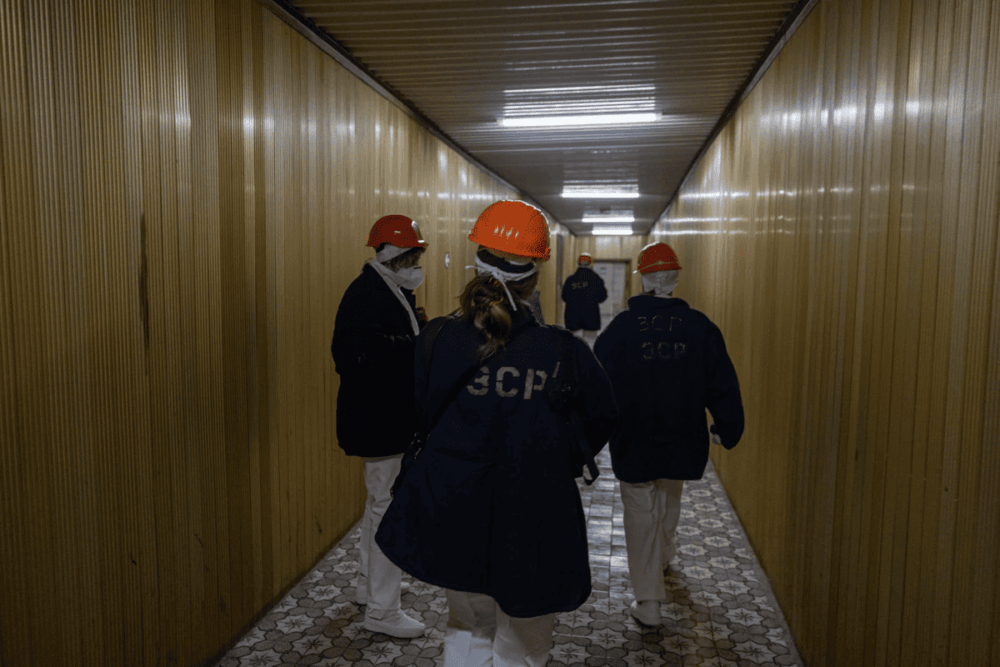
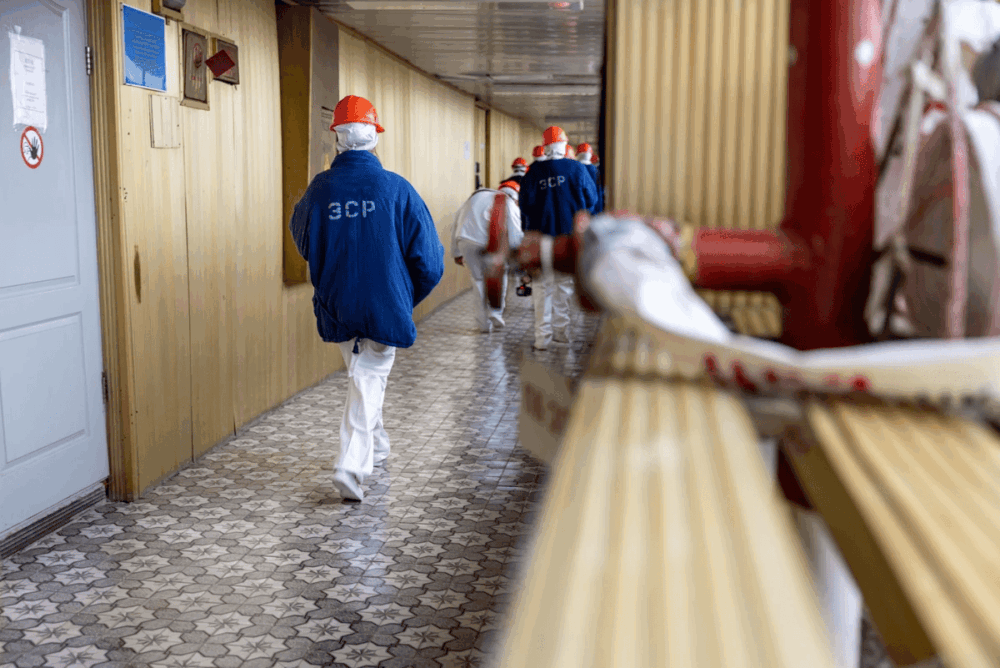
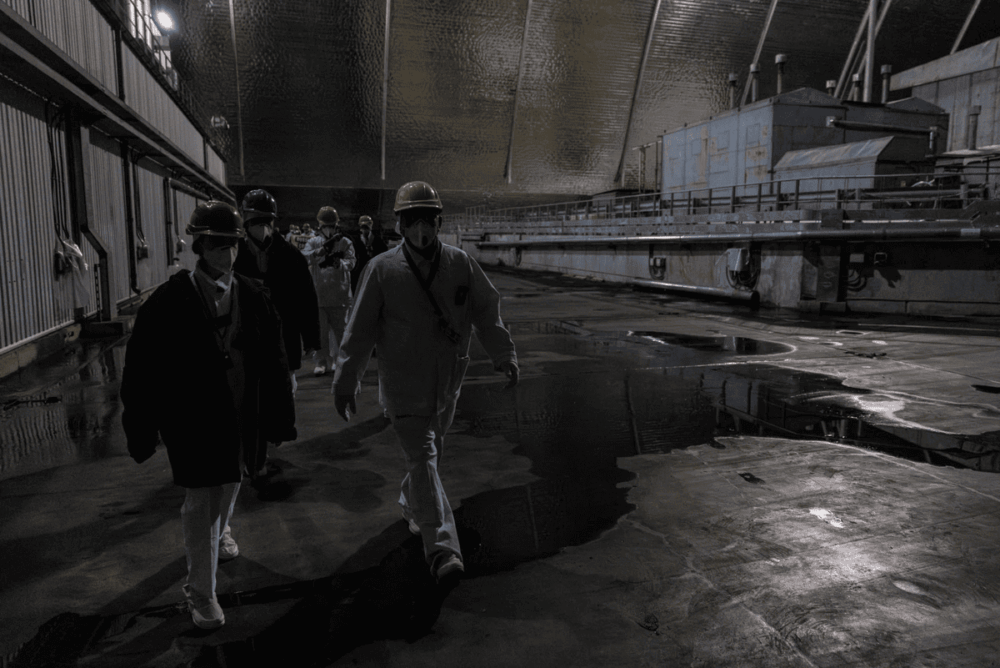
We walk through dim corridors. The cold moves with us — it feels omnipresent. At least indoors, there is no wind. Sometimes there are no windows at all, and the darkness is pushed back by yellow lamps that form small circles of light in the surrounding gloom.
The sound of dozens of footsteps echoes ahead of and behind us. It seems that so many people do not come here often. After a few minutes, we notice that the walls are lined with golden metal panels — the very “Golden Corridor.” As our guides explain, it is designed to shield against radiation at the Chornobyl Nuclear Power Plant.
Our escorts warn us: if anything falls onto the floor or the ground, it stays there until plant workers check it for contamination. In the worst case, it will have to be sent for decontamination.
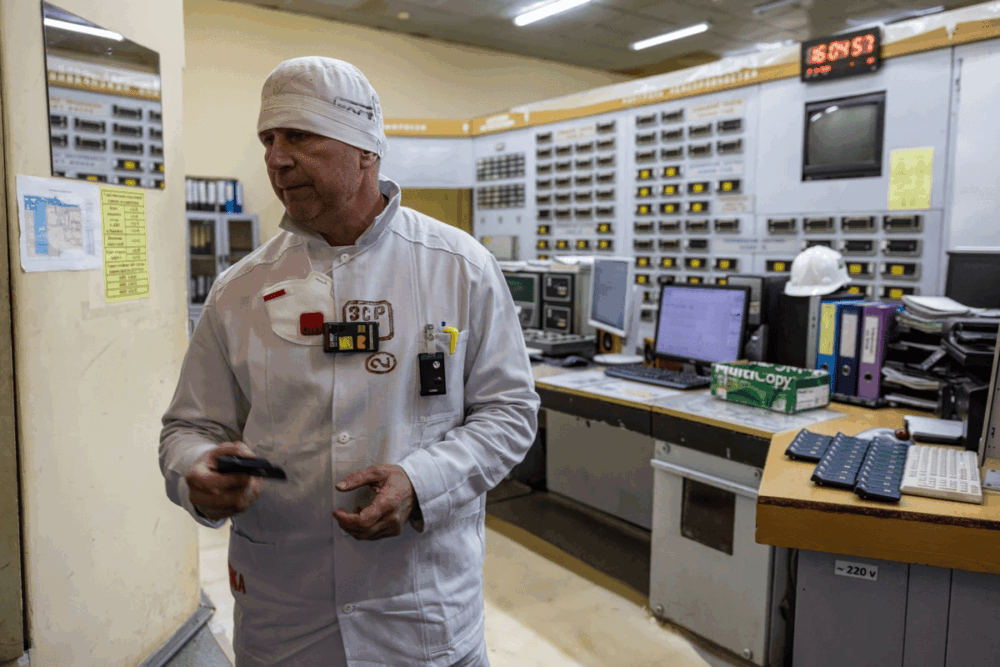
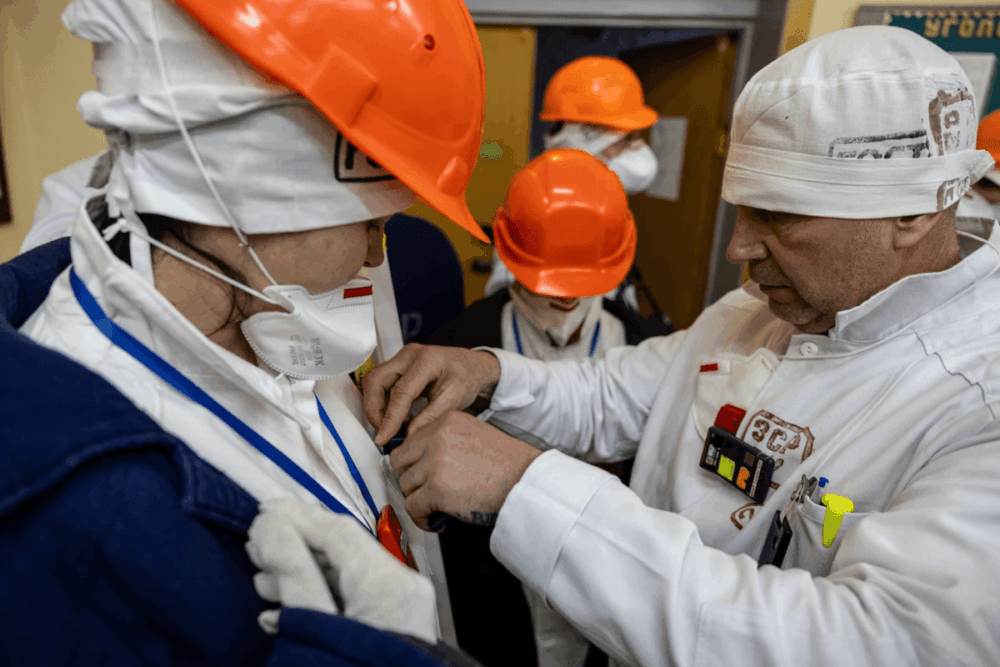
Talking, we make our way to the control room of Reactor Unit 3. It is a small room with several panels that once controlled the operation of the third reactor. Here, we are issued another dosimeter to track the amount of radiation exposure we receive. We put on respirators and gloves. From this point on, touching objects is strongly discouraged.
Another 20 minutes later, we find ourselves outside, right next to the confinement. A few dozen meters from the main wall lies twisted metal — what remains of the cladding after a Russian drone strike.
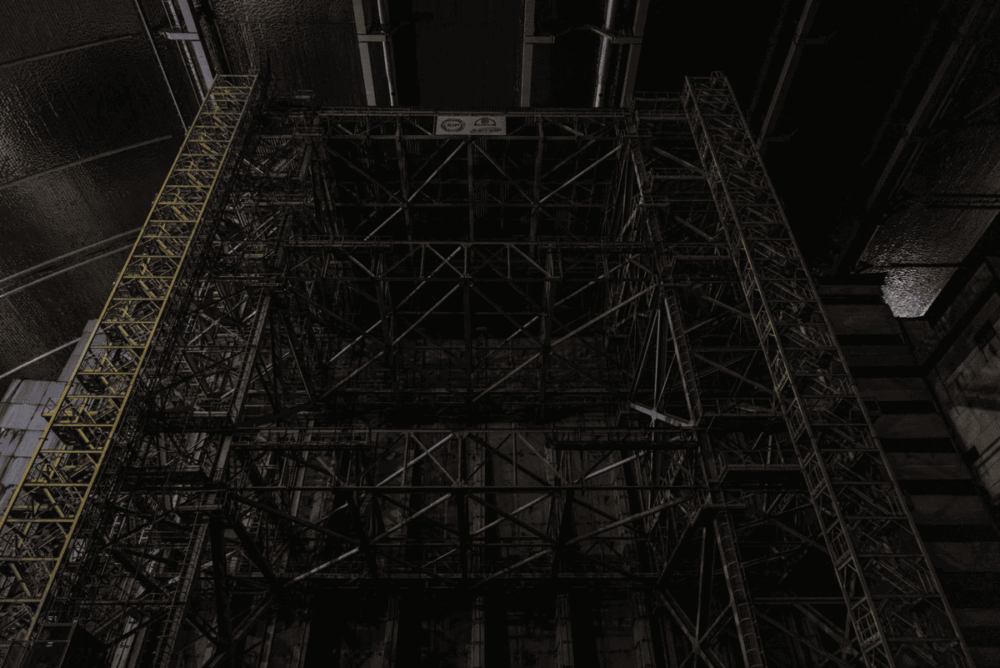
Up close, the arch looks enormous — more than 90 meters high and 270 meters wide. It could easily fit the Motherland Monument inside.
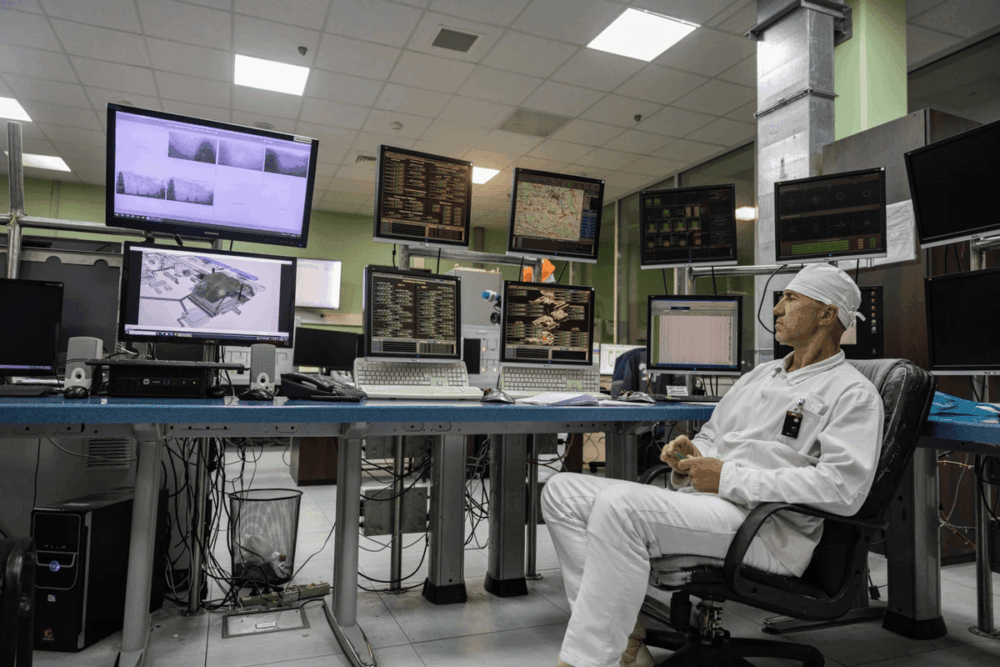
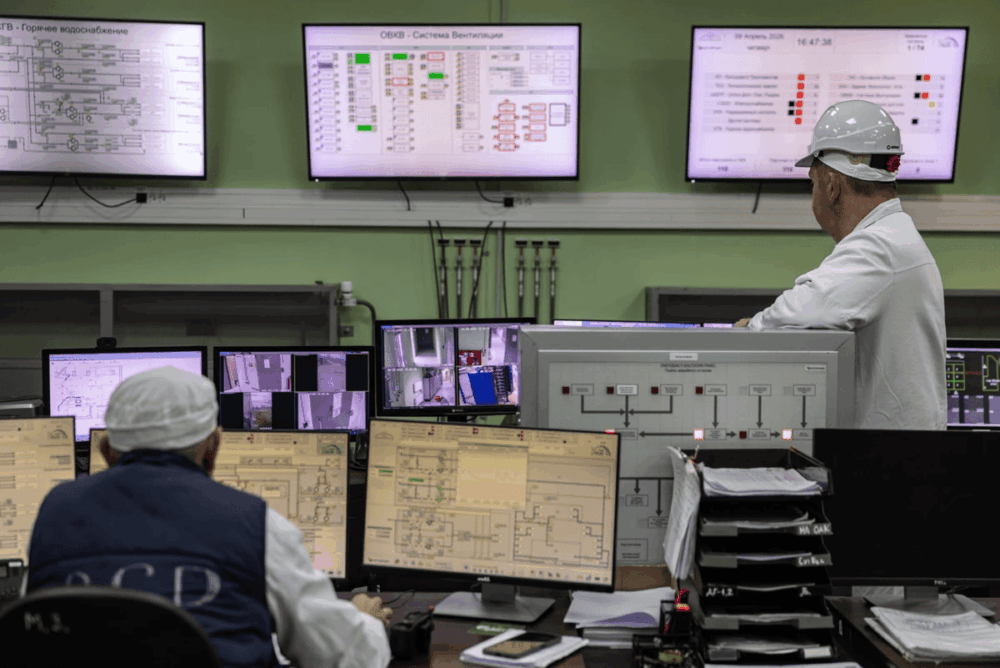
The control room of the confinement feels more like a futuristic spacecraft, filled with screens, computers, and buttons. Monitors display pressure, temperature, humidity, radiation levels, and who knows what else inside the structure. A few plant workers occasionally glance at the readings.
They say that after the Russian attack, radiation levels around the shelter did not increase critically, which is good news. But that does not mean it cannot happen in the future, so the structure needs to be resealed in the coming years. On top of that, radiation and environmental conditions will accelerate the aging of the confinement.
The sarcophagus, surrounded by engineering structures, looms over you as a concrete-and-metal monolith. You can’t take your eyes off these walls streaked with rust. Half of the building that once housed the fourth reactor unit disappears into the dimness. Somewhere there is the “Golden Corridor” as well. However, as plant workers explain, it is not advisable to enter the territory of Unit 4 — radiation levels there are higher, so that section of the corridor is avoided unless absolutely necessary.
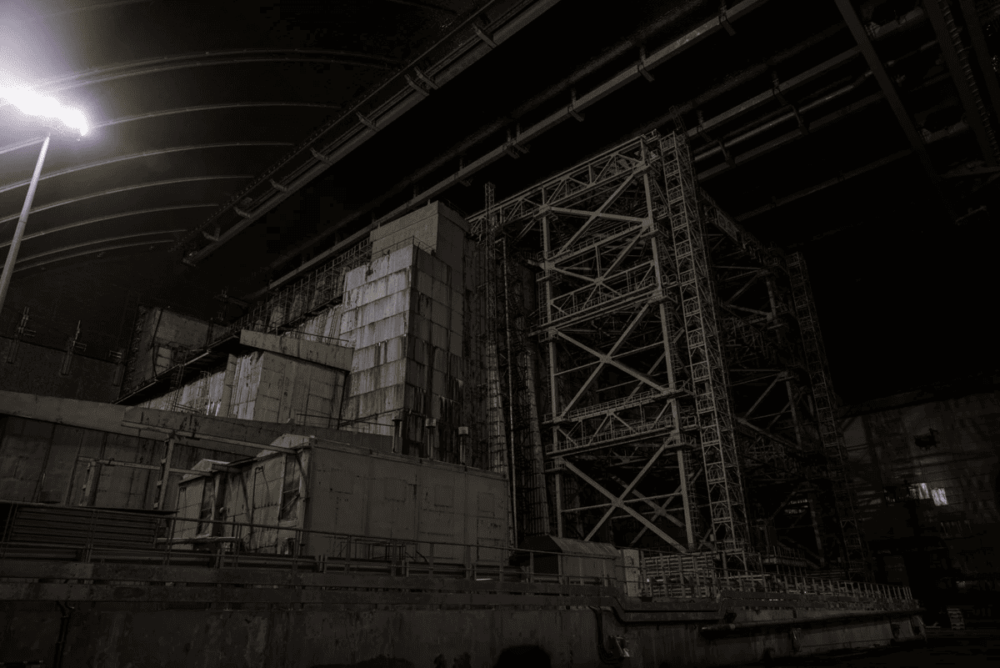
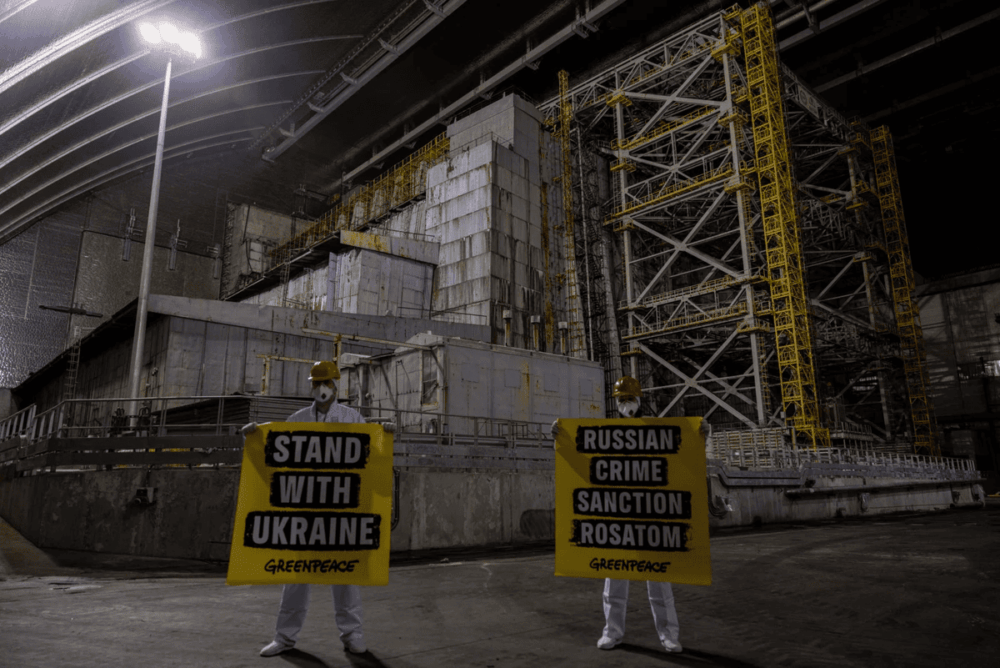
Suddenly, you lower your gaze and notice water under your feet — the aftermath of a Russian attack a year ago. Rain and snow seep through holes in the arch and run down onto the concrete floor, forming small puddles. We try to step over them to avoid soaking our feet. Plant workers usher us outside: it is not advisable to stay near the sarcophagus for too long.
We pass through several more sanitary control checkpoints and find ourselves in what is probably one of the most important rooms in modern history — as grand as that may sound. We are in the control room of Reactor Unit 4 at the Chornobyl Nuclear Power Plant. The place where the infamous button that triggered the apocalypse was pressed. It is no longer on the panel, by the way — nor is most of the equipment.
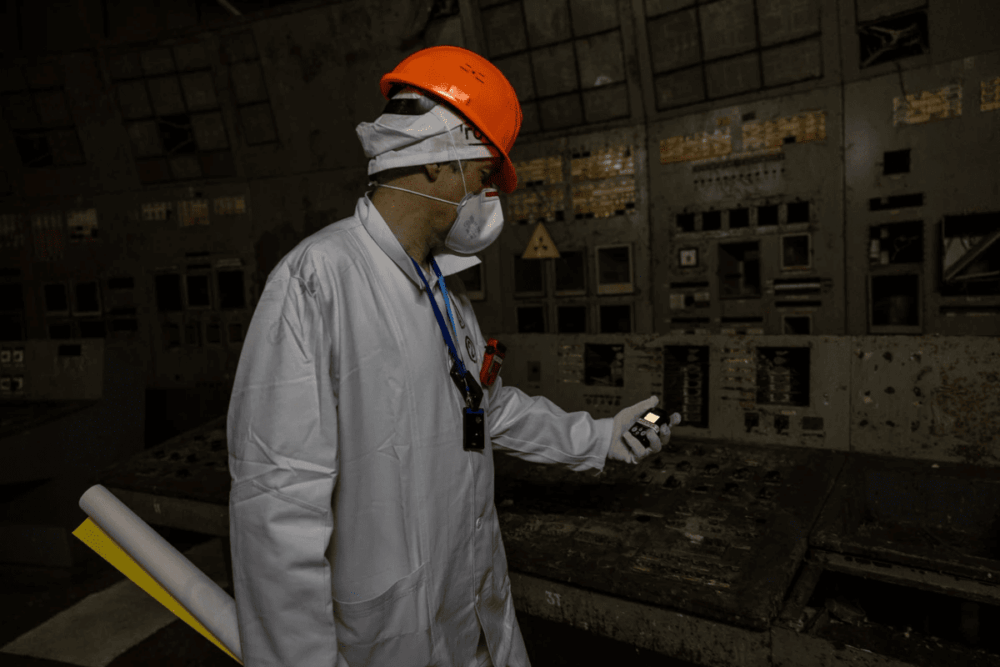
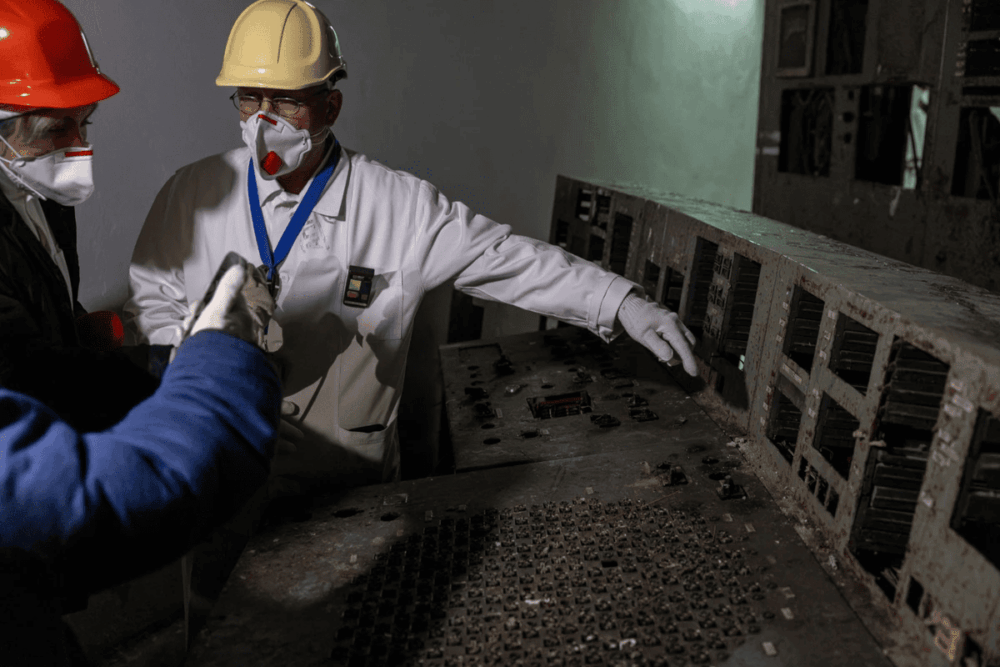
The panels here are covered in a gray dust. The dosimeter shows 23 microsieverts per hour: for comparison, the normal background level in Kyiv is 0.1 microsieverts per hour — in this room, you can receive in a single day roughly half a year’s worth of radiation exposure.
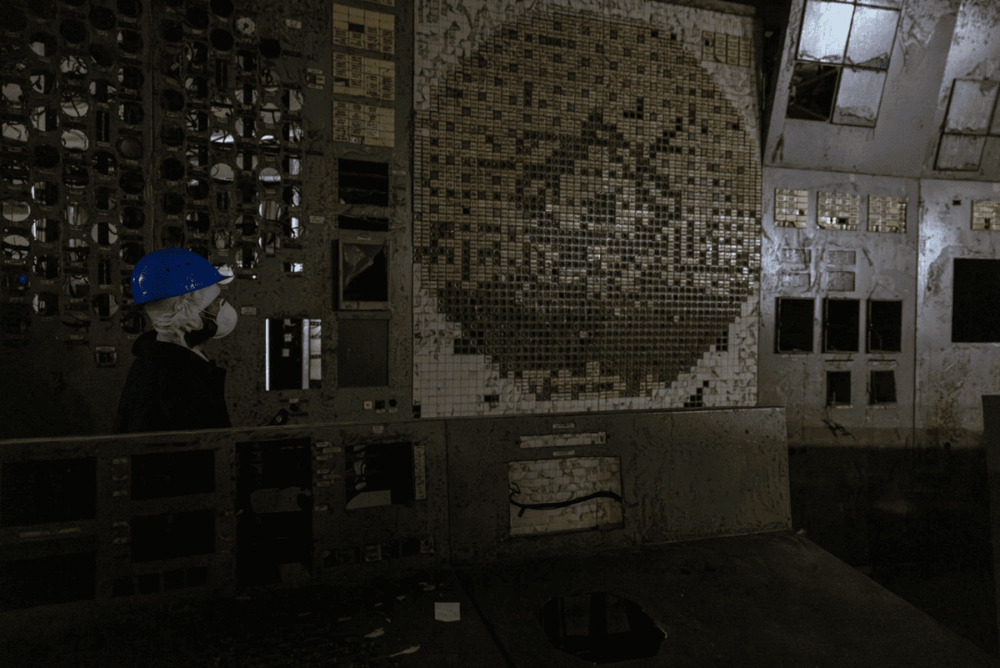
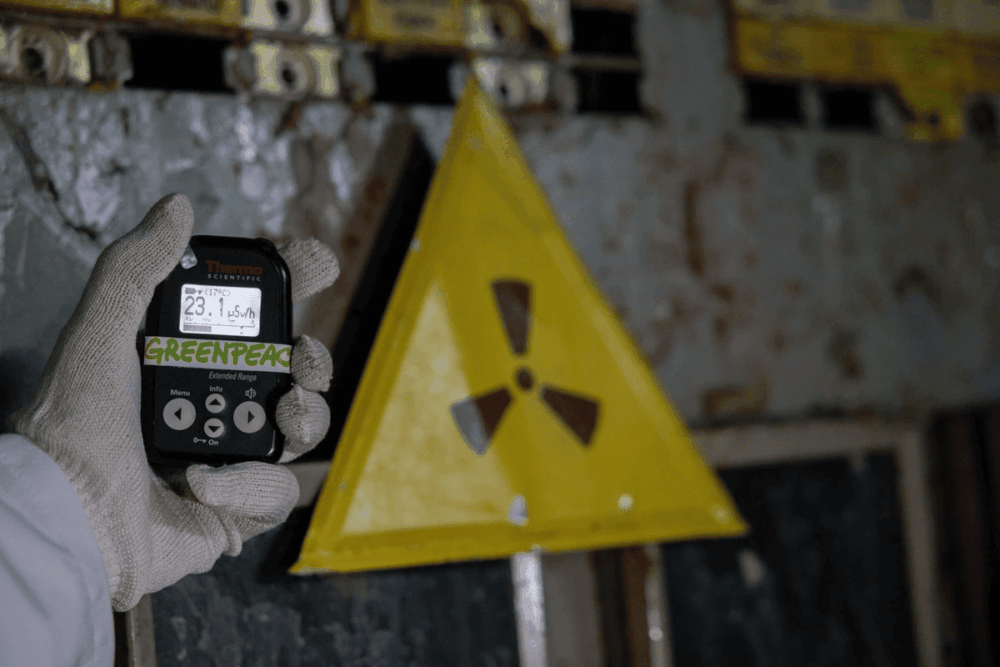
While we look around at the cold and desolation, plant workers explain that the control room of Reactor Unit 4 at the Chornobyl Nuclear Power Plant looks this way because of its age. During the construction of the sarcophagus, it was not properly sealed, so wind and rain did their work. Preservation of the room was only considered later, in the 2000s: part of the control room was then sealed off, creating a separate passage running parallel to the “Golden Corridor.”
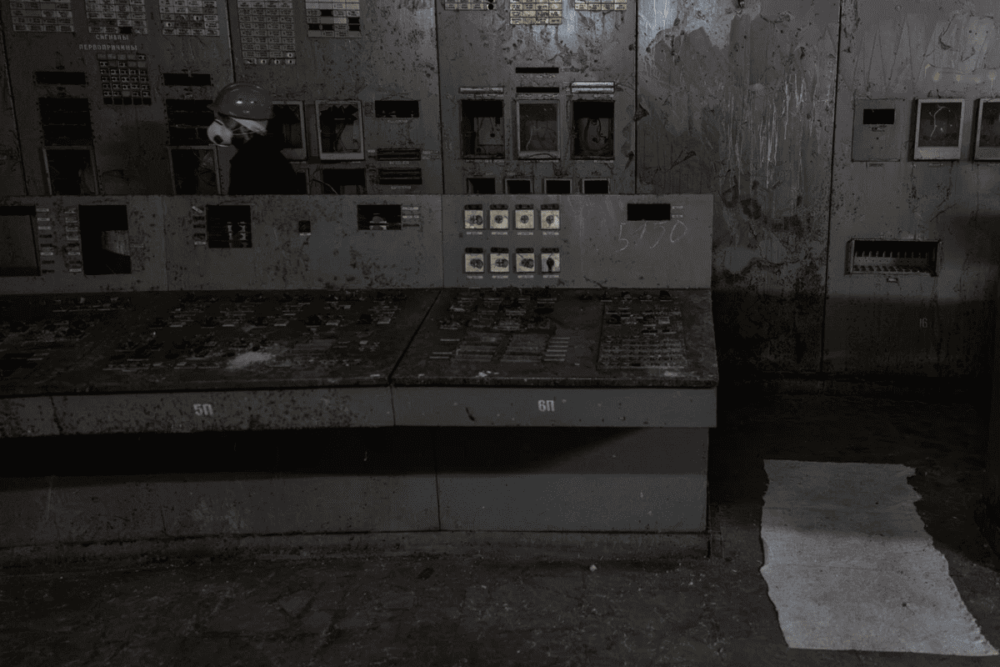
In silence, we return to the changing rooms. On the way, we hand in our dosimeters. In an hour and a half under the confinement and in the area of Reactor Unit 4 at the Chornobyl Nuclear Power Plant, each of us received about 20% of the daily radiation exposure limit.
In the changing room, we return the white clothing. An hour later, after additional checks, we step outside under the gray April sky.