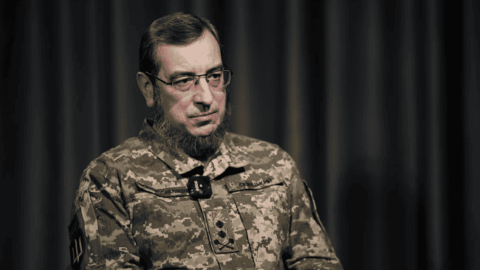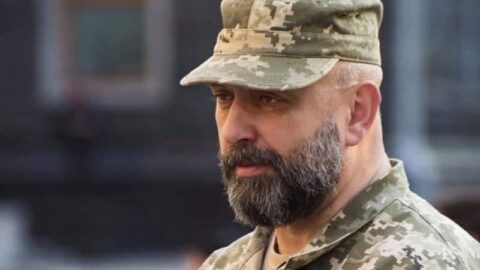
Sergeant Andriy “Nelson,” a former businessman, now SOF platoon commander, leads high-risk evacuations, island operations, and combat missions, highlighting teamwork, rapid decisions, and innovative military logistics.
In the past, he was a successful businessman. Today, he is a platoon commander for extraction and evacuation at the 144th Special Operations Forces Center. His experience includes evacuations from islands on the Dnipro River, where drones and mortars were used to break the ice to get our fighters out, as well as operations in Pokrovsk.
Sergeant Andriy “Nelson” is a Kyiv native who, six years before the full-scale invasion, was already preparing for a major war. He was part of the “Ukrainian Legion” and studied military affairs, which he later taught to others. By February 24, 2022, Andriy already knew exactly what he had to do.
Read Andriy’s interview for 24 Kanal to learn how “Nelson” faced the full-scale war, how the SOF fighters carried out exceptional operations in Kherson and Donetsk regions, and what sets SOF work apart from the tasks of other branches of the military.
Liberation of Kyiv Region and Training Abroad: How the Great War Began for “Nelson”
After six years in the public organization “Ukrainian Legion,” you joined the military when the full-scale war began. But why did you choose the Special Operations Forces?
We had a prior agreement with the SOF that in the event of a full-scale offensive, the entire “Legion” unit would enter service. The first missions in February–March were carried out in Kyiv and Chernihiv regions. We used personal weapons and vehicles, gathered information on enemy positions, and communicated with the local population.
We also split into groups to track troop movements. By then, we already had experience operating drones, which allowed us to relay precise coordinates for artillery.
You entered the military as a civilian. How did that change your life?
At my not-so-young age, I learned many new skills and met interesting people. Many of the guys I joined the military with are now company commanders, squad leaders, or deputy chiefs of staff…
Most people moved up not out of a desire to build a career in the military. Many of them were doing well in civilian life. I, for example, owned a company that manufactured and installed furniture. In the first year of the war, it still somehow operated, but then I had to choose — business or the military. I simply didn’t have the capacity for both.
Likewise, my comrades went to fight solely out of love for their land and a desire to restore justice.
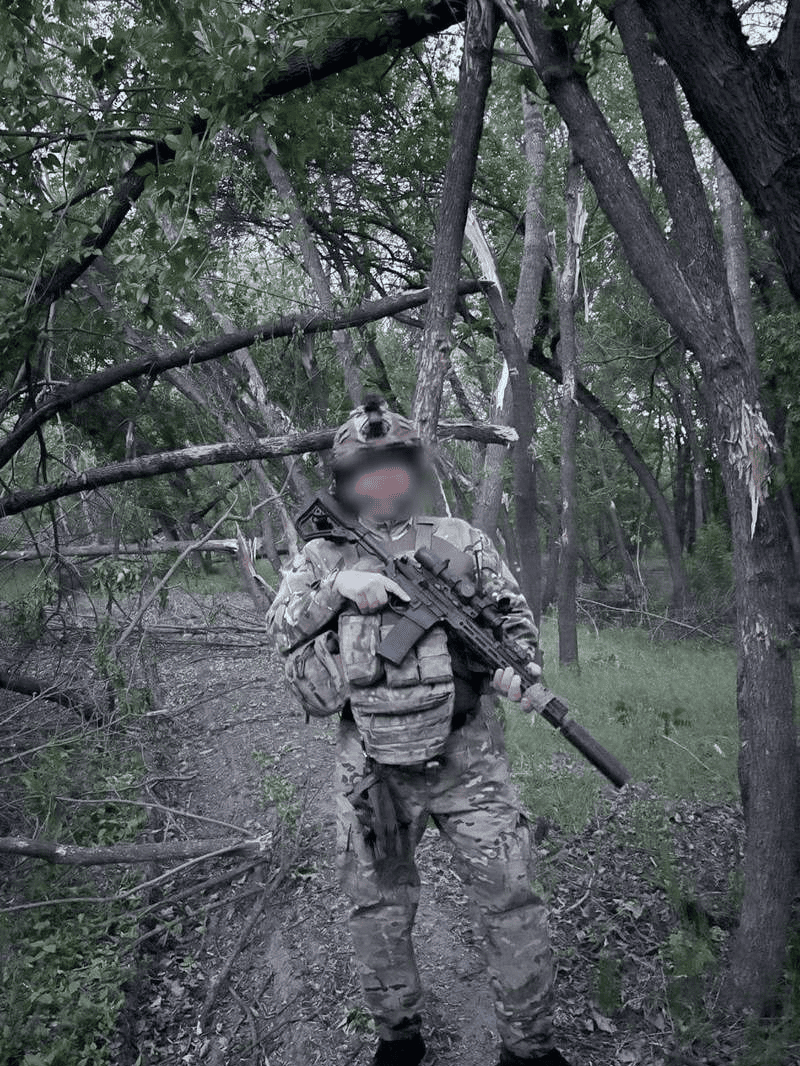
Surely, your callsign “Nelson” is in honor of the British naval commander Horatio Nelson?
Not quite! I actually had a different callsign, but in a chat on one of the messengers, I was accidentally signed as “Nelson.” And it just stuck.
After the liberation of Kyiv, Chernihiv, and Sumy regions, society was euphoric. Did the military feel the same?
There was fatigue and a desire for revenge. After the crimes committed by the Russians in Bucha, Hostomel, and Borodianka, we realized this war would last a long time. Quick solutions were no longer possible. But liberating the capital region was strategically important, and the contribution of the SOF was significant.
Next, we underwent two months of “ranger” training abroad with foreign instructors. We coordinated the unit, improved physical fitness and marksmanship, and acquired CQB skills — close-quarters combat, room clearing, operating in buildings, corridors, basements, and stairwells. At that time, we had no experience like this.
“Who controls the islands controls the passage”: On the battles on the Dnipro in Kherson region
After returning from this training, where did you go on combat missions?
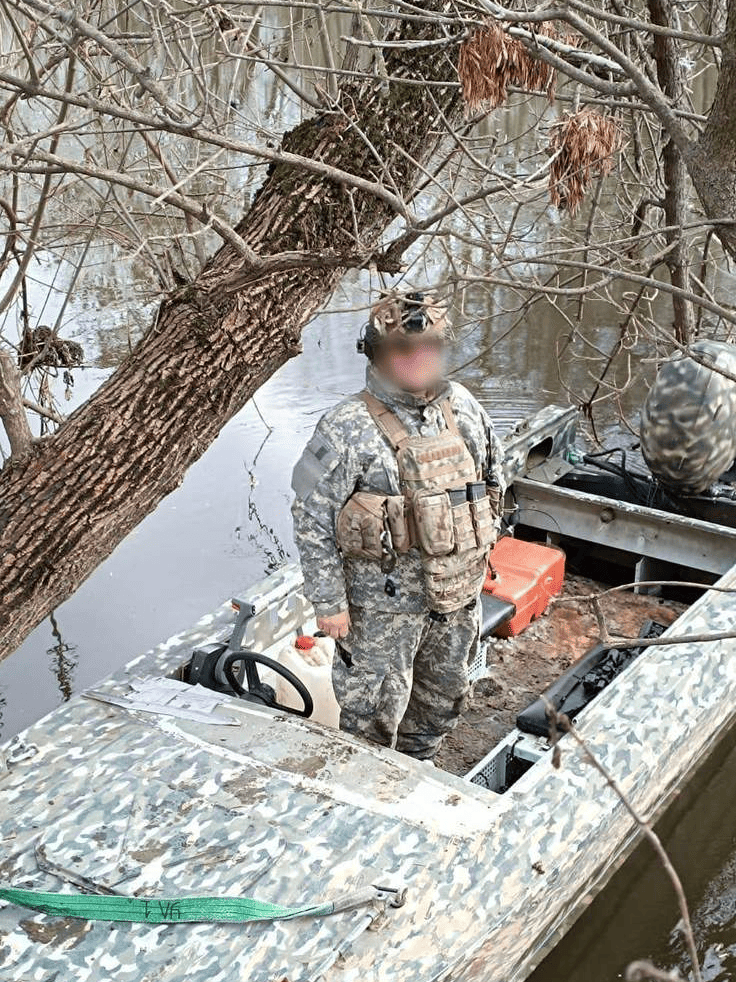
We spent almost a year in Kherson region. Kherson itself had been liberated, but the fight for the islands continued. We had no experience operating boats, so adjacent units transported our group to the islands, while we focused on our tasks — clearing, target spotting, and directing artillery. Later, we received our own boats and logistics and began operating independently.
Battles on the Dnipro islands are a specific part of the war that, unfortunately, is rarely discussed. What is the greatest challenge in these fights?
The psychological aspect: if an operation fails, getting off the island is almost impossible. I recall one mission on an island measuring 6 by 1 kilometer — a long, narrow strip. We crossed at night, secured positions, and stockpiled ammunition. Then, group by group, we went in to “clear” the island.
Every section saw fierce fighting because, as I’ll put it, whoever controls the islands controls the passage along the Dnipro. Our group successfully completed the missions; I served as the senior boat operator. I was responsible for the boats’ maintenance and reliability, as well as planning movements and evacuation. Initially, the islands were controlled by the Russians, but we eventually drove them out.
Many factors had to be considered. Before one winter operation, we calculated temperatures. Local residents provided information on when the water in the riverbed and channels would freeze. One group got stuck on the island and needed urgent evacuation. However, due to current-created channels and ice thickness, it wasn’t safe to cross on foot.
We launched a drone and found a path through weakened ice. Using drops from drones and mortars, we broke through thicker ice. This idea came from the unit commander, and after assessing the situation, we implemented it. The cold snap was approaching, and the group had to be evacuated by boat that same day.
A Particularly Risky Mission: Evacuating Fighters from the Pokrovsk Industrial Zone
What else do you work with besides boats? And do you carry out ground operations?
I am the platoon commander for extraction and evacuation at the 144th SOF Center. We handle transporting personnel to mission sites, logistics of food, ammunition, and everything else the troops need. We are part of a combat unit and carry out combat missions.
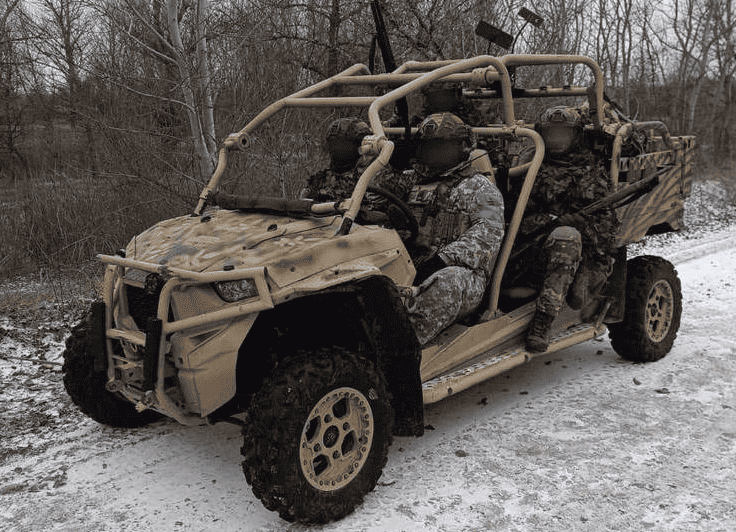
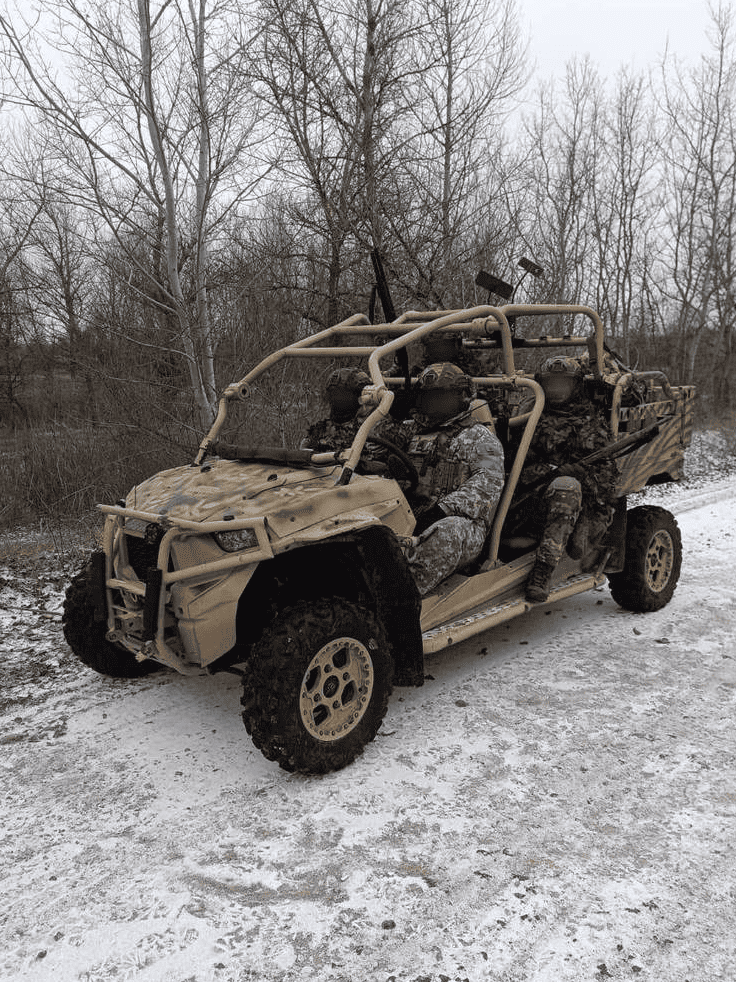
We have armored HMMWVs, regular off-road vehicles, buggies, and ATVs. On-site, we decide which transport is best to use. We also operate ground robotic systems and have evacuated wounded soldiers using them multiple times.
Has there been a mission that stood out the most or was particularly risky?
Usually, our goal is the infiltration and exfiltration of combat groups. Sometimes this happens up to the front line, sometimes on it, and sometimes on enemy territory. The situations vary greatly.
In Pokrovsk, we had to extract our guys from an industrial zone with more than a dozen buildings, and only one of them held our troops. All the others were under enemy control. We took the risk and went in with two HMMWVs manned with machine gunners. The mission was to breach the area, suppress the enemy with fire so they couldn’t leave the buildings, and evacuate our guys. The operation was planned down to the smallest detail. Everyone knew their role, even for scenarios where something went off-plan. In the end, the mission was completed without any losses — not a single casualty.
Other stories? That’s probably more a question for the guys in the groups. As a driver, the work is mostly routine and carefully thought out. You try to operate in a way that no “interesting” incidents occur.
The fighters need to be 100% confident that logistics won’t fail. That’s one thing they shouldn’t have to worry about. During our entire service, we’ve never had a case of being late, failing to deliver supplies, or, God forbid, leaving our own behind.
“There Are No Random People in the SOF”: On the Nature of Service and Risks
How did your commanders recognize your work?
The greatest reward is bringing the guys back alive. Everything else comes later. Sometimes you have to take risky actions to save lives. People laughed at us when the Russians drove around on buggies, but there are situations where this type of transport is actually the most suitable.
For example, in the Sumy direction, in the forests, nothing passes except buggies and ATVs. The choice is either for the group to walk 25–30 kilometers on foot or to transport them on a buggy. The Russians learn from us, and we learn from them. The war is constantly evolving: four years ago, a soldier with a drone was considered top-notch, and every unit wanted him. Now, the drone has become a primary tool of warfare.
How does service in the SOF differ from other units of the Armed Forces?
I’ll speak only about the SOF, where I’m now in my fifth year of service. Everything here is very carefully planned. For example, during our last combat rotation, we carried out missions for four months. Sometimes it’s longer, sometimes shorter. Afterward, we return to our permanent base for about two months to rest, recover, and train. If you can’t keep up, the system simply won’t accept you.
The chief of staff, the squad commander, the sergeant corps… There are no random people in the SOF. Combat work is carried out by teams, and each member has a voice in operational planning. These are people with strong education, experience, and motivation, all driven by an intense desire to destroy the enemy. We don’t have people who, let’s say, just come to “sit it out” or gain perks. Everyone understands — we are one family; it’s no coincidence we’re called a pack. And if you get into trouble, they won’t forget you and will do the nearly impossible to save you.
Do minutes often decide everything in war?
I recall Kherson region, where we had to carry out an urgent special operation. Due to the large number of drones, moving boats to the islands could only be done at night. We had two wounded soldiers who needed immediate evacuation. One of them had a penetrating abdominal wound — every hour, even every minute, counted. I was at one of the positions near the Dnipro with a comrade and asked him, “Are we going to save them?” Of course, he gave an affirmative answer. Five minutes to get ready, another five to reach the shore where the boat was hidden. Over the radio, I informed the commander to be ready for our arrival in 15 minutes for the evacuation.
We moved not quietly, as usual, but quickly and boldly — the enemy didn’t expect such audacity. In the end, everything went smoothly, and the medics later said that another 5–10 minutes and saving him would have been impossible. Today, the soldier has recovered and continues to serve in an adjacent unit. This evacuation is remembered especially for the speed with which it was carried out.
“They Don’t Trust Each Other”: On the Russians Captured near Pokrovsk
Do you have any “trophy” vehicles or weapons in the platoon’s park?
Usually, we destroy enemy equipment in combat. But we do have some trophy vehicles, including an MT-LB. Right now, though, the enemy focuses on infiltrating small groups through the front lines, so capturing their equipment is difficult.
Near Pokrovsk, we took prisoners, and according to them, only 1 out of 50 soldiers actually reaches the assigned position. This is how they conduct buildup and subsequent attempts to seize our territory. Losses are enormous — every landing zone is littered with bodies — and yet they keep pushing forward.
What else did the captured “landing troops” reveal?
Almost all of them carried money and bank cards. At first, I was surprised — why would they need that in combat? It turned out — they don’t trust each other and are afraid to leave anything behind in the rear.
How to Join the SOF
How is personnel selected for your unit, and are there any open positions?
We recruit constantly because there are many missions, and rotations haven’t stopped. My platoon specifically consists of drivers aged 21 to 52. If someone can’t physically perform the work, I have to find another role for them. You won’t be taken into the combat groups at that age, but you can serve as a driver or mechanic at 40, 45, or even 50 — if you want it badly enough!
We value smart and proactive people, those who don’t panic when they need to make quick decisions. For example, our drivers designed a device that allows one buggy to evacuate another with two wheels torn off a single axle. It’s not exactly inventing a space rocket, but it has saved more than one vehicle for us.
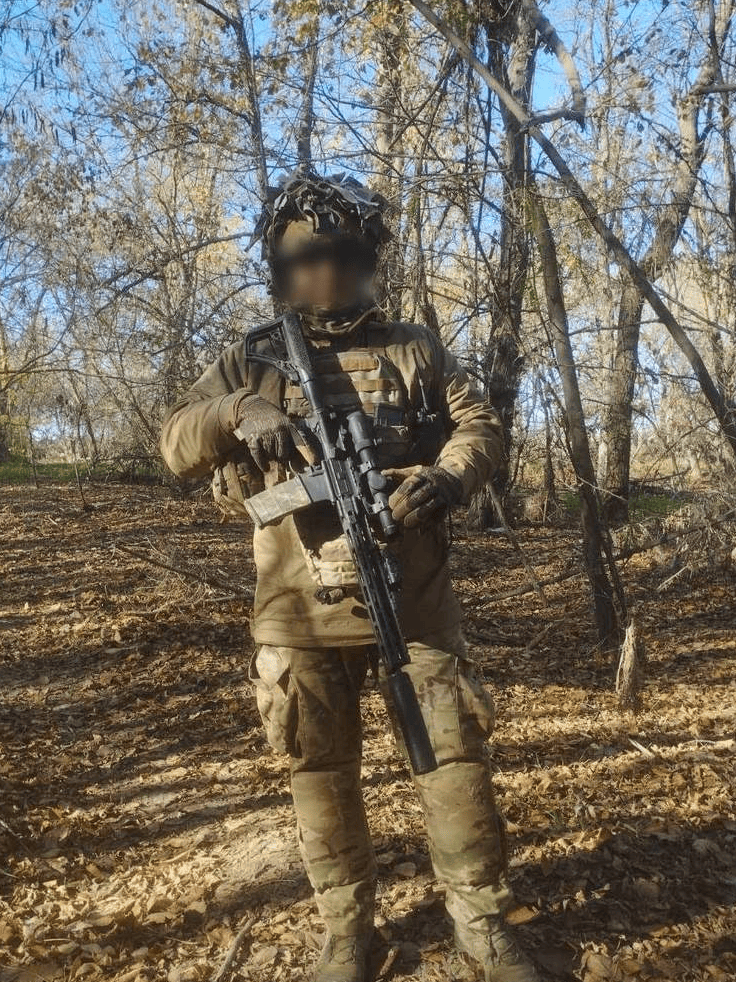
Sometimes people ask where it’s best to serve. I can only speak from my own experience: in the military, the most important thing is the team. If you have reliable people around you, fighting becomes much easier. I advise not to wait for conscription but to choose your unit yourself. Talk to people, find out where you can truly be useful. Personally, I need drivers, while neighboring units need drone operators, logisticians, cooks, and programmers.
EMPR
Tags: Dnipro battle Drone Attacks EMPR media frontline interview special forces Ukraine ukraine war war testimony