
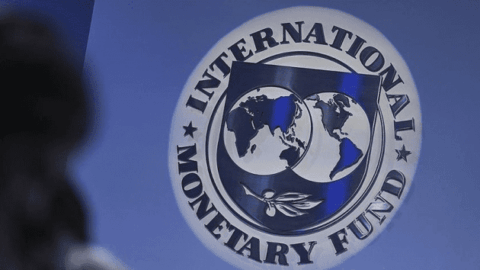
Ukraine’s IMF program includes 20 benchmarks: permanent bank rules, four prior actions on taxes, VAT, FOPs, labour code, plus structural reforms with strict deadlines.
Ukrainian MP Yaroslav Zhelezniak analyzes.
Regarding the IMF in detail, if you haven’t seen the breakdown:
Overall, the new IMF program will include 20 benchmarks, of which:
– one is permanent,
– four are prior actions — mandatory benchmarks that must be completed for the program to launch,
– 15 have deadlines (the last one is due at the end of December 2026).
The permanent benchmark concerns state-owned banks. The IMF requires that budget funds not be used for their recapitalization and that problematic banks be transferred to the State Property Fund.
Regarding the prior actions in 2026:
One of the four has already been completed — approval of the 2026 state budget.
Two others are a kind of “populism check”: tax increases that will pay for cashback schemes, winter bonuses, the “3,000 kilometers” initiative, and other government cash handouts.
The first involves taxing income from digital platforms (a tax on OLX) and abolishing duty-free imports for parcels up to €150.
The second concerns VAT for sole proprietors. The current prior action for the government is to submit to parliament a bill making VAT registration mandatory from 1 January 2027 for simplified-tax sole proprietors whose turnover exceeds the general VAT registration threshold of 1 million hryvnias.
This law will need to be adopted under another benchmark by the end of March 2026.
Two more prior actions are: approving a resolution setting rules for VAT-paying participants in public procurement, and registering a bill to amend the Labour Code.
The rest of the requirements are standard structural benchmarks with deadlines.
By the end of February 2026, it is necessary to:
– Implement the requirements of international financial institutions for selecting members of supervisory boards of state-owned banks
– Approve a plan for developing sectoral strategies for state investments
– Appoint all six members of the Accounting Chamber in accordance with the competition
By the end of March 2026:
– Appoint a new head of the Customs Service
– Adopt the law on VAT registration for simplified-tax sole proprietors
– Guarantee access to independent, reliable, prompt, and high-quality expert examinations in criminal cases investigated by NABU
By the end of April 2026:
– Publish a technical analysis that quantifies the costs of current benefits and subsidies in the electricity, gas, and heating sectors
– Publish a reform scenario for the gradual restoration of market tariffs with adequate protection for vulnerable consumers
By the end of June 2026:
– Amend the state property policy and the Law “On Joint-Stock Companies” so that the statutes of state enterprises include decision-making by supervisory boards by a simple majority (except for adopting development strategies), and to eliminate provisions allowing veto powers or elevated quorum requirements
– Submit amendments to the Tax Code to parliament to align transfer pricing rules with OECD and EU standards
– Approve an updated strategy for state-owned banks that reflects privatization goals
– The Cabinet of Ministers must submit the Budget Declaration for 2027–2029
– Introduce a critical third-party risk oversight system
– NACP must issue new regulations establishing a risk-based system for verifying declarations, prioritizing high-ranking officials in high-risk categories.
By the end of December 2026:
– Design a centralized data center for the Tax and Customs Services
– Amend the law on the NSSMC to create an independent supervisory board for the agency
The latest corruption scandals are reflected not only in the structural benchmarks but also in so-called soft commitments. These are certain promises the government makes in the memorandum text, but their implementation is not tied to program funding.
For example, the government promises to improve corporate governance at Energoatom, as well as at Ukrenergo and Ukrhydroenergo.
They promise to form supervisory boards. For Energoatom — by the end of December. By the end of December, they also plan to restore an independent evaluation of supervisory boards’ performance and conduct a retrospective review of Energoatom’s board activities. In addition, the new Energoatom supervisory board will be required to select the director through a competitive process.
The government also promises to improve the operations of the State Financial Monitoring Service, but not until 2027:
– By the end of March 2026 — conduct an independent audit and prepare a plan to address identified deficiencies
– By the end of March 2027 — improve cooperation between the State Financial Monitoring Service and the tax, customs, and law enforcement agencies
Tags: 2025 economy Governance reforms IMF state-owned banks structural reforms taxes Ukraine VAT








![Visitors at the “Thank You With All My Heart” Ukrainian exhibition at the Council of Europe, featuring the Great Amber Heart and powerful war art. :contentReference[oaicite:2]{index=2}](https://empr.media/wp-content/uploads/2026/02/heart-300x171.png)