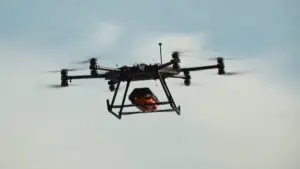
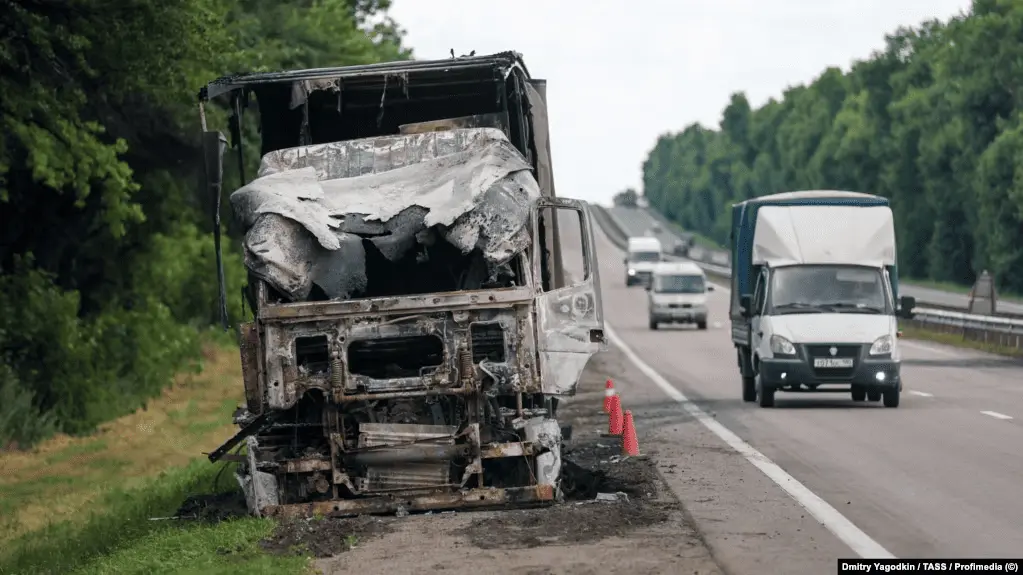
Ukrainian drone attacks are disrupting Russia’s “land corridor” to Crimea, destroying trucks and cargo, reducing freight traffic, and causing mounting losses for Russian businesses.
Russian authorities continue to use the “land corridor” through the occupied regions of southern Ukraine to annexed Crimea, despite Ukrainian drone attacks. For the fifth month, Ukraine’s Defence Forces have kept this key Russian logistics route toward Crimea under fire control. Having failed to find alternative routes, Russian authorities began increasing traffic along the highway in the autumn. Russian businesses are suffering growing losses, with cargo and vehicles being destroyed, and are now publicly questioning the Russian authorities. Krym Realii explains what is happening.
After Ukraine’s Defence Forces brought the “land corridor” to Crimea under fire control in late May, freight traffic along the route was temporarily restricted, with exceptions for military and special cargo, medicines, equipment for infrastructure repairs, fuel, perishable food, and certain socially significant essential goods.
However, in September, Russian authorities once again began increasing traffic along the “land corridor,” despite Ukrainian strikes. Businesses are unhappy with the move, as their trucks regularly go up in flames along this route.
“What Will Run Out First: Trucks or Drivers?”
For several months, Russian authorities tried to establish alternative supply routes to Crimea by sea, via the ferry crossing, and across the bridge over the Kerch Strait. However, they failed to organize full-scale deliveries. In September, Russian authorities began forcibly redirecting some freight traffic back to the “land corridor,” which is under fire.
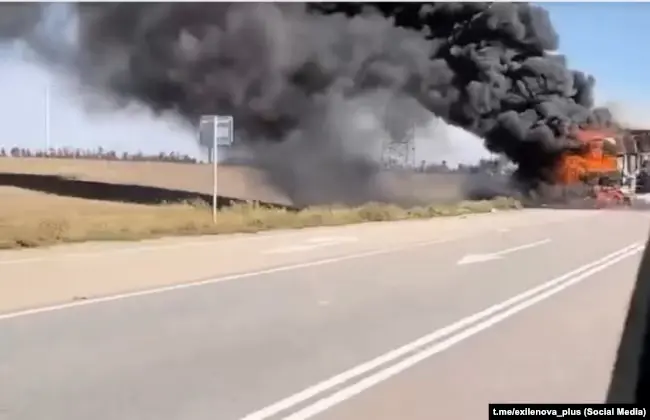
This is being done by preventing trucks that deliver priority cargo from Russia to Crimea via the Kerch ferry crossing from boarding ferries for the return journey after unloading.
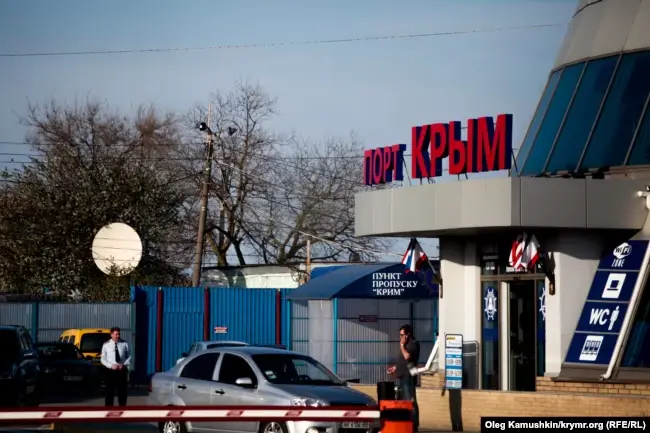
Their only way back to Russia is via the “land corridor,” as restrictions also remain in place on the Kerch Bridge following attacks by Ukraine’s Armed Forces.
In these circumstances, truck drivers are increasingly refusing to take jobs on this route, even for higher pay. This is creating problems in Crimea with the delivery of materials, goods, components, and spare parts.
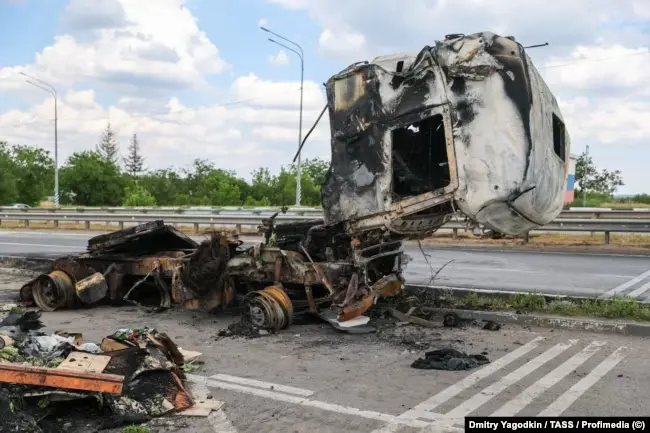
Some drivers agree to make the risky journeys, which, according to unofficial reports, can now pay up to 500,000 rubles per trip. The consequences vary. Ukrainian and Russian social media channels regularly publish videos showing numerous trucks catching fire along the “land corridor” highway, sometimes with drivers injured or killed.
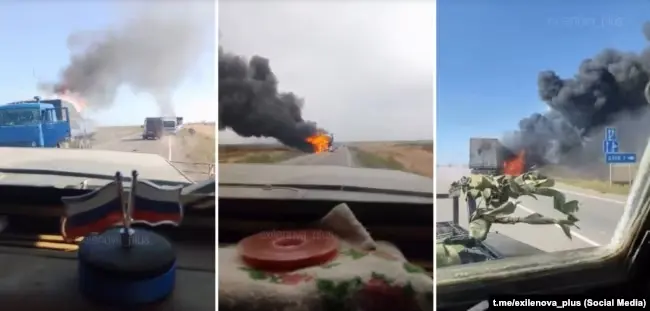
“What will run out first at this rate: trucks or drivers willing to make a quick buck?” the Ukrainian Telegram channel Exilenova+ asks rhetorically.
Thousands of Trucks Under Attack?
The full scale of Ukrainian strikes on the “land corridor” remains unknown. No official figures are available. According to French OSINT analyst Clément Molin, more than 3,000 trucks and other vehicles carrying fuel, goods, and military equipment may have been targeted by Ukraine’s Defence Forces along this route since May.
According to the analyst, Russian transport companies have increasingly begun moving in convoys escorted by Russia’s mobile air defence systems.
“Day after day, the same footage emerges from the occupied territories of southern Ukraine: large convoys of trucks, accompanied by numerous mobile air defence systems, speeding along major roads. Vehicles carrying cargo, fuel, or military equipment are constantly targeted by Ukrainian drones. The targets include not only trucks but also bridges — Ukraine is doing everything possible to make every journey even more dangerous and difficult,” Clément Molin reports.
According to Anatoliy Tsurkin, head of Russia’s “Association of Freight Carriers and Forwarders of Crimea,” freight traffic along the “land corridor” has fallen by two and a half times due to Ukrainian drone attacks.
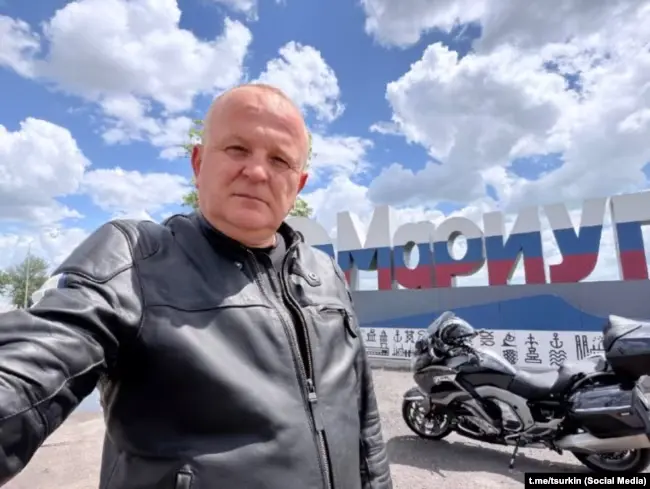
According to him, up to 2,000 trucks of various sizes travelled along the route daily in the spring, compared with just 500–600 a day now.
It is impossible to verify the accuracy of these figures amid the ongoing war between Russia and Ukraine.
According to estimates by Petro Andriushchenko, head of Ukraine’s Centre for the Study of Occupation, traffic along the “land corridor” may currently amount to 250–450 vehicles per day, or approximately 1,700–3,100 trucks per week and 7,500–13,500 per month.
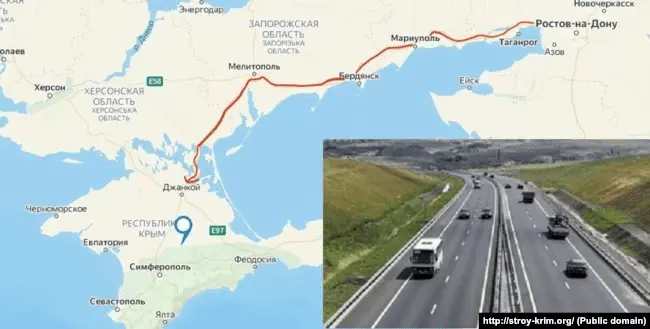
Anatoliy Tsurkin claims that an optimal logistics system for the route to Crimea exists, but not everyone knows about it.
“Crimean logistics today is not only the most complicated but also constantly changing. Routes, types of rolling stock, and transportation conditions are all changing. Because the enemy constantly monitors all information resources, it is impossible to publicly explain to businesses how to deliver goods to the peninsula faster and more efficiently. However, such routes do exist, and businesses are using them,” he says.
“Trucks Are Burning to the Ground”
Those who are unaware of the “alternative logistics routes” are suffering losses. Owners of freight transport companies and truck drivers affected along the “land corridor” are asking the Russian authorities to compensate them for their losses.
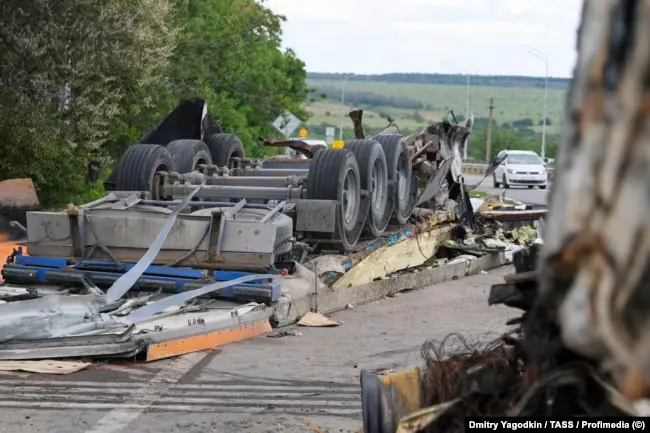
“Sergiy Valeriyovych (Aksyonov, the Russian-installed head of Crimea — KR), could you tell us when decisions will be made on compensation for lost cargo and trucks on the R-280 highway (Russia’s ‘land corridor’ — KR) to Crimea? There are no safe routes left! You can’t transport much across the Crimean Bridge: a single 3.5-tonne truck can make the trip only once every three days due to restrictions on inspection capacity at the bridge! The ferry crossing is closed to food products! That leaves only the R-280 highway, which is already being attacked by UAVs every hour, and trucks carrying food are burning to the ground!” writes Igor Bogoyev on Sergiy Aksyonov’s VKontakte page.
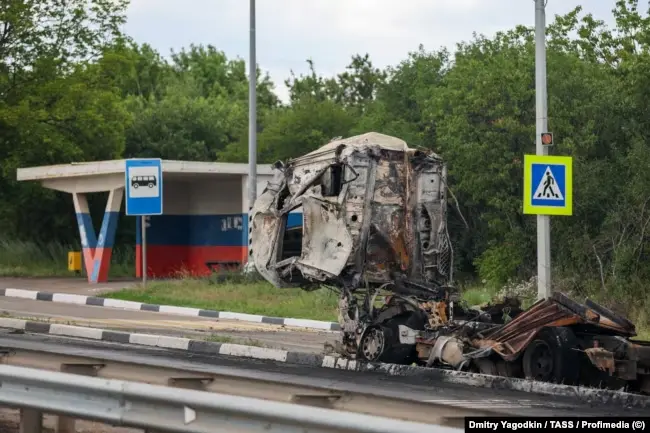
A truck destroyed by Ukraine’s Defence Forces on Russia’s “land corridor” highway to Crimea, June 19, 2026
According to him, his truck carrying chicken eggs recently burned down. The company appealed to the Russian government of Crimea but received a response stating that “such risks are not compensated.”
“We transport food along this highway at our own risk, essentially to a blockaded Crimea! Nothing has been done to secure the land route. Civilian drivers are being killed, carriers are losing their trucks, and we are losing our cargo. Over the past four months, the capacity of the Crimean Bridge and the ferry crossing has not increased — it has actually decreased! Who will compensate us for these losses?!” Igor Bogoyev asks.
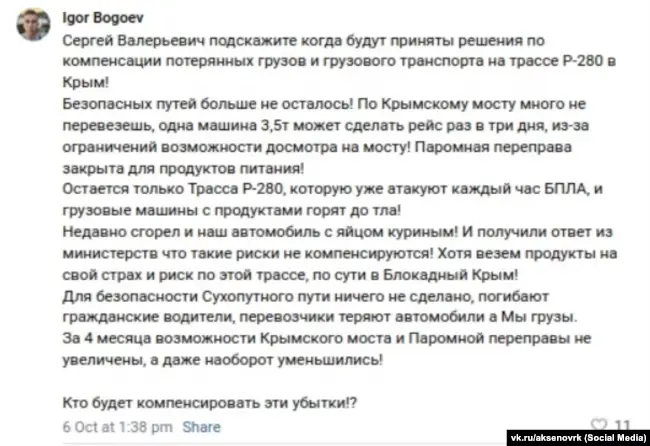
Russian truck drivers are losing their vehicles and cargo along Russia’s “land corridor” to Crimea due to Ukrainian UAV attacks and are seeking compensation, October 2026. Screenshot.
“A Lottery and Millions in Losses”
Maksym Vorontsov, commercial director of a Crimean transport company, says state support is needed for businesses taking risks along the “land corridor.”
According to him, his company’s vehicles came under fire from Ukraine’s Armed Forces seven times over the past three months. Cargo was completely lost on three occasions, and one truck was burned down.
“On a global scale, it’s a lottery. When, for example, 2,000 vehicles travelled along the route per day, the probability of one of your company’s 10 vehicles being hit was two per day. There was still some logic to that. But when the number of vehicles passing through is reduced to 500, and your own 10 trucks are on the road, the risks increase dramatically,” Maksym Vorontsov told Sevastopol-based outlet ForPost in October.
He estimates his losses at “approximately 25 million rubles.” However, the businessman has never managed to obtain compensation, even for insured cargo.
Under the current circumstances, operating without immediate government support is “extremely difficult,” he admits. The Russian authorities “could take control” of cargo and vehicle insurance, develop a procedure for obtaining subsidies to purchase vehicles, ensure the safety of transportation, or open another route toward Crimea, Maksym Vorontsov believes. He claims that Crimea’s “food security” depends on these measures.
“Those Affected Will Be Told: ‘There’s No Money, but Hang in There’”
For its part, the Russian authorities in Crimea are urging freight carriers to participate in a programme insuring vehicles and cargo against risks associated with “damage caused by sabotage, terrorist acts, and the use of weapons and military equipment.”
“Vehicles transporting essential goods (accounting for at least 25% of the cargo’s value), as well as cargo containing food, fuel, grain, construction materials, children’s goods, and other items, can be insured against military risks during transportation by road, rail, river, and sea, including container shipping and railway rolling stock. The lives and health of drivers, freight forwarders, and crew members are also eligible for insurance,” the Ministry of Economic Development of the Russian government of Crimea states.
Not all freight carriers are eligible for this programme, so there is little demand for these “war risk insurance” policies, according to Ukraine’s Association of Reintegration of Crimea.
“Statements about ‘additional insurance’ serve only one practical purpose: to encourage businesses to resume risky transportation immediately, with the obvious expectation that once an ‘insured event’ occurs, the companies that have suffered losses will hear the familiar response: ‘There’s no money, but hang in there.’ Now, it is claimed that ‘the cargo itself, the vehicle, as well as the driver’s life and health’ can be insured against military risks only through Sberbank, for up to 100 million rubles. The bank states that ‘to insure a vehicle, essential goods must account for at least 25% of the value of the cargo being transported.’ Therefore, even assuming that Sberbank intends to pay anyone anything, not all businesses can qualify under the new rules purely from a logistical standpoint, given the contents of their shipments,” the Association states.
Sberbank’s press service claims that the insurance policy under this programme has been taken out by a “major retail chain” that delivered nearly 60 tonnes of goods to Crimea. The company’s name was not disclosed. Freight carriers from Ukrainian territories occupied by Russia are also being invited to participate in the programme. However, the current number of participants in this insurance scheme is unknown.