
A powerful new exhibition in Warsaw is redefining how the world sees Crimea – through art, memory, and the voices of those shaped by war and displacement.
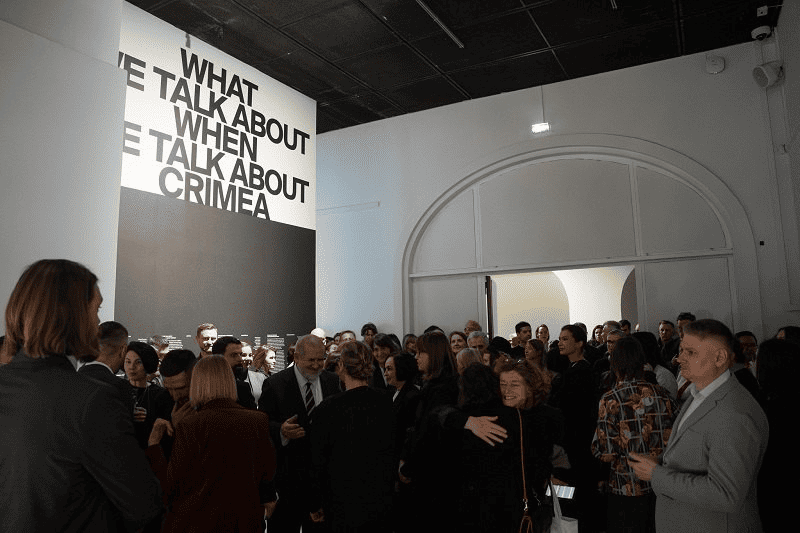
The Ujazdowski Castle Centre for Contemporary Art in Warsaw opened the exhibition “What We Talk About When We Talk About Crimea.” Commissioned by the Ukrainian Institute, it brings together works by 13 Ukrainian artists who explore their personal connections to the peninsula.
Their statements address a wide range of themes, from the deportation of the Crimean Tatars to the lost queer paradise in Simeiz. Taken together, they do not form a neat or singular image, but rather a kaleidoscope of experiences connected by a shared frame.
LB.ua reveals.
The curatorial project for the exhibition in Poland about Crimea, conceived by the Ukrainian Institute, was proposed by the Platform of Memory Culture Past / Future / Art. In their introductory statement, the curators invite viewers to see Crimea not only as a south but also as a north. They had already explored this shift in familiar associations in 2024 at the First Maltese Biennale, where they spoke about Odesa not as the south of the former Russian Empire, but as the north of the Mediterranean. However, while this positioning is quite organic in the context of a biennale focused on countries of the Mediterranean region, in a dialogue between Ukrainian artists and Polish audiences this shift in coordinates works more speculatively, since for both countries Crimea is geographically in the south, regardless of former imperial logic.
The exhibition of 12 works occupies five rooms of the art center. One third of the presented art objects include video; in addition, there is a video explainer (curatorial statement) and a kinetic sculpture. Moving media here are interwoven with static forms (graphics, painting, photography), and this combination makes the exhibition quite dynamic.
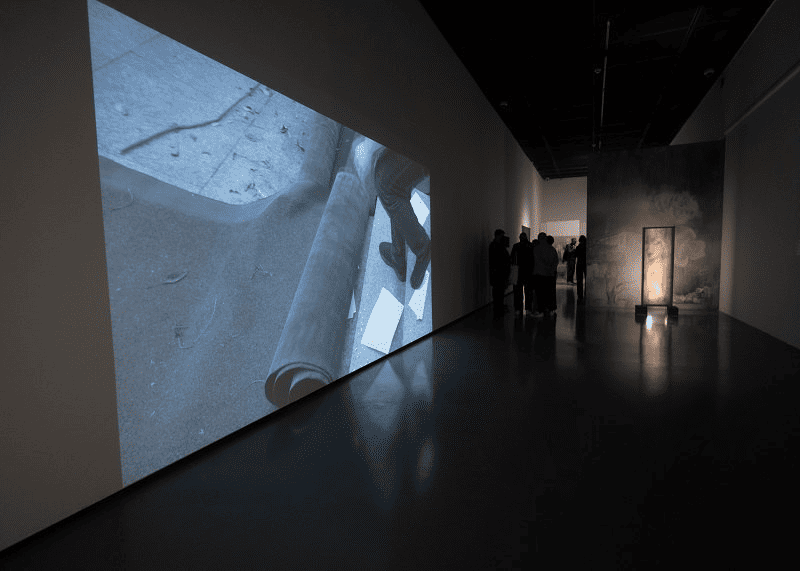
A significant part of the exhibition is devoted by the curators to the theme of the Crimean Tatars, as addressed by artists of Crimean Tatar heritage. Naturally, their works are imbued with motifs of a lost homeland. One entire wall of a room is occupied by video documentation of a new performance by Vlodko Kaufman and Khalil Khalilov: we see the artists unrolling and rolling up strips of roofing felt, imitating carpet runners on the stairs of the Ujazdowski Castle. “Roofing felt is a very cold, rigid, toxic material,” Khalilov explains, “but it constantly accompanied the Crimean Tatars on the paths of their deportation and gave them warmth.” Among the strips of roofing felt, tumbleweed moves along the stairs, scattering branches. The Crimean Tatars call this steppe plant biñ baş, meaning “a thousand heads” — a transparent metaphor for a people torn from their roots. This work continues Khalilov and Kaufman’s series of “Crimean” performances; they have scheduled the next one for April 16, on the eve of the anniversary of the deportation, also at the Ujazdowski Castle Centre for Contemporary Art.
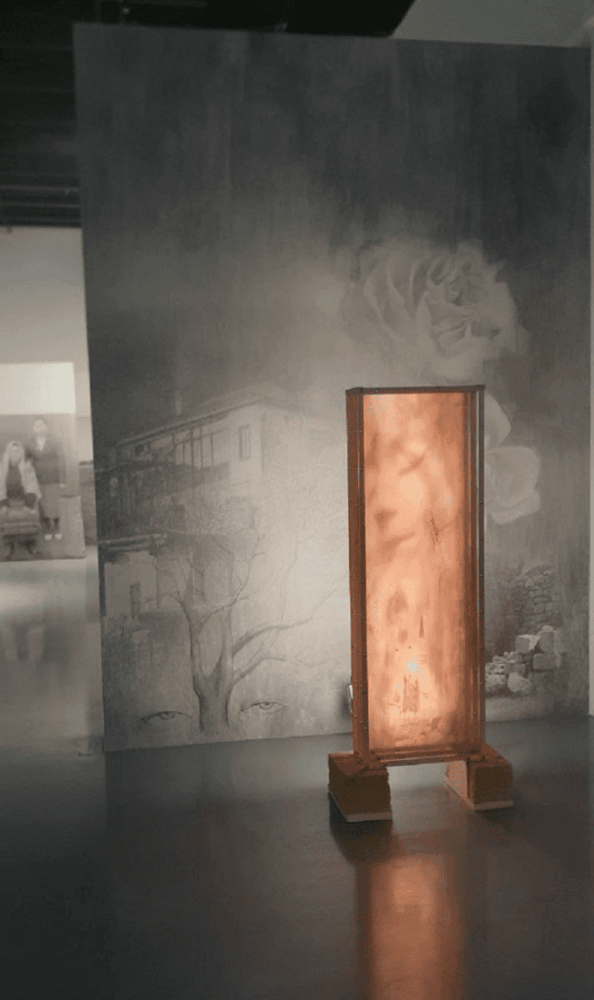
The second (and final) work created specifically for this exhibition is the installation by Sevilâ Nariman–qizi -lar. In the Crimean Tatar language, this ending denotes plurality. Against the backdrop of a black-and-white wall drawing that imitates photographic wallpaper of a “blooming Crimea,” the artist places three transparent pink panels, each bearing faded drawings depicting a building, trees, and faces. Their base consists of shell limestone bricks, from which houses were built by Tatars returning to Crimea in the 1990s. It is a commentary on the collage-like nature of memory and forgetting as its inevitable part.
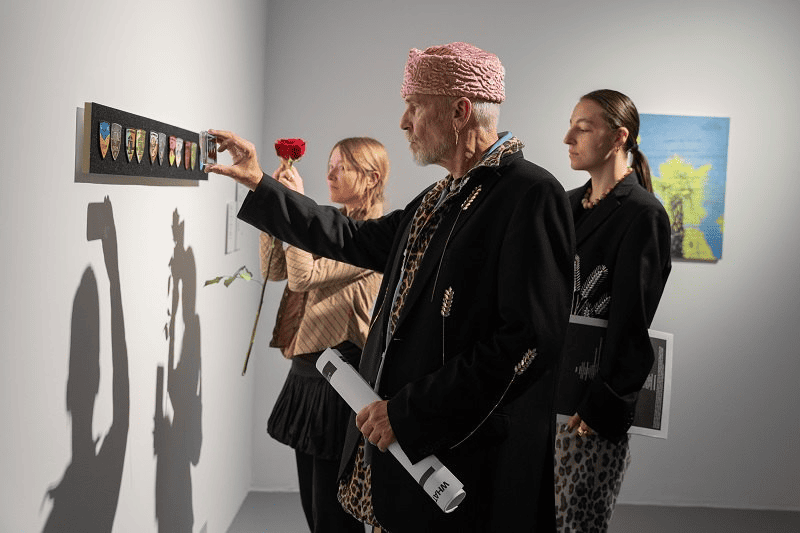
At one time, Sevilâ Nariman-qizi studied in the El-Cheber studio of Rustem Skybin — he serves as a link connecting generations of deported Crimean Tatar artists with subsequent generations. The exhibition features Rustem Skybin’s work “Crimean Tatar Military Identity” — 12 chevrons with ornaments that Skybin documented after consulting with specialists in the military history of the Crimean Khanate. This is not the first artistic engagement with the theme of military insignia: for example, Yevhen Ravskyi created symbols for the brigade in which he serves, based on historical heraldry. According to the curators, some soldiers of the Armed Forces of Ukraine wear Skybin’s chevrons to emphasize their particular attitude toward the liberation of Crimea from the occupiers.
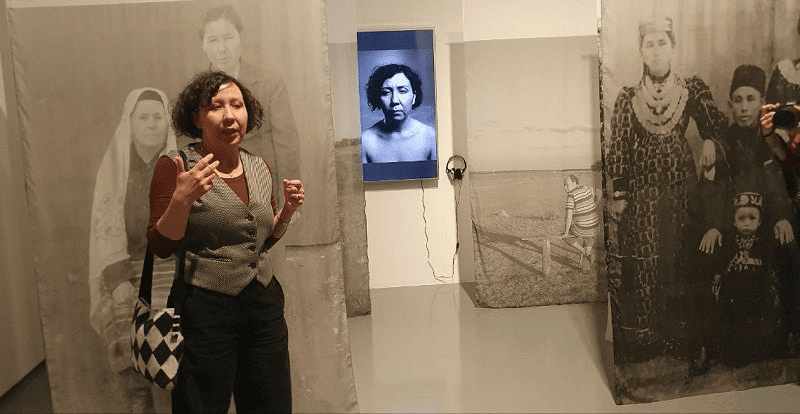
The installation “I Am My Father’s Daughter” by Emine Ziiatdin was shown to Kyiv audiences last autumn at Garage 33 gallery. It consists of photographs printed on fabric; the oldest dates back to 1914 and comes from a family archive, while the most recent is from 2020 and was taken by the artist herself. Between the fabrics is a screen with the artist’s face; against the backdrop of water, she says: “I am a daughter of the steppe.” The absent father appears here as a symbol of trauma in the artist’s family and in the people as a whole.
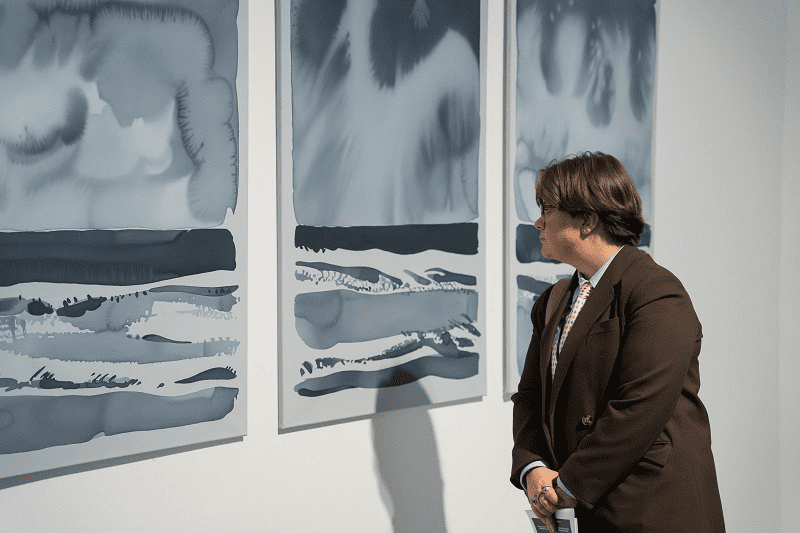
Elmira Shemsedinova’s series of paintings “Tense Horizon” consists of semi-abstract, almost monochrome seascapes executed in oil, imitating the effect of watercolor. The artist created this series in 2022–2023 as a recollection of the sketches she made on the Crimean coast before 2014. Devoid of detail and color, the works appear as a faded memory of lost places.
It should be noted that the works created by artists of Crimean Tatar heritage are not set apart at the exhibition in a separate cluster, but are interwoven with works by other artists who were born in Crimea or have a close connection to the peninsula. The curators do not exoticize the voices of Crimean Tatar artists or contrast them with the rest; however, the difference in how these groups perceive Crimea is evident.
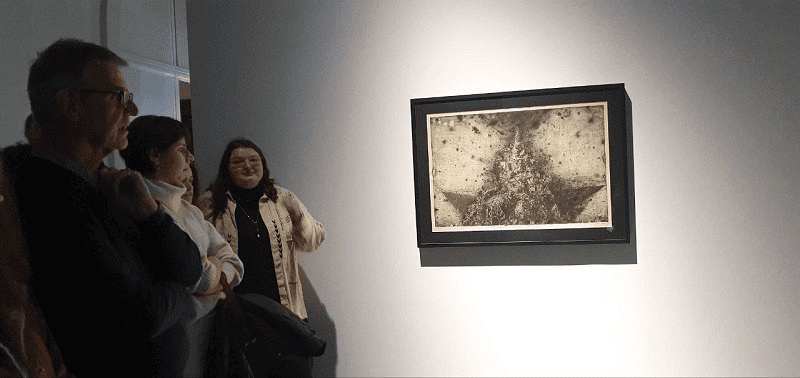
Pavlo Makov’s etching “Simferopol Landscape” is the oldest work in the exhibition. Makov created it in 1988, during the Soviet era. The study of the city is one of the key themes in Makov’s practice, and he most often turns to Kharkiv (city of KH), which became the main place in his life. However, Crimea is also closely tied to his biography: he lived in Simferopol in 1970–1979 (while studying at the Crimean Art School), and again in 1986–1988. In his etching, the city appears as a Bruegel-like Tower of Babel — a symbol of cultural diversity and misunderstanding — assembled from small details and symbols associated with Crimea.
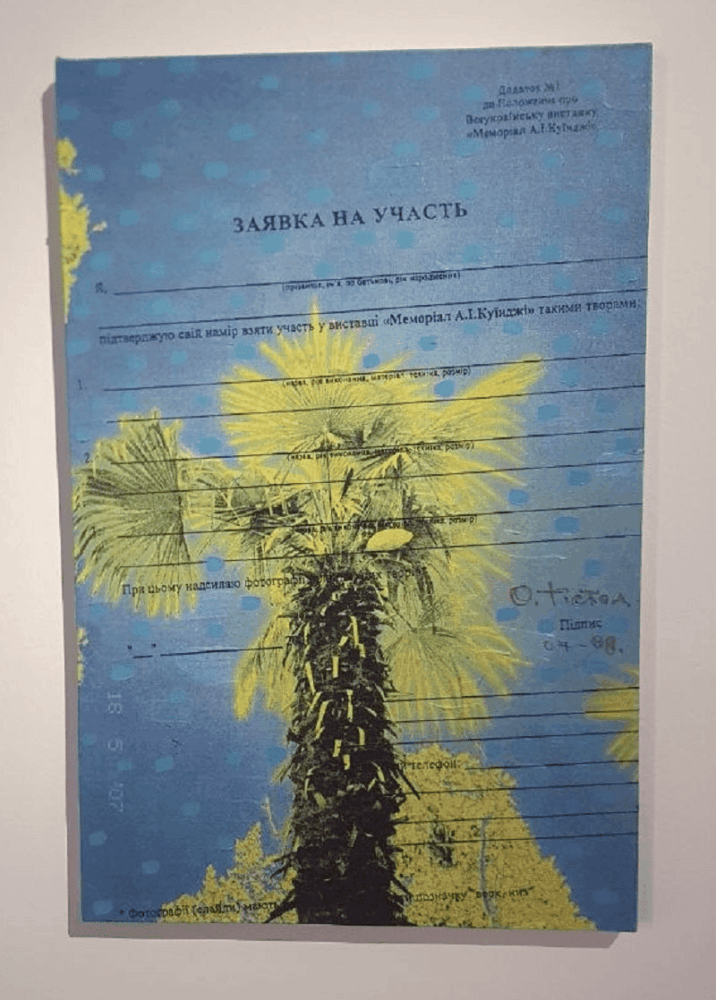
Another work by an artist from a generation formed during the Soviet era is “Gurzuf.07” by Oleh Tistol. The stencil image of a palm tree is one of the most recognizable “signs” of this artist (in his exploration of contemporary myths, he even referred to the palm as the national tree of Ukraine). It is also a symbol of Crimea as a resort — the palm was introduced to the peninsula only in the late 19th century, and it grows only on its southern coast, where the most popular vacation spots are concentrated. The exhibition presents a work from the “UBK” series, whose canvas imitates a form for applying to participate in the “Kuindzhi Memorial” festival — a landscape painters’ competition held in Mariupol. Today, the name of Kuindzhi, who created dozens of outstanding Crimean landscapes, is primarily associated with the crimes of Russian forces (the looting of the Kuindzhi Museum and the destruction of the artist’s monument in Mariupol), so Tistol’s older work now acquires a new layer of meaning.
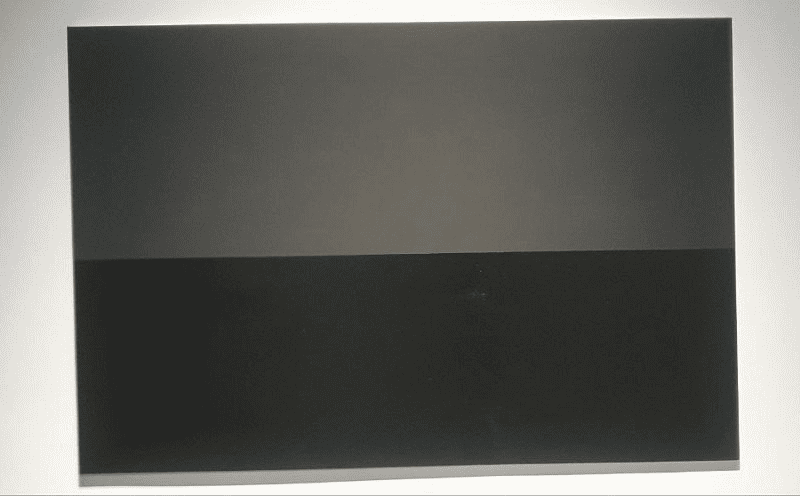
The painting “Black Sea” by Roman Mykhailov is also presented by the curators as a political statement. If this abstract canvas is viewed figuratively, then black here is both the sky and the sea, while the line in the middle — a symbolic horizon — separates black from even blacker. The artist has been working on the “Black Sea” series since 2014; perhaps the best-known work in it is the installation “Shadows” — black silhouettes of military ships cut from charred wood.
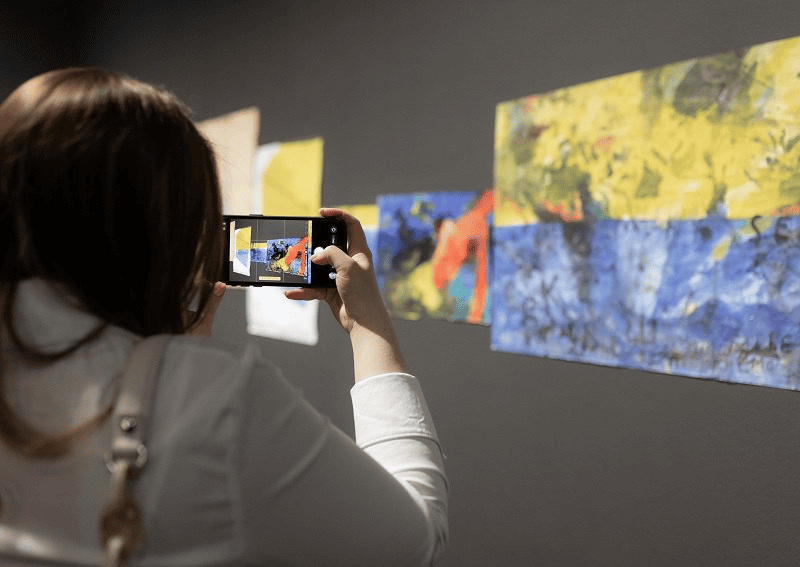
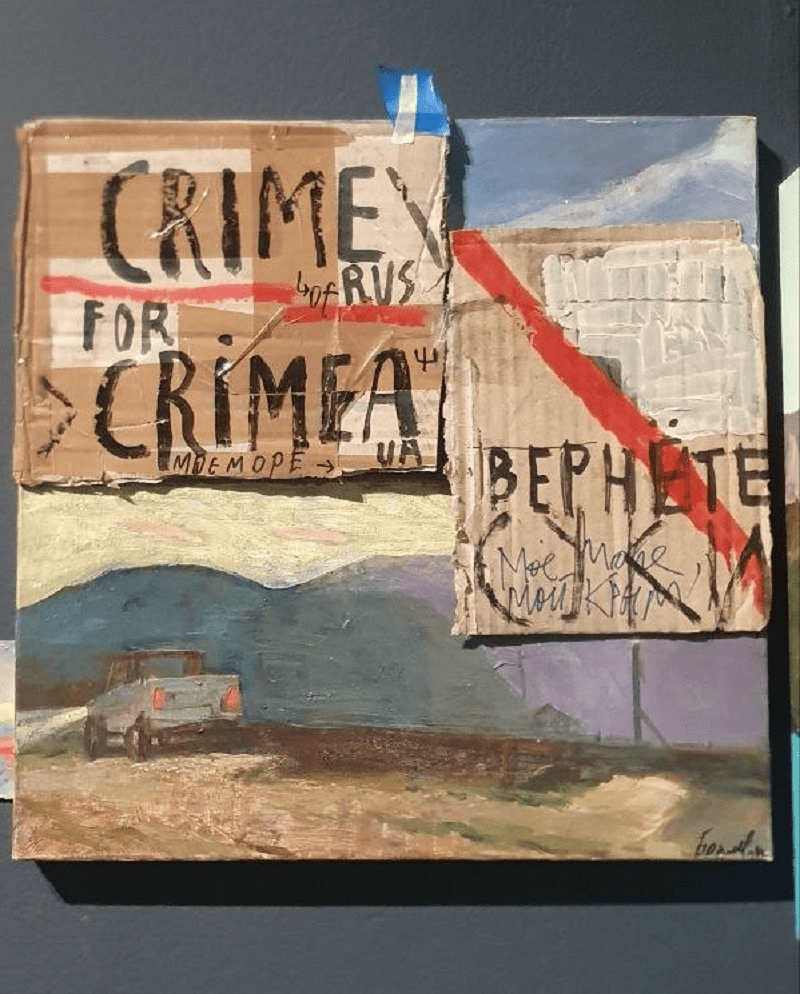
The horizon line is also central to Oleksii Borysov’s landscape series “My Sea,” which occupies three walls of one exhibition room. He has been working on it since 2014, when he stopped traveling to Crimea due to the annexation. The series includes idyllic memories of Crimean beaches, “little green men,” and calls to return Crimea. Works of varying sizes and themes are united by a single horizon line and the repeated, mantra-like inscriptions “My Sea,” “My Crimea.”
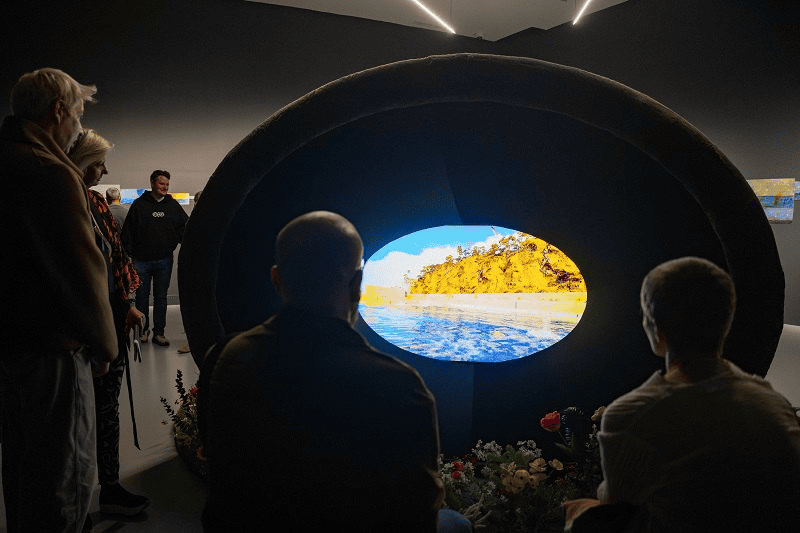
Opposite it is an installation by Yurii Yefanov with the complex title “I Watched the Sinusoidal Movement of Blue Electronic Waves Until I Could Smell Them.” The artist was born in Crimea and now lives in Paris. The installation includes an animated component that recreates the Artek camp in Gurzuf, where a diving competition takes place. The action unfolds after the liberation of Crimea — according to Yefanov, he dreams of holding such a “diving festival.” This is the only work in the exhibition that, even if briefly, addresses the need to communicate with people living under occupation, who for more than ten years have been exposed to Russian propaganda (including through the Artek camp, which has become a site of militarized ideological education). The artist proposes diving as a local tradition that could create space for dialogue.
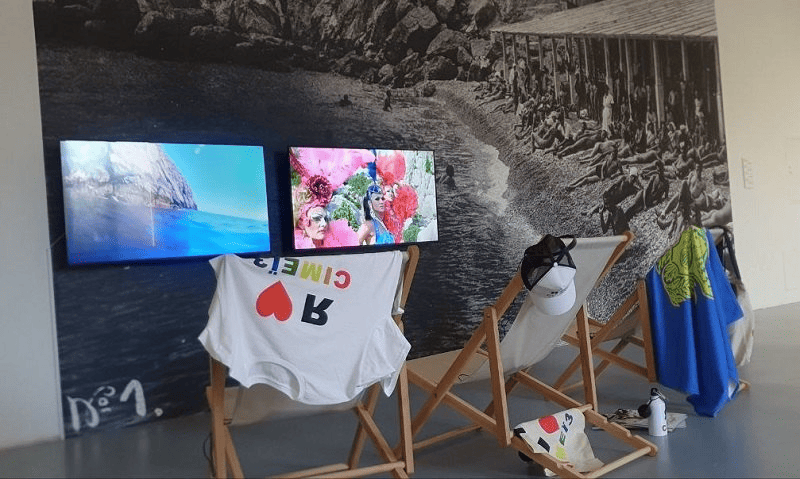
The installation “Simeiz” by Anton Shebetko addresses the history of a queer community that formed around a nudist beach and the Yehzhi nightclub in Simeiz. It features video, photographs, and a zine that can be explored while sitting in deck chairs, as if on the seashore. Like Yefanov, Shebetko also dreams of returning to Crimea — together with a Pride march, which is currently impossible there due to Russia’s homophobic laws. In his work, Crimea appears as a territory of freedom, a lost queer paradise.
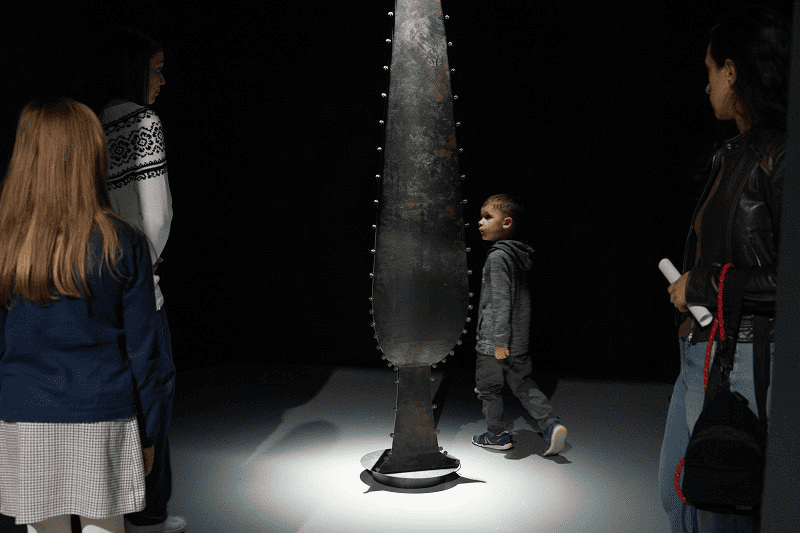
The exhibition concludes with Vitalii Kokhan’s kinetic sculpture “Cypress.” A dark metal pyramid, joined with bolts, refers to another symbol of tourist Crimea. The sculpture is placed in a separate darkened room, slowly rotating around its axis. In recent years, Kokhan has been actively working with the theme of memorializing the war and searching for a new visual language for it. This also recalls that the cypress is a symbol of mourning and an essential element of Crimean (and other) necropolises. In particular, it is part of the recently installed Memorial to the Victims of the Genocide of the Crimean Tatar People in Kyiv, created based on an earlier design by architect Irfan Shemsedinov, who had envisioned this memorial in Crimea. Kokhan’s cypress echoes Shemsedinov’s. Works by Elmira Shemsedinova (Irfan’s granddaughter, who brought his materials to Kyiv) are displayed in the exhibition next to Kokhan’s sculpture.
The image of Crimea shaped by the exhibition is unified by motifs of the horizon, water, and the sea. This collective image is one of loss. For some, it is the loss of home, family, roots, and memory; for others, the loss of a summer destination, beloved landscapes, and familiar ways of expressing themselves. It is a Crimea that is largely depopulated and uneasy — though with nostalgic and, at times, optimistic notes in certain works.
Designed for an international audience and commissioned by the Ukrainian Institute, the exhibition functions as a tool of cultural diplomacy. It fulfills this role well, conveying all the expected narratives: the long history of Crimea that runs deeper than Russia’s claims; the repressive Russian presence expressed through deportations, oppression, and military indoctrination, which has even turned the sea into a synonym for danger; and the symbolic marking of Crimea as Ukrainian territory. However, for a viewer from Ukraine, it is difficult (and perhaps unnecessary) to adjust one’s perspective in an attempt to see the project through the eyes of a Polish audience. Instead, it becomes easy to notice which themes this skillfully constructed narrative about Crimea leaves unaddressed.
In it, Crimea is articulated through the (tragic or idyllic) past and a (desired) future, but not the (real) present; it appears more as a space and a territory than as a population — an inconveniently Russian-speaking one that, while not unanimously, largely welcomed Putin’s arrival and is unlikely to be waiting for liberation from him. Do we not oversimplify the conversation about the future when we avoid the question of whether we consider all these people “ours”? Or the conversation about the past, when we speak about Russian crimes but forget Ukrainian indifference? At this exhibition, it is easy to forget, for example, that it was Ukrainian citizens who clashed with returning Tatars over “self-seized” land; that 2014 did not completely seal off the border with Crimea (this only happened in 2022); that Pride marches still face resistance in Ukraine.
Are all these themes necessary in an exhibition for a foreign audience? I am not sure. But there is a sense that commissioned exhibitions in general lose some important connection to reality; that by proposing different languages “for them” and “for us,” we open the door to the “not the right time” stance — and in doing so, we lose time. Thus, the image of loss that dominates the exhibition extends far beyond its boundaries.
Alongside the exhibition “What We Talk About When We Talk About Crimea,” the Ujazdowski Castle Centre for Contemporary Art also opened another show, “This Cat Was Drawn During the War” — a group exhibition on the visual representation of different wars, bringing together Polish and Ukrainian curators (Anna Lazar and Lada Nakonechna) and mixing Ukrainian works with those by artists from Germany to Mexico. At the same time, in another Warsaw museum — the Museum of Modern Art — Ukrainian art can be seen in the exhibition “The Female Question 1550–2025.” Works by Mariia Bashkirtseva, Alla Horska, Tetiana Yablonska, Vlada Ralko, Kinder Album, Sana Shakhmuradova, Lesia Khomenko, and other Ukrainian artists form a shared statement alongside works by Artemisia Gentileschi, Sofonisba Anguissola, Angelica Kauffman, Tamara de Lempicka, Frida Kahlo, Louise Bourgeois, Tracey Emin, Agata Bogacka, and many others.
It is evident that Polish institutions — at least in the field of contemporary art — consider Ukraine part of a shared cultural space and include its artists in complex, multifaceted narratives. Perhaps we, too, can already afford a little less caution in these shared conversations?
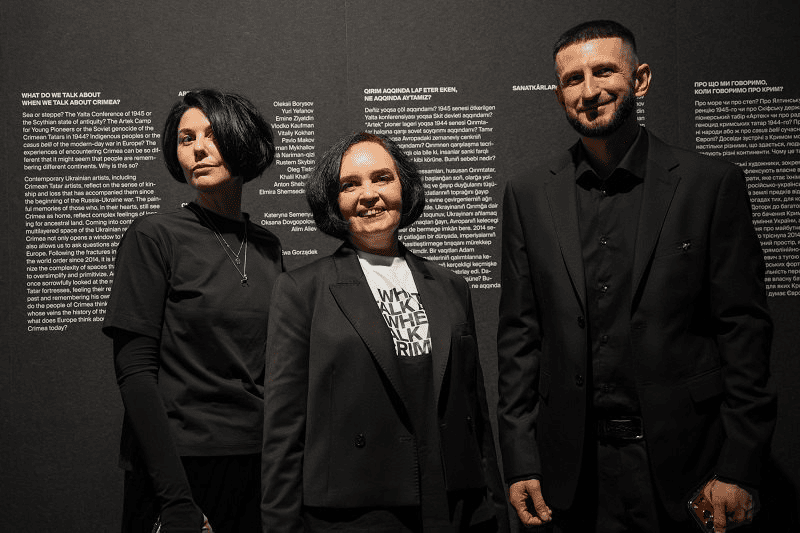
The exhibition “What We Talk About When We Talk About Crimea” was organized by the Platform of Memory Culture Past / Future / Art, commissioned by the Ukrainian Institute with the support of the Partnership for a Strong Ukraine Programme. The project’s curators are Kateryna Semeniuk, Oksana Dovhopolova, and Alim Aliiev. The exhibition runs until June 28, 2026.

![View of the “What We Talk About When We Talk About Crimea” exhibition space in Warsaw with Ukrainian contemporary artworks and cultural reflections. :contentReference[oaicite:1]{index=1}](https://empr.media/wp-content/uploads/2026/02/yuriy-480x270.png)