
There are neither safe places in Kherson nor any chance to take a break from the war. The frontline city suffers from constant attacks, and the lives of its residents have turned into a daily struggle for survival.
This was reported by Hromadske.
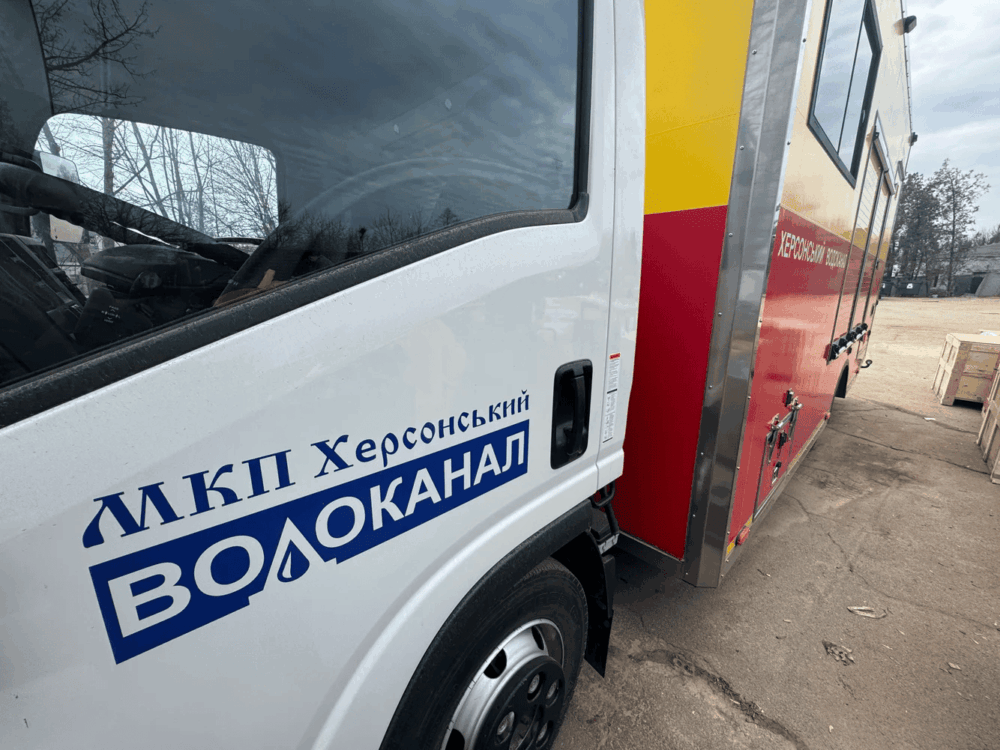
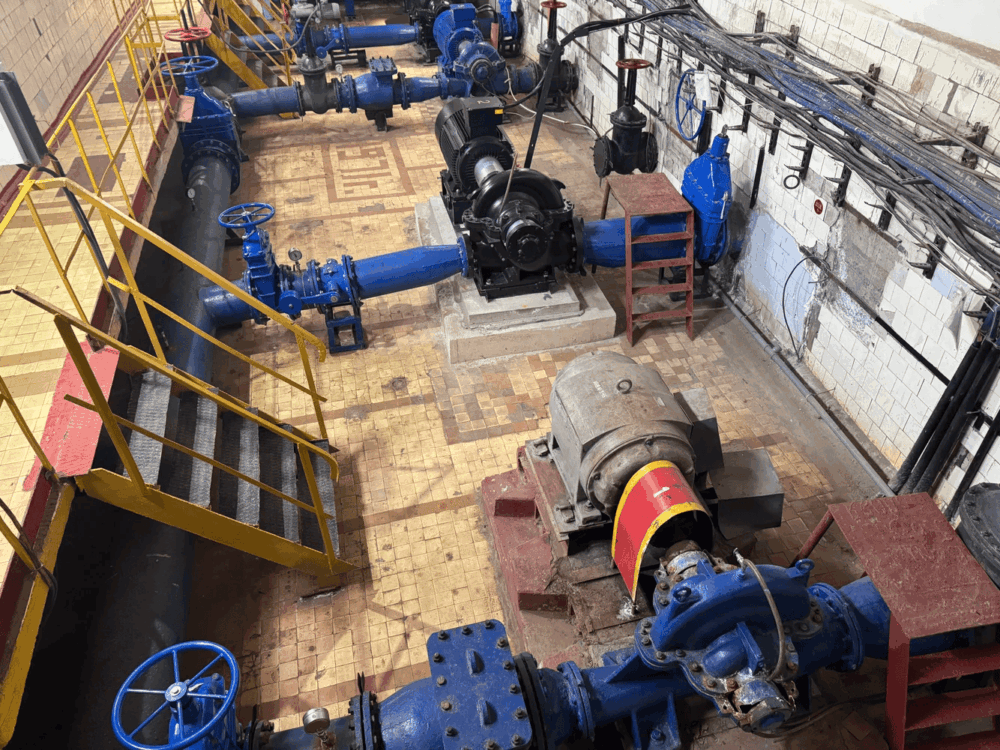
Since the start of the full-scale war, 89 facilities of the Kherson Water Utility have been destroyed in the city. However, employees of the municipal enterprise, with the support of international partners, continue to find ways to restore and provide residents with access to water.
In 2022, when the city was temporarily occupied, the water utility was looted. Everything was taken away — from municipal equipment and computers to rags used for washing floors. After the regional center returned to the control of the government of Ukraine, the whole country helped the Kherson Water Utility recover.
“Perhaps there was not a single city in the free territory of our state that did not send us assistance. They shared everything they could with us, even frontline and border communities,” recalls Oleksii Savchenko, director of the Kherson Water Utility.
“We Always Keep at Least a Three-Day Supply of Water at Home”
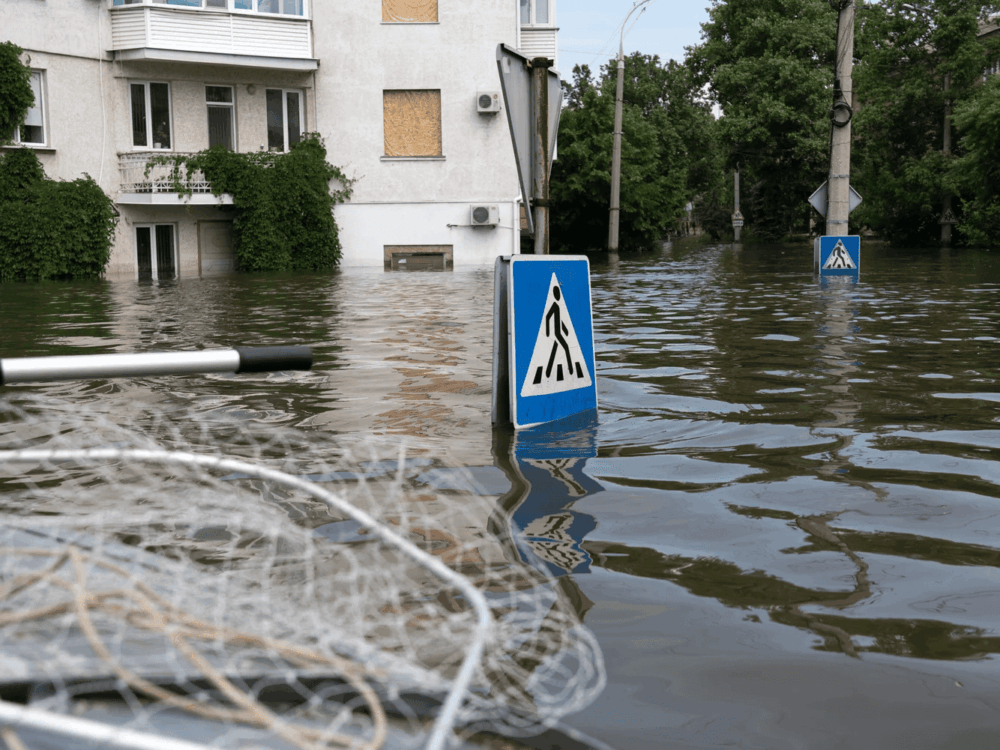
Vira and her 8-year-old daughter Mariia moved to central Kherson from the Ostriv neighborhood. In June 2023, it was flooded as a result of the destruction of the Kakhovka Hydroelectric Power Plant.
“Our apartment remained there. It is on the fifth floor and has already suffered from shelling more than once. Of course, the water did not reach that high. At that time, we left to stay with my mother in a village near Mykolaiv. We saw all that horror through videos and photos. I immediately understood that we would not return there, because I had read in the news that our neighborhood had been left without any utilities. My daughter was only five years old then,” Vira says.

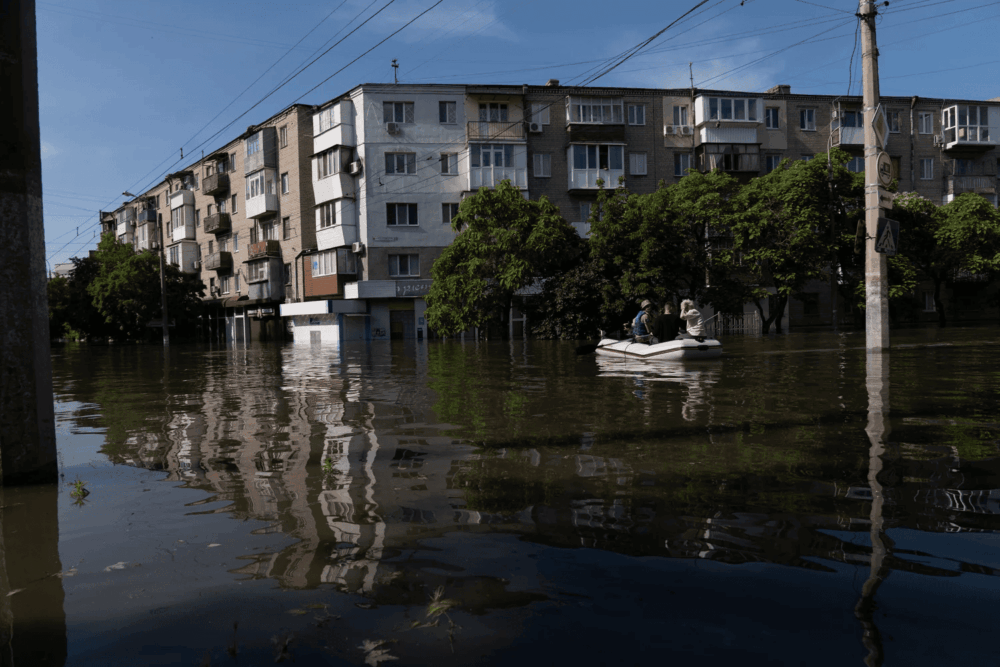
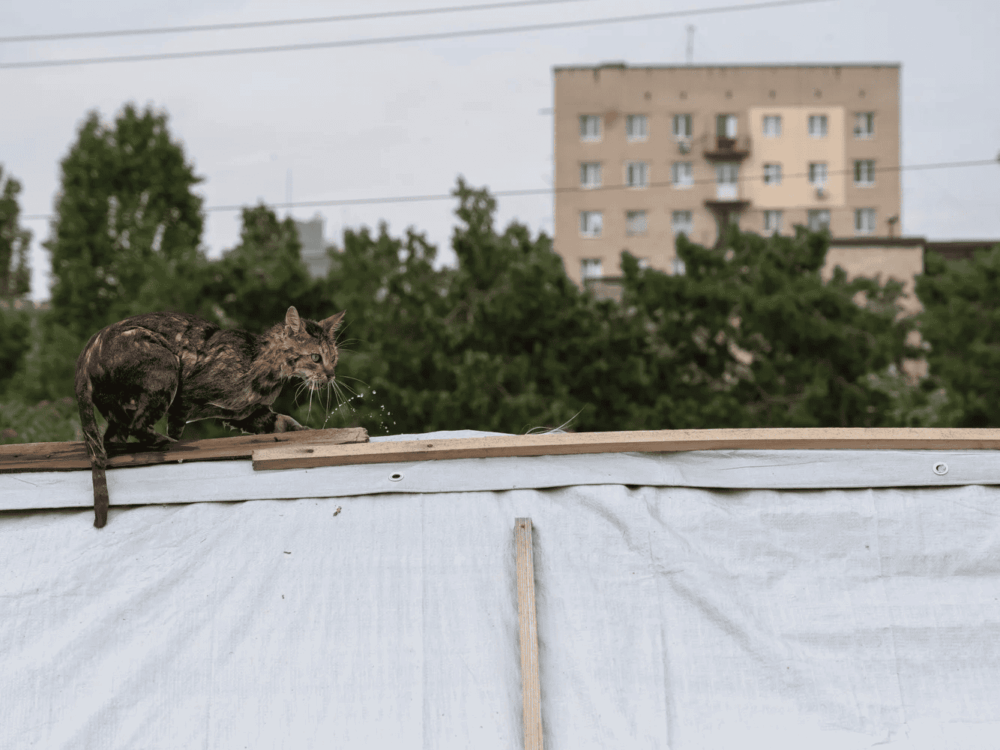
According to the woman, her apartment now always has at least a three-day supply of water. After another round of shelling, water may disappear from the tap. Vira says the war has taught her to stock up and be economical. “We are already used to having five-liter water bottles all over the apartment.”
“Our utility workers try to repair everything as quickly as possible. But this is war, and situations can be different — completely unpredictable as well. I remember very well the period after de-occupation, when we spent several weeks without water. We went to the Dnipro River to collect water while it was still possible and carried it home,” she adds.
“Mom always says it is better for us to stock up on water and live ‘surrounded by bottles’ than to stand in lines for water under shelling,” adds schoolgirl Marichka.
The girl says she has already grown used to shelling, but when the water disappears, it still upsets her.
“I like helping my mother in the kitchen and washing dishes. I already know how to save water, because we do not know whether it will be turned on today or whether we may be without water for a long time,” she says.
A Dangerous Profession
According to the head of the Kherson Water Utility, the enterprise now depends on the people who remained in Kherson and continue working while risking their lives every day. Five employees of the water utility have been tragically killed, and 45 workers have been injured while carrying out their daily duties. Some suffered such severe injuries that they are unable to return to work.
The utility’s facilities also often come under attack because of near-daily shelling, says Vitalii, deputy chief engineer of the Kherson Water Utility.
“They can hit underground utilities, pipes, and wells. When valves and pipes are damaged, water leaks out, and everything has to be shut off. Many people may be left without water,” he says.
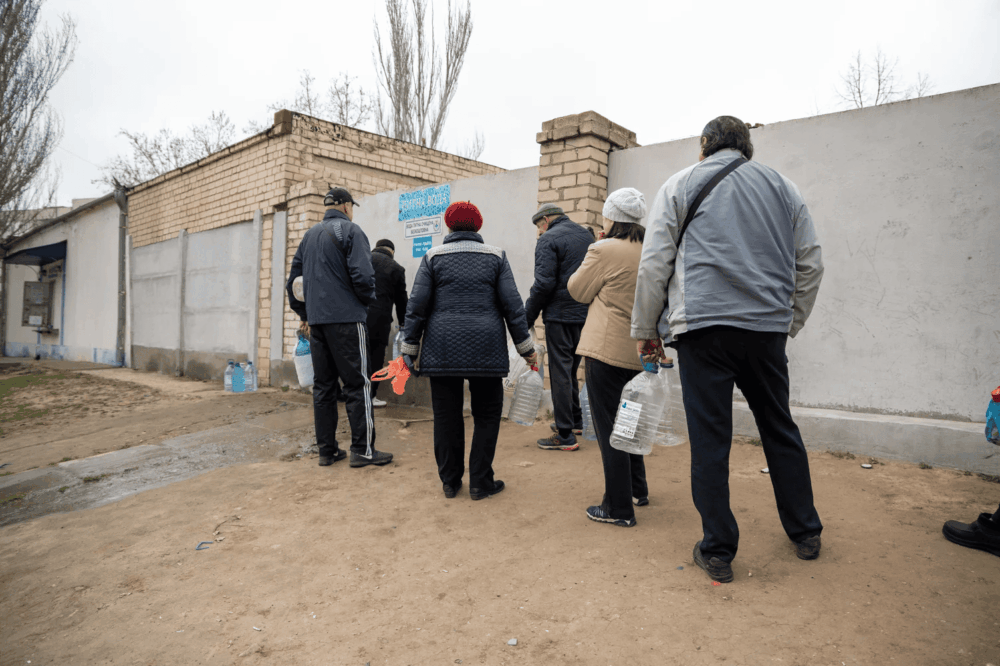
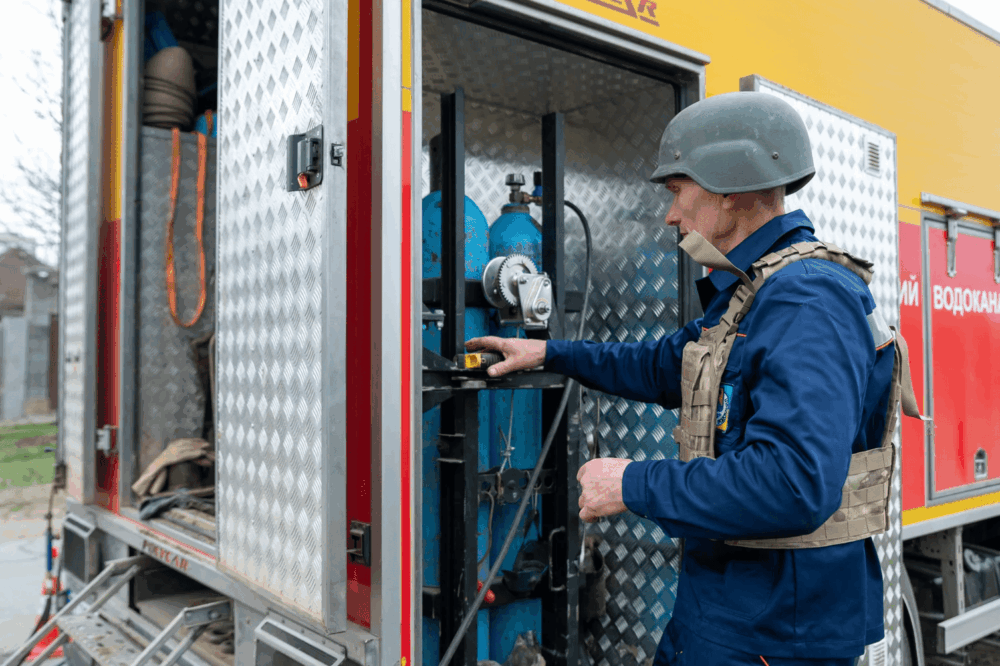
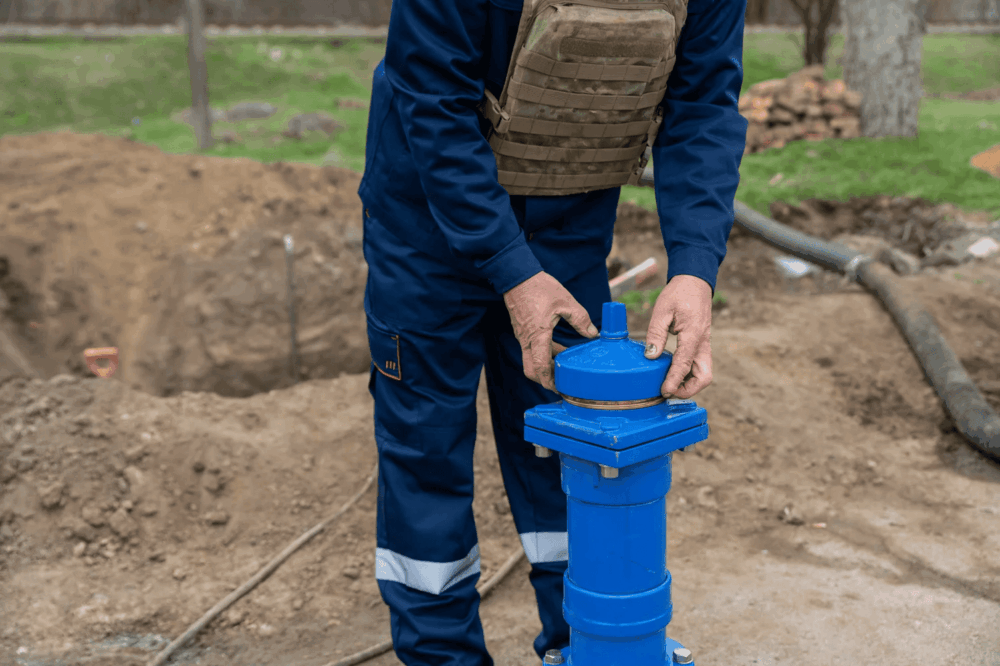
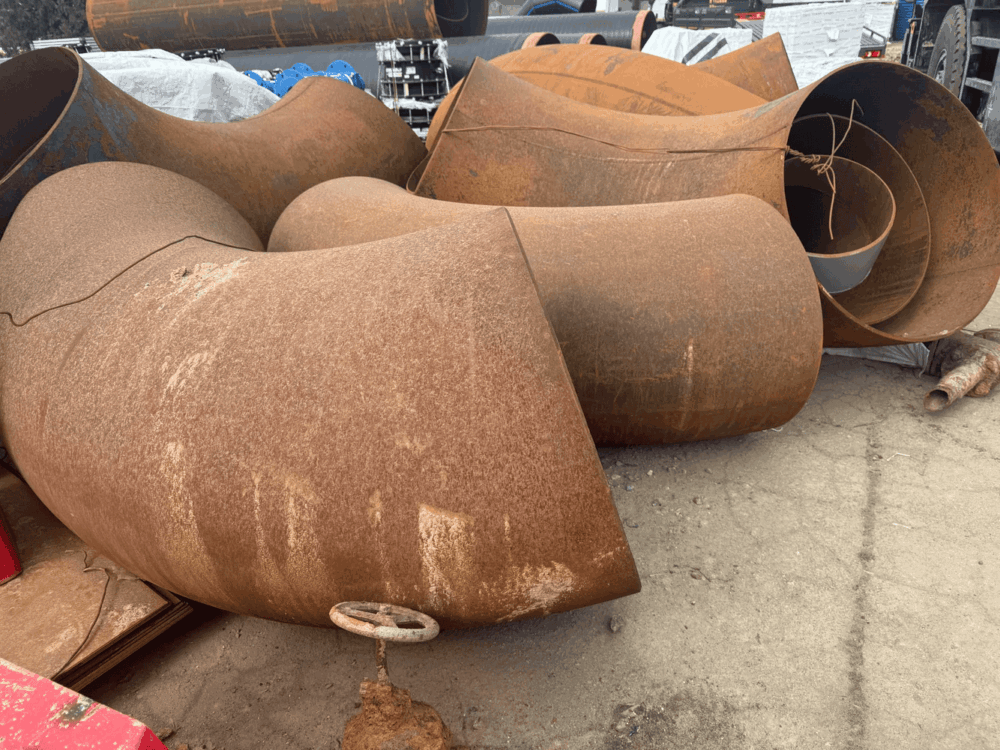
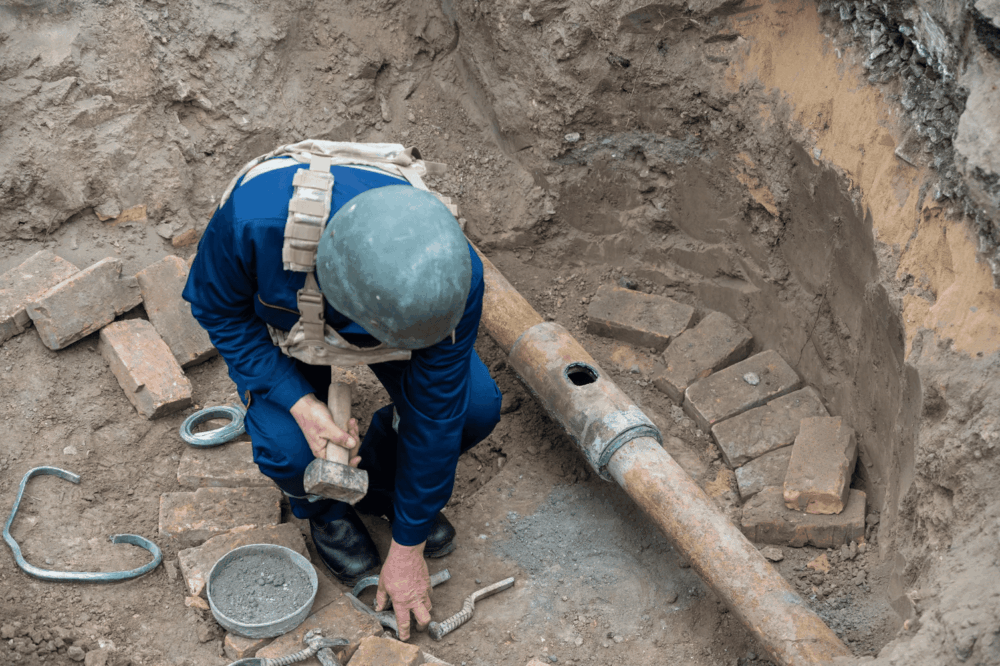
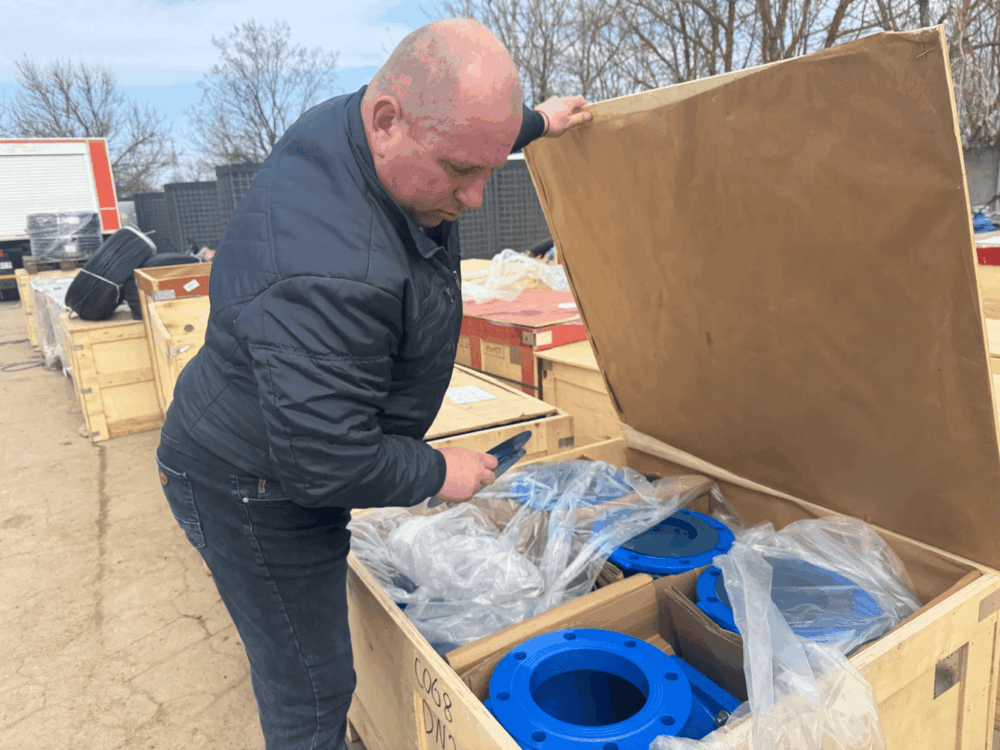
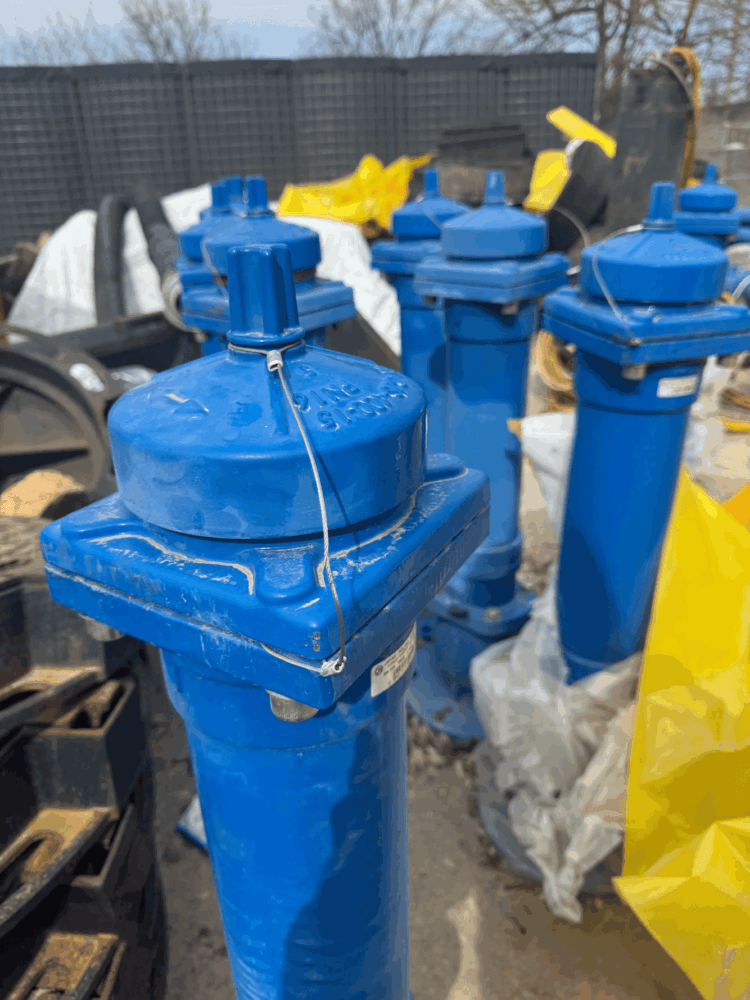
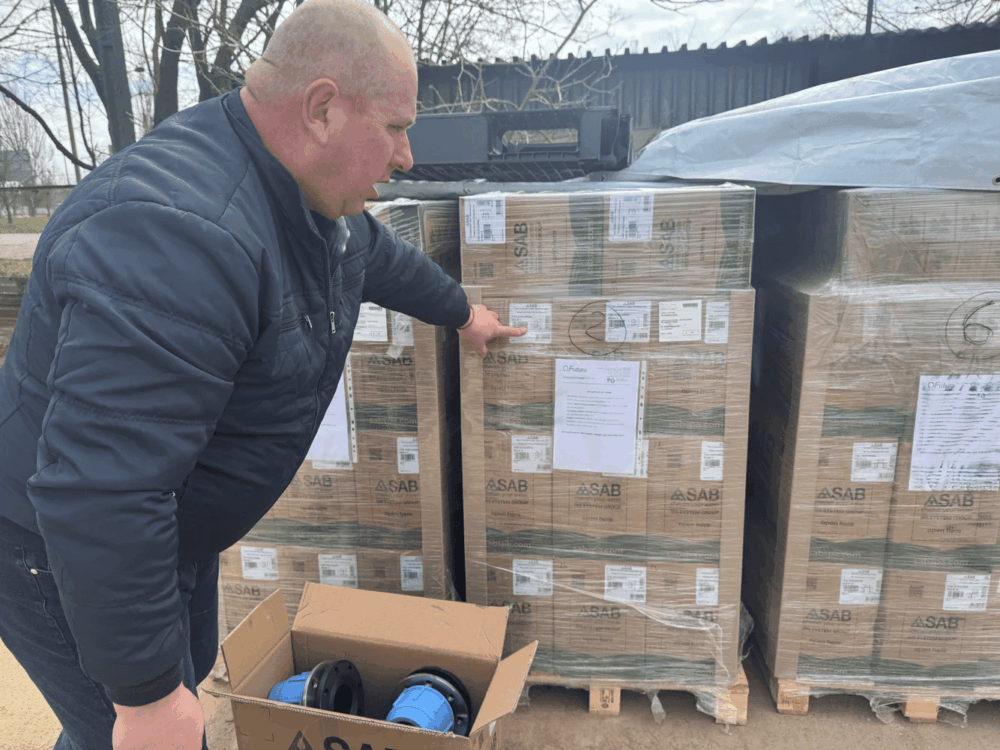
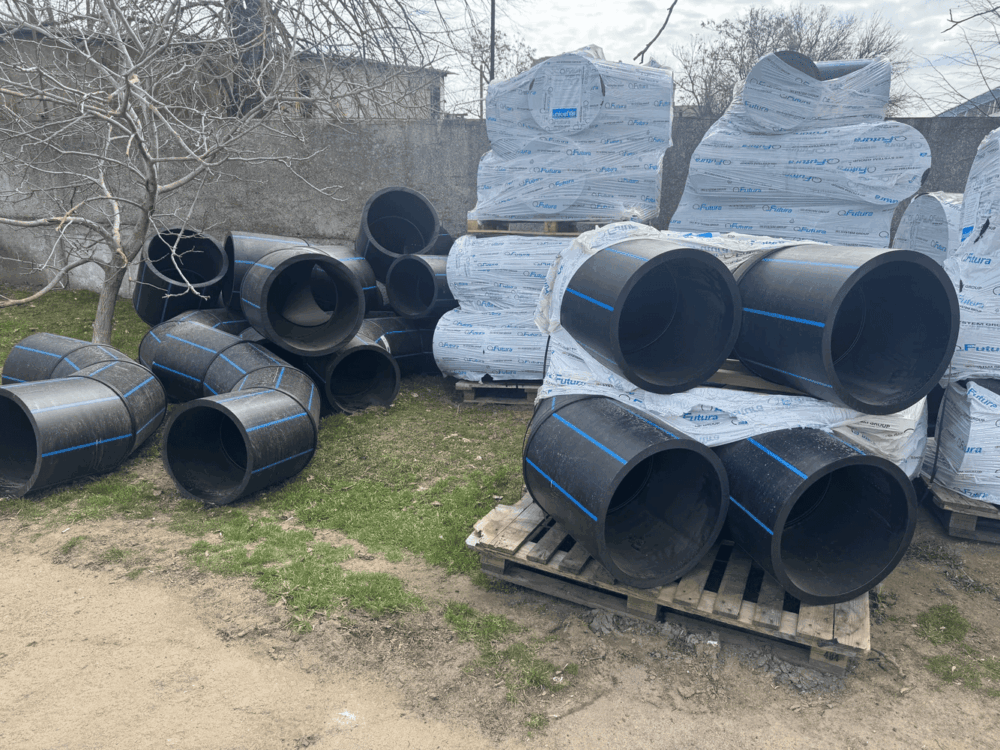
A huge amount of materials is spent on daily repairs and replacing damaged infrastructure. At the same time, the city’s population has decreased by nearly 80% — from 300,000 before the start of the full-scale war to 70,000 — and far from everyone is able to pay for utility services. As a result, the enterprise’s revenues have dropped significantly. According to Oleksii Savchenko, without assistance from international donors, providing the city with water would be far more difficult.
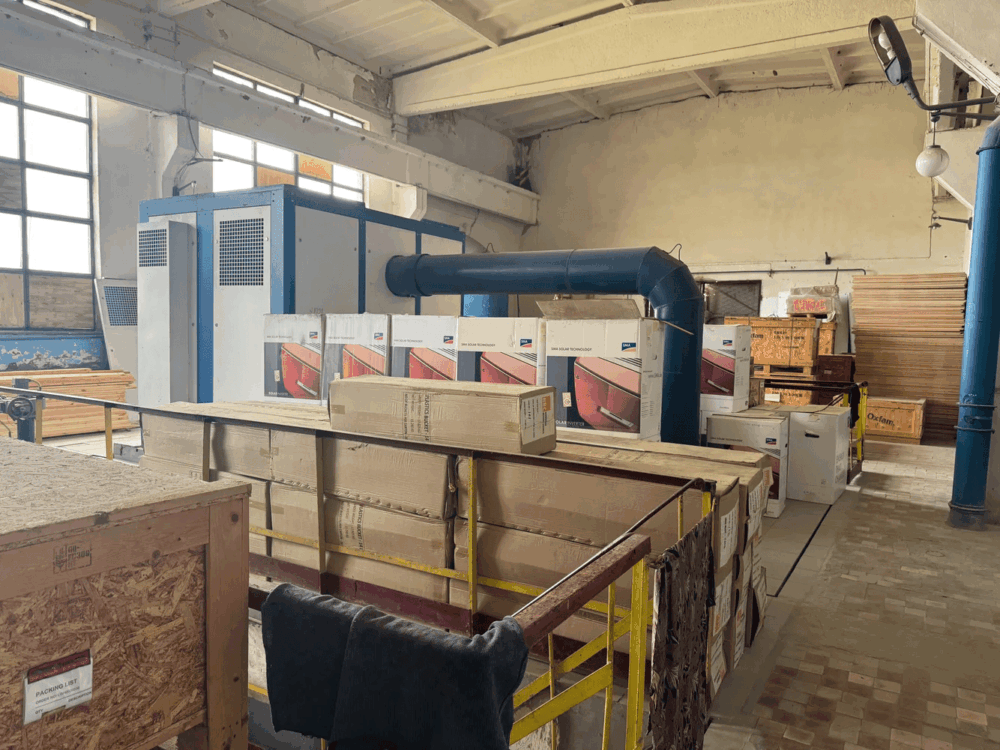
“Despite all the hardships, we receive a lot of help. Since the liberation of Kherson, UNICEF Ukraine has provided enormous support: equipment and cables, as well as chemical reagents to make the water safe for consumption. All of this assistance is critically important for us,” says the head of the Kherson Water Utility.


Under Constant Fire
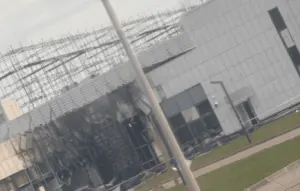
The water utility is currently setting up workplaces in modular buildings reinforced with external concrete blocks and protected by anti-drone nets. This will allow some employees to work in safer conditions after the utility’s buildings were destroyed by shelling. Construction of two more modular buildings has already begun to provide workspace for employees of the chemical and bacteriological laboratory, whose building was destroyed.
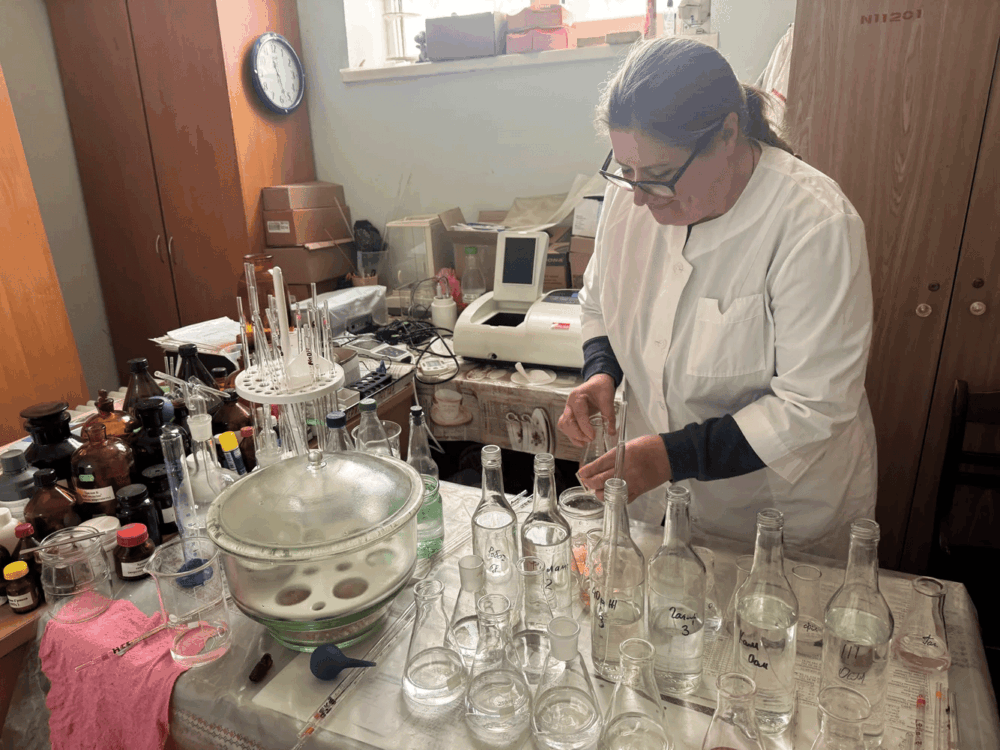


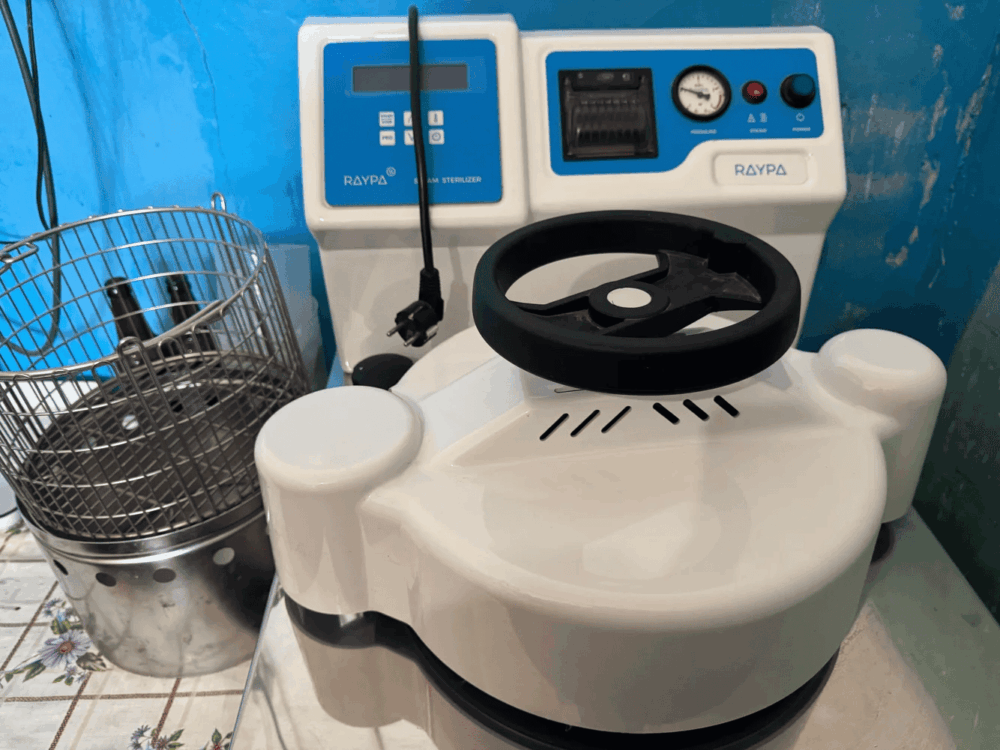

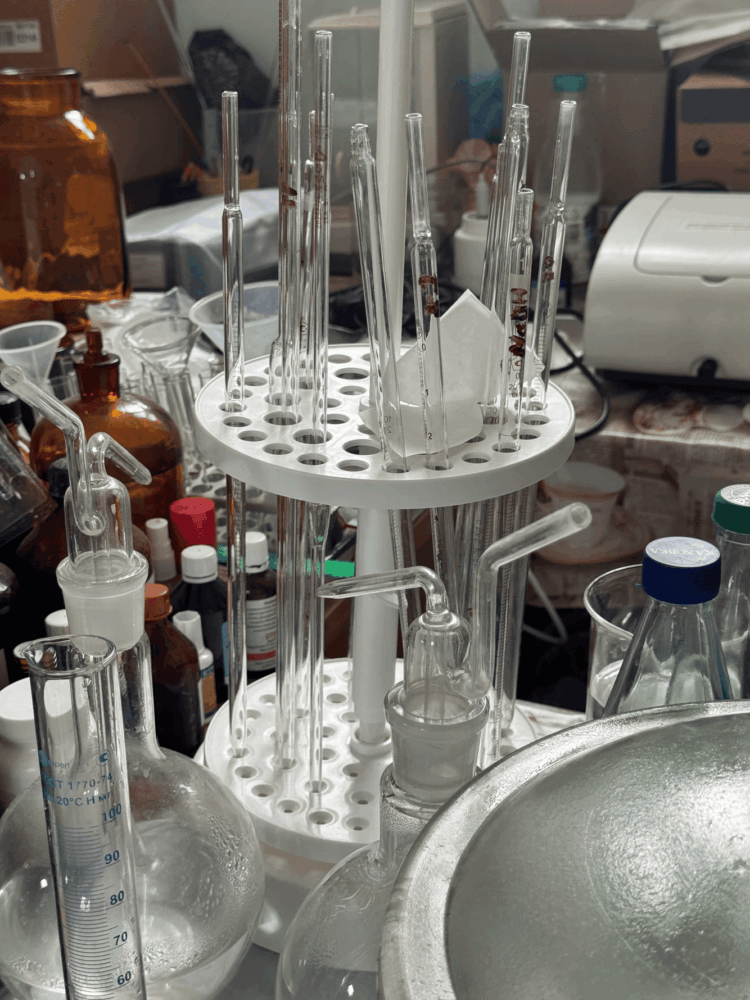
“Drinking water is supplied to the homes of Kherson residents from artesian wells, and we must inspect each of them at least once a week. Although in the current conditions, this is very difficult,” says Olha. Her team plays an important role in ensuring safe drinking water for local families.
Tymur, head of the water intake section, says there are 147 wells from which water is pumped for Kherson. Around 80 of them are in use, while the rest are either destroyed or located in the so-called red zone, which is under constant shelling.
“The wells on the riverbank are cut off from the city and shut down,” Tymur says. “About some of them, we do not even know what condition they are in, because we physically cannot reach them. Those that are visible but under shelling cannot be restored right now. So we supply water from the wells that we are able to maintain.”
Some of the wells had to be cleaned and restored after the dam of the Kakhovka Hydroelectric Power Plant was destroyed in 2023, flooding several districts of the city. The laboratory regularly takes water samples from wells to make sure it is safe for consumption.
“We lifted everything out, cleaned it, and chlorinated it. We check the water hardness, bacteriological composition, and all other indicators. Everything is within normal limits,” says Olha.
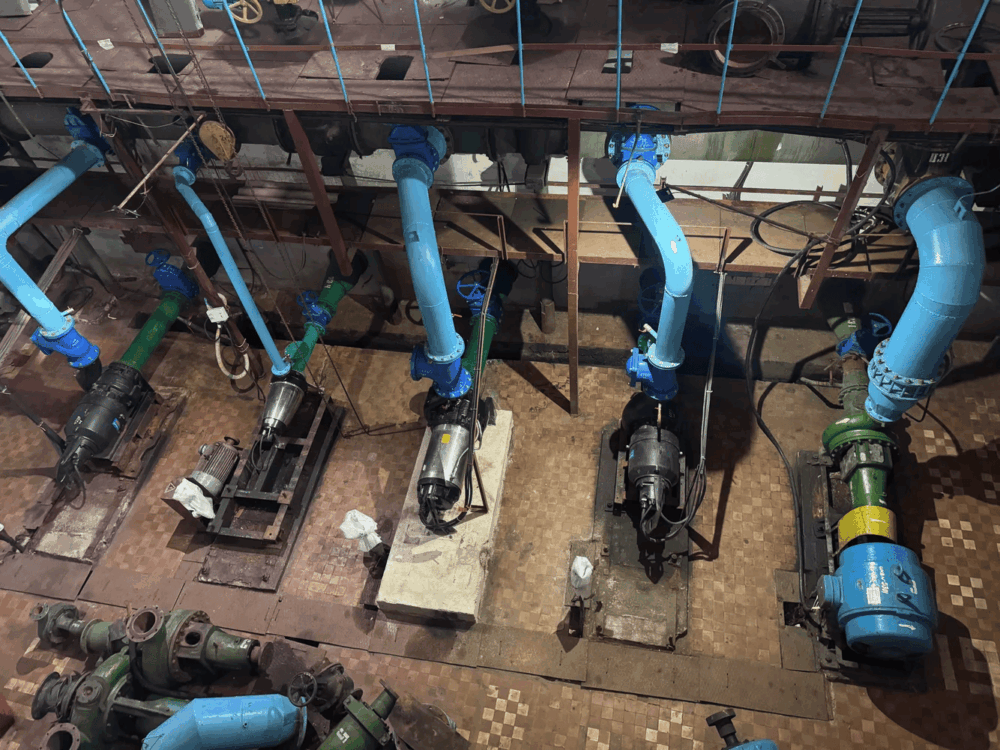
Kherson also often remains without electricity. However, the water supply does not stop even during outages, as generators provided by UNICEF Ukraine and other partners keep the wells and pumps operating.

Currently, the Kherson Water Utility is facing a shortage of qualified staff. Many employees have resigned and left to safer places outside the city. Some evacuated their children to safer locations and later returned to work. Among them is compressor operator Olena, who has been working at the enterprise for more than 20 years.
“When the authorities announced the mandatory evacuation of children from Kherson, I took my daughter and son to Odesa. They are teenagers now. They live there with their grandmother. I come to visit them, I miss them. But here, there are people and work,” Olena says.
Kherson and its residents have been on the line of fire for four years already. However, life continues here, including thanks to the heroic efforts of the city’s water utility workers.
Tags: civilian survival EMPR media humanitarian response Infrastructure Damage kherson Ukraine war news water crisis