Atesh partisans report sabotaging railway infrastructure in Russia’s Belgorod region, disrupting ammunition deliveries to Russian units fighting on the Kupiansk front.
Representatives of the Ukrainian partisan movement ATESH have reported carrying out a sabotage operation targeting railway infrastructure in Russia’s Belgorod Oblast, an action they say disrupted the logistics of Russian forces operating on the Kupiansk axis of the front.
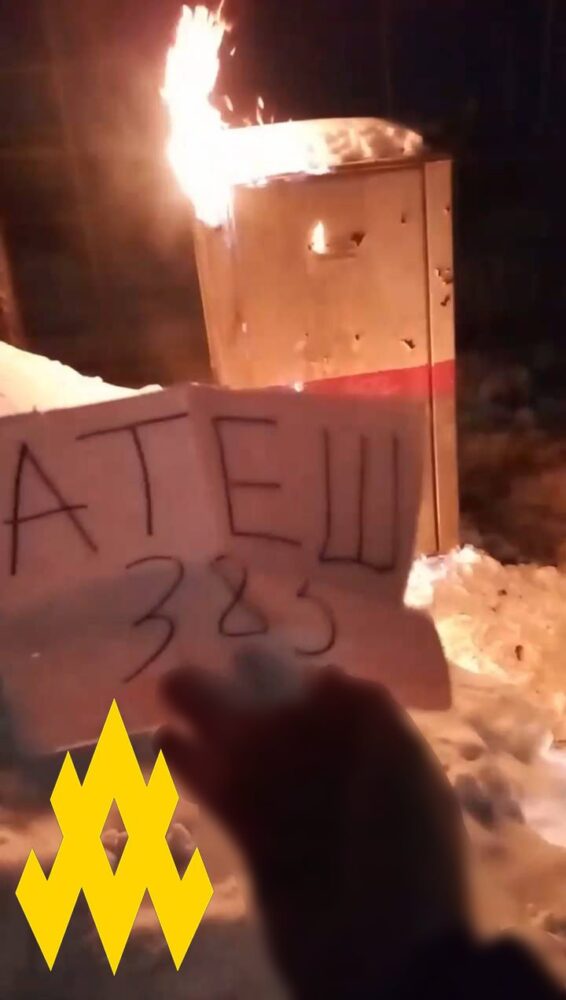
According to a statement released by the movement on March 12, agents affiliated with ATESH disabled a railway relay cabinet on a track section located near the city of Stary Oskol. The partisan group claims that this rail route was actively used by Russian forces to transport ammunition and other military supplies toward the front line in eastern Ukraine.
The sabotage reportedly targeted a key technical component of the railway signaling system. Relay cabinets play a critical role in controlling rail traffic, ensuring the safe movement of trains and coordinating track switches and signals. Disabling such equipment can halt or severely slow railway operations along the affected route, potentially disrupting military transport schedules.
According to ATESH, the damaged railway section forms part of a logistical corridor that the Russian military has been using to move ammunition and other supplies to the front, particularly toward the Kupiansk direction. The city of Kupiansk in the Kharkiv Oblast remains one of the contested sectors of the front line, where Ukrainian and Russian forces continue to engage in frequent clashes.
In its statement, ATESH reported that the route near Stary Oskol had recently been used for an urgent shipment of ammunition destined for two Russian military formations: the 122nd Motorized Rifle Regiment and the 27th Separate Motorized Rifle Brigade of the Russian Armed Forces.
The partisan movement says the supply convoy was organized as an unscheduled delivery intended to replenish ammunition stocks ahead of planned combat operations in the area. According to information allegedly obtained from an ATESH agent embedded in a neighboring reconnaissance battalion of Russian forces, the delivery was considered urgent due to a significant shortage of ammunition in those units.
The disruption of the railway line, ATESH claims, delayed or prevented the planned shipment from reaching its intended destination on time. As a result, the two Russian units reportedly entered combat operations with critically low ammunition reserves.
In the statement, ATESH asserted that the shortage had a direct impact on the combat effectiveness of the affected Russian formations. The group claims that insufficient ammunition limited the ability of the units to sustain fire during engagements, ultimately contributing to significant personnel losses.
While these claims have not been independently verified, they illustrate the growing role that covert resistance networks are playing in the broader conflict. Ukrainian partisan groups have repeatedly stated that they conduct reconnaissance, sabotage, and intelligence-gathering operations in both occupied territories and inside Russia itself.
Operations targeting railway infrastructure have become a recurring tactic in such efforts. Rail networks remain one of the primary means by which Russia transports heavy equipment, ammunition, and reinforcements to the front. Even localized disruptions can create logistical bottlenecks, forcing supply trains to be rerouted or delayed and complicating the planning of military operations.
The ATESH movement, which has previously claimed responsibility for multiple acts of sabotage and intelligence gathering, operates through a network of agents and sympathizers across several regions. The group often publishes reports and images of its operations through social media channels, presenting them as evidence of continued resistance against Russian military activity.
The reported sabotage near Stary Oskol highlights how relatively small actions against logistical infrastructure can potentially influence battlefield dynamics. If supply lines are disrupted, front-line units may face shortages of ammunition, fuel, or equipment, which can affect their operational readiness and their ability to conduct sustained offensive or defensive operations.
As fighting continues along the Kupiansk axis and other sectors of the front, the role of sabotage and intelligence operations behind the lines is likely to remain an important element of the conflict’s evolving dynamics.










![Visitors at the “Thank You With All My Heart” Ukrainian exhibition at the Council of Europe, featuring the Great Amber Heart and powerful war art. :contentReference[oaicite:2]{index=2}](https://empr.media/wp-content/uploads/2026/02/heart-300x171.png)