A psychotherapist explains how to communicate with military personnel and veterans: respect boundaries, avoid triggering phrases, support without pressure, and create a safe, stable environment for adaptation.
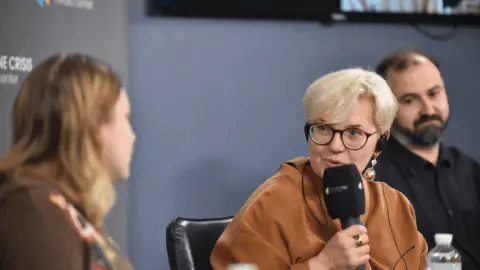
A psychotherapist with 20 years of experience, a trauma therapist and trainer, Rostyslava Pekariuk has been working with military personnel, veterans, and families of defenders since 2014.
How to help loved ones adapt to civilian life after returning from the front line or captivity; what is and is not appropriate to say to military personnel; and what society and the state should do to ensure that the integration of service members is as comfortable as possible for both sides — Rostyslava Pekariuk spoke about this in an interview with Suspilne.
— Rostyslava, could you explain what basic “civilian etiquette” rules exist when communicating with military personnel? What should everyone know?
Basic etiquette is based on respect for a person’s autonomy and boundaries.
Keep distance. Do not try to hug, pat someone on the shoulder, or touch them without permission. For many veterans, physical space is a zone of safety.
Be sincere, but restrained. You should not behave as if you owe this person your entire life, even though in many ways that may feel true, because it creates discomfort for both sides.
Express gratitude calmly. A hand placed over the heart or a nod is a dignified gesture. Excessive pathos or shouting may cause discomfort. Imagine that a soldier is your neighbour whom you simply haven’t seen for a long time. For example, if you see a service member standing in a coffee line, there is no need to deliver a speech of gratitude. A sincere smile or a short “Thank you, have a good day” works better than any grand gesture.
— What cliché phrases should be avoided, and why can they be harmful?
Some phrases that civilians consider sympathetic can actually devalue a person’s experience or violate their privacy. Most of these expressions come from a desire to say something when words are lacking: “I understand you.” No. If you haven’t been there, you don’t understand. This phrase can sound false. It is better to say: “Friend, I have no idea how you endured this, but I’m glad you are here.” Or: “I can’t imagine what you went through, but I can be here for you when you are ready to talk.”
Also, the phrase “You’ve changed a lot,” especially when said reproachfully, intensifies already difficult emotions. In addition, it is not appropriate to demand immediate happiness after returning.
“We didn’t send you there” is the worst phrase since 2014, one that wounds our soldiers. It expresses complete indifference and isolation. Sometimes it is better to remain silent.
“So, how is it there? When is victory?” — this phrase shifts responsibility onto a person who is already giving everything they have, and forces them to make predictions in a situation of uncertainty. For a service member, it can sound as absurd as asking a surgeon during a 12-hour operation: “So, when do we get to go home?”
— How should you react if a military person or veteran shows irritation or a lack of willingness to communicate?
Think about yourself after a sleepless night, a terrible workday, or a long and exhausting trip. Now multiply that by a thousand and understand that it is not necessarily about you personally. A person may be in a state of exhaustion, hypervigilance, or experiencing difficult memories — and very often, all of these at once. So don’t take it personally. Don’t get offended and don’t try to “fix” the person’s mood.
Give them space. If you notice irritation, calmly end the conversation: “I can see/feel that now is not the best time to talk. It was good seeing you, have a good day.”
Stay calm. Your calm reaction helps the veteran feel that they are not “broken” and that their state is being perceived normally.
If a veteran is irritated, do not try to be an “entertainer.” The best expression of respect is to give space and remain calm yourself. You can simply say: “Brother/sister, I can see it’s not an easy day. I’ll be around if you want to have a coffee or talk.” And then quietly step away. This is what mature respect looks like.
— How should we behave when we see a person with visible injuries or a prosthesis?
The main thing is not to focus your attention on the prosthesis or, for example, an injured limb. Keep your gaze on the person’s face.
Act naturally. If the person enters public transport or a shop, behave just as you would with any other passerby, without creating a “zone of special attention” around them.
Do not show pity. A pitiful look or sighs can be discouraging. Instead, show respect for the person’s experience, strength, and resilience.
— Is it appropriate to offer help, and how can it be done without hurting a person’s dignity?
You can offer help, but it is important to ask rather than do it automatically. Help should be unobtrusive, like service in a good hotel.
For example: “May I help you open the door/carry your bag?” Wait for the response. If the person says “no” — accept it. Insisting may be perceived as implying helplessness.
— How should we talk to military personnel about their injuries?
If you are not a doctor, psychotherapist, or rehabilitation specialist, it is generally not recommended for civilians to initiate this topic. It is like asking about the details of someone’s surgery on a first date — a bit too much, isn’t it? An injury is an intimate story of pain and physical limitation.
If a person wants to, they will talk about it themselves. When a veteran starts sharing on their own, then listen carefully, do not interrupt, and do not get distracted by other things. Follow the speaker’s pace. If the story stops, hold the silence. Silence can also be therapeutic. And perhaps that is all the veteran wanted to share at that moment.
Then you can close the conversation with something grounding and pleasant. Even a story about your cat stealing a sausage. Everyday small things can sometimes heal better than memories of a hospital.
— What are the specifics of communicating with former prisoners of war? What should never be asked in the first months after their return?
The first months after returning are like stepping out of deep darkness into bright sunlight. The eyes are blinded, everything hurts.
In contact with a person who has been in captivity, it is very important to carefully respect boundaries — psychological and physical — and to respect timing. Always leave the person the right to choose, even in small decisions.
Avoid evaluations: do not comment on appearance, such as weight loss or skin color.
Forbidden questions include: “Were you tortured?”, “What did they do to you?”, “Who else was there?”, “Why were you exchanged and not others?”
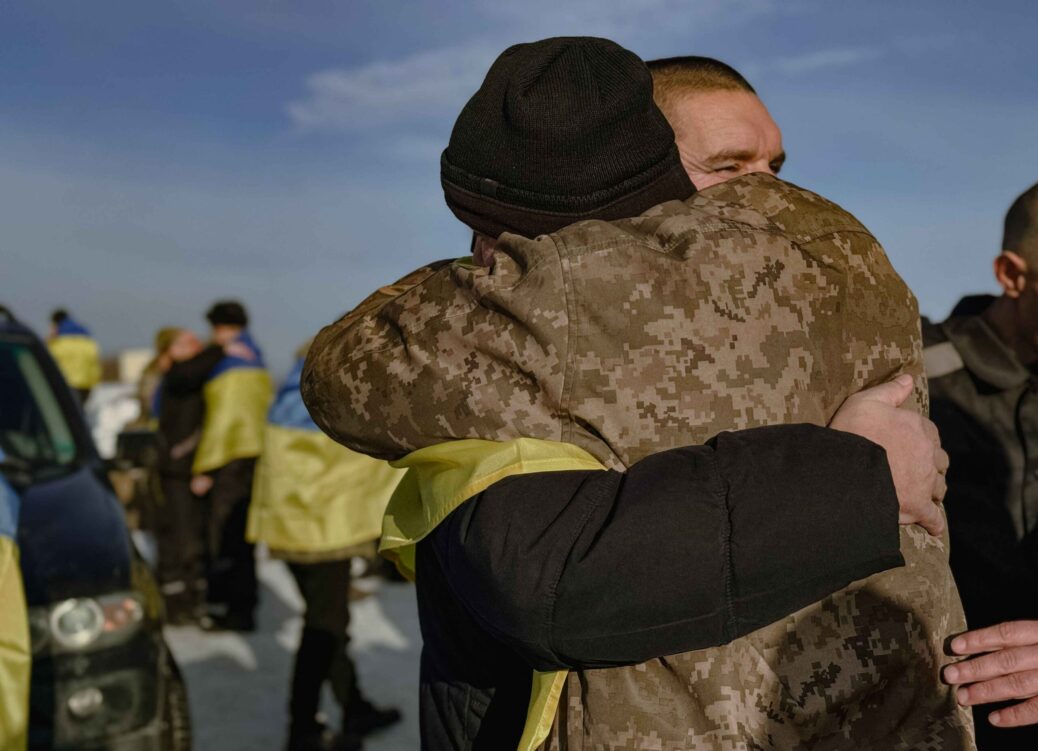
Returning is a long process of the psyche adapting to safety. Do not put pressure. Any questioning can trigger retraumatization. Focus on the life that has returned, not on the hell that is left behind.
— How should loved ones behave at home to create a safe environment for a person who has been in captivity?
Captivity is an experience of total loss of control over one’s own life. After it, it is important to create conditions where trust in the world can be rebuilt — where a person can again feel that the world can be safe. And yes, it starts with trust in those closest to them (family, specialists), and gradually expands to society (the state, the community). This restores the sense that the world is not only hostile, but also contains support and kindness. Safety at home is about stability and control.
Return the right to choose. Do not decide for the person what they will eat or where they will go. Give them the ability to make even small choices. Especially small ones — that is where recovery begins.
Predictability. Inform them about your plans in advance, do not make surprises, and avoid sudden noises or unexpected touch (especially during sleep).
Do not force social interaction. If the person wants to stay at home — allow it.
Home should become a “quiet harbor,” not an interrogation room.
For example, if your loved one wants to sleep on the floor or with the light on — let it be so. Wants to keep a stash of crackers under the pillow? Buy them the best crackers. These are small things that give a sense of control. When a person feels that their “strangeness” does not scare you, they return to themselves more quickly.
— How should we respond to specific habits or reactions that may appear in a person after being in captivity?
A person may hide food, spend a long time in the shower, startle at footsteps, or have sleep disturbances.
Do not make remarks. Do not laugh and do not ask, “Why are you doing this?” In forced isolation, these actions were survival strategies for the psyche.
Be patient. Over time, as the sense of safety strengthens, these habits may disappear on their own.
Normalize the state. If you notice anxiety, you can simply say: “I see you’re feeling uneasy right now. I’m here, we are safe.”
In this case, only love helps, and a bit of humor if your relationship allows it. For example, if you notice a hidden stash of bread, there is no need to lecture about hygiene. You can jokingly say: “Oh, a strategic reserve! I support it — I sometimes stock up on treats too.” Acceptance without judgment is the highest form of closeness.
— Why are civilians often afraid to start a conversation with military personnel? How can this “awkwardness barrier” be overcome?
This fear is usually caused by feelings of guilt (“I’m not fighting”) or the fear of saying something wrong and hurting the person. But silence or indifference can hurt even more.
Acknowledge the awkwardness. It is normal. Do not try to be perfect.
Start simple. A short greeting or a smile is already a bridge in communication.
Stop seeing them as “porcelain dolls.” Military personnel are ordinary people — often with an excellent sense of humor, their own interests, and everyday routines, just like anyone else.
How to overcome it? Understand that a soldier is the same guy who once played football in the yard, or a girl who loved a latte with syrup. Start with small talk — about the weather, traffic in the city. In other words, be human, not a “civilian object.” Show warmth, openness, sincerity, and do not pretend — military people can sense that.
— What should you do if a military person starts talking about horrific events that a civilian is not emotionally prepared for?
Do not devalue it. Do not say: “Don’t think about it.” It is better to say: “This is an incredibly difficult experience. Thank you for trusting me with these memories.”
Ground yourself. During the conversation, feel the support under your feet, drink water — this helps you not to fall into an emotional “hole.”
Show a genuine reaction. You do not need to pretend that everything is fine when, inside, everything tightens up. You are not made of steel, and that is normal. You can simply place a hand on their shoulder, if the person allows it, and say: “Listen, this is so hard to hear that I can barely breathe. Let’s take a breath for a moment. Shall we have some tea?” This kind of honesty is something military people often value deeply.
Be honest about your limits. If you feel overwhelmed, you can say: “What you’re sharing is very important to me, but I’m finding it emotionally difficult to handle right now. Can we take a short break?”
— How can civilians and military personnel find common ground again?
Common ground is not built on shared past experiences (the experience of war), but on a shared present and future.
Look for shared points outside of the war. Hobbies, football, humor, raising children. I, for example, often ask for a funny story from the war. Because alongside that enormous experience and endured pain, our wonderful soldiers also have so much wisdom, and many funny, even instructive stories.
Ask for advice. It is important for a veteran to feel that their civilian competencies and opinions are still valuable.
Shared activity. Do things together — build something, cook, go for a walk. Creating together brings people closer more than long conversations.
Ask a veteran to teach you something useful. It doesn’t have to be assembling a weapon (although that can be very important). Maybe they now know how to start a fire in the rain or how to stay calm when everything around is chaotic. Let them feel that their new experience is also valuable in civilian life.
Tags: EMPR media Ethics mental health psychotherapist interview reintegration Ukraine Veterans war trauma