Russian strikes on Ukraine’s energy infrastructure are not just a tactic of attrition. They are a large-scale social experiment with irreversible consequences that will matter not only for this war but for the next fifty years.
The logic of “forcing peace” seems elegant on paper: deprive civilians of basic resources — electricity, heat, water — creating living conditions so unbearable that continuing resistance becomes physically impossible.
Internal pressure on the authorities should force capitulation for the sake of survival.
A classic siege strategy, adapted to modern warfare.
But this formula ignores one critical variable. When the external threat targets basic physiological needs — warmth, children’s safety, the ability to cook food — evolutionary mechanisms far deeper than rational thought are triggered. Traumatic memories of freezing winter nights without heat or electricity do not register in the brain like ordinary recollections. They are encoded in the amygdala as emotional danger markers.
Children who fall asleep this winter in cold apartments will remember it not as a historical fact but as a bodily experience. Their children will inherit these stories as part of family narratives. This is how intergenerational trauma works.
This is not the first time in history that a state has used hunger or cold as a weapon against civilians. The Soviet past provides a stark case study.
The Holodomor of 1932–33 had a clear utilitarian goal: break peasant resistance to collectivization, secure control over grain, and finance industrialization. For Stalin’s planners, this was a rational strategy; civilian losses were considered an acceptable cost.
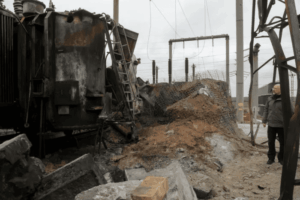
Now, ninety years later, the Russian state is systematically reproducing the same pattern. Only instead of famine, it is cold and darkness. Instead of grain seizure, it is the destruction of power plants. But the psychological mechanism is identical: creating conditions where physical survival becomes a daily challenge.
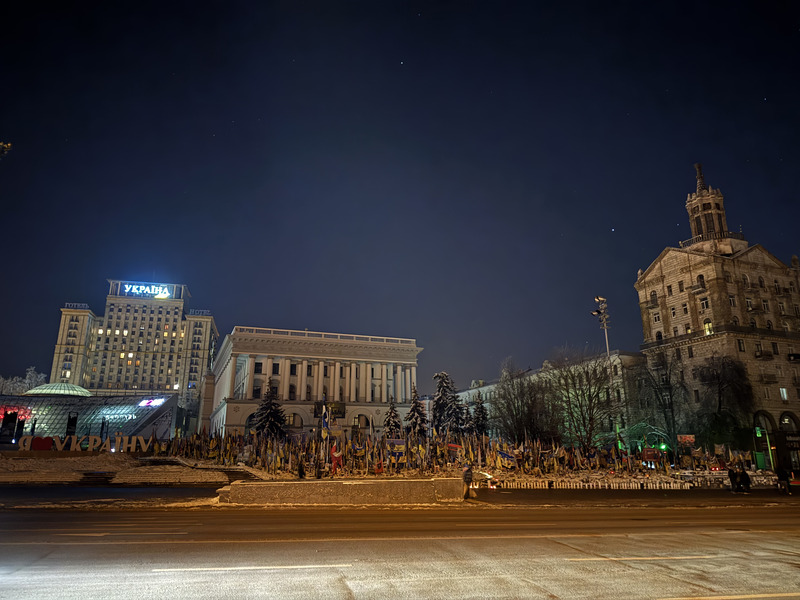
Even if the war ends tomorrow, even if a new Russian government apologizes publicly for terrorizing civilians, even if reparations and reconstruction begin — the trauma is already embedded. Memories of freezing winters, children in dark apartments, and the wail of sirens have become part of the personal history of millions.
The Kremlin has answered the question, “Why do you hate us?” in the most radical way. It has inscribed the answer into the bodily memory of an entire generation — a memory that no propaganda, diplomacy, or economic integration can erase.
Tags: Civilian Impact EMPR media energy infrastructure attacks featured-1 Humanitarian Crisis intergenerational trauma russia ukraine war winter warfare





![Visitors at the “Thank You With All My Heart” Ukrainian exhibition at the Council of Europe, featuring the Great Amber Heart and powerful war art. :contentReference[oaicite:2]{index=2}](https://empr.media/wp-content/uploads/2026/02/heart-300x171.png)