Over the past week, fighting intensified in Sloviansk, Huliaipole, and Chasiv Yar. Russians advanced in some sectors, but most front lines remained stable.
Over 12 years of the Russian-Ukrainian war, we have endured perhaps the most difficult winter yet. Harsh weather conditions worsened the situation on the front line, while the enemy, taking advantage of the freezing temperatures, attacked our energy infrastructure in an attempt to plunge the country into darkness and cold. However, the Russians failed to achieve their goal.
As of early spring 2026, the fiercest fighting is taking place in the areas of Pokrovsk, Huliaipole, and Sloviansk. Battles are also ongoing in the border areas of the Sumy region, as well as in the Kharkiv, Dnipropetrovsk, Luhansk, and Kherson regions.
Read more about how the situation on the front line changed over the week from February 23 to March 1, 2026, in the article by 24 Kanal. Our review of the battlefield map is based on data from DeepStateMAP.
What Was the Winter Like on the Front Line?
From December 1, 2025, to February 28, 2026, there were 15,933 combat engagements along the front line, averaging more than 170 enemy attacks per day. The enemy launched particularly many assaults on foggy days, as drones operate less effectively in such conditions. The Russians also attempted to take advantage of the freezing temperatures to force major water obstacles, such as the Siverskyi Donets River.
This winter, the Defense Forces pushed Russian troops out of Kupiansk. At the same time, the enemy managed to capture the city of Siversk in the Donetsk region. The Russians also launched a series of attacks in the border areas of the Sumy region, carrying out several breakthroughs there.
Zaporizhzhia also faced a particularly high number of attacks. However, the Defense Forces managed to regain positions and clear certain areas near the regional center. They also carried out a large-scale counteroffensive in the Dnipropetrovsk region.
By direction, the situation throughout the winter was as follows:
Pokrovsk direction – 3,994 attacks;
Huliaipole direction – 2,139 attacks;
Kostiantynivka direction – 1,639 attacks;
Lyman direction – 1,079 attacks;
Oleksandrivka direction – 1,011 attacks;
Kharkiv direction – 783 attacks;
Sloviansk direction – 607 attacks;
Kupiansk direction – 481 attacks;
Orikhiv direction – 240 attacks;
Sumy direction – 233 attacks;
Kramatorsk direction – 136 attacks;
Prydniprovske direction – 103 attacks.
The Dynamics of Fighting in the Final Week of Winter
In the final days of February and on the first day of spring, a total of 1,196 combat engagements took place along the front line. In the last days of winter, Russian forces reduced pressure in the Pokrovsk direction while intensifying it in the Huliaipole and Sloviansk directions. For several consecutive days, the Huliaipole area accounted for the highest number of enemy attacks.
By direction, the situation was as follows:
Pokrovsk direction – 227 attacks;
Huliaipole direction – 220 attacks;
Kostiantynivka direction – 111 attacks;
Sloviansk direction – 59 attacks;
Lyman direction – 56 attacks;
Oleksandrivka direction – 47 attacks;
Kharkiv direction – 44 attacks;
Kupiansk direction – 34 attacks;
Sumy direction – 23 attacks;
Kramatorsk direction – 12 attacks;
Orikhiv direction – 10 attacks;
Prydniprovske direction – 3 attacks.
Despite all enemy assaults, the line of contact did not change over the final week of winter in the Sumy, Kharkiv, Kupiansk, Lyman, Kostiantynivka, Oleksandrivka, Huliaipole, Orikhiv, and Prydniprovske directions. We will discuss the situation in other sectors below.
What Is Happening in the Sloviansk Direction?
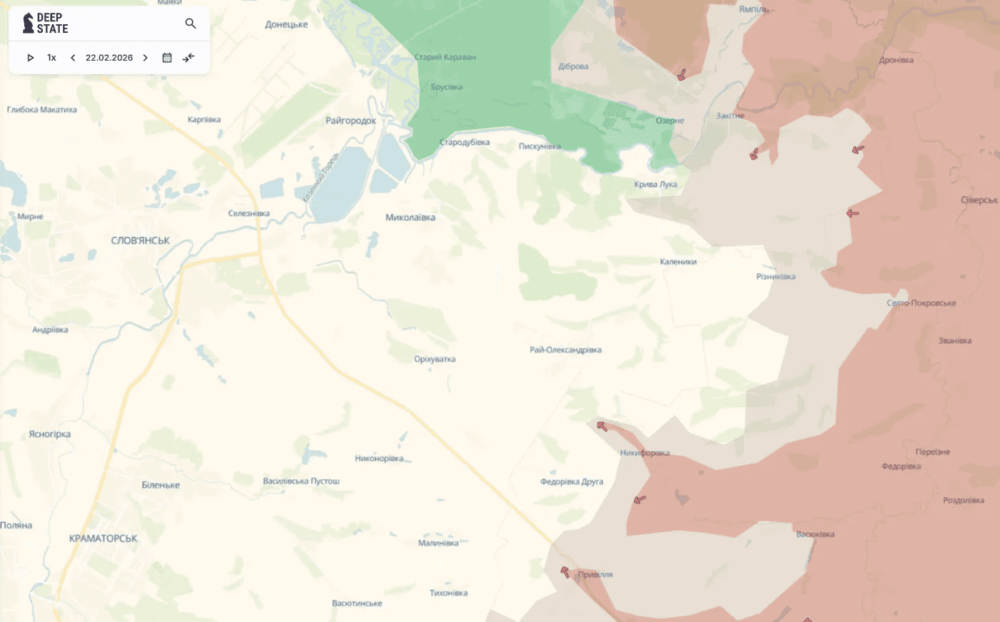
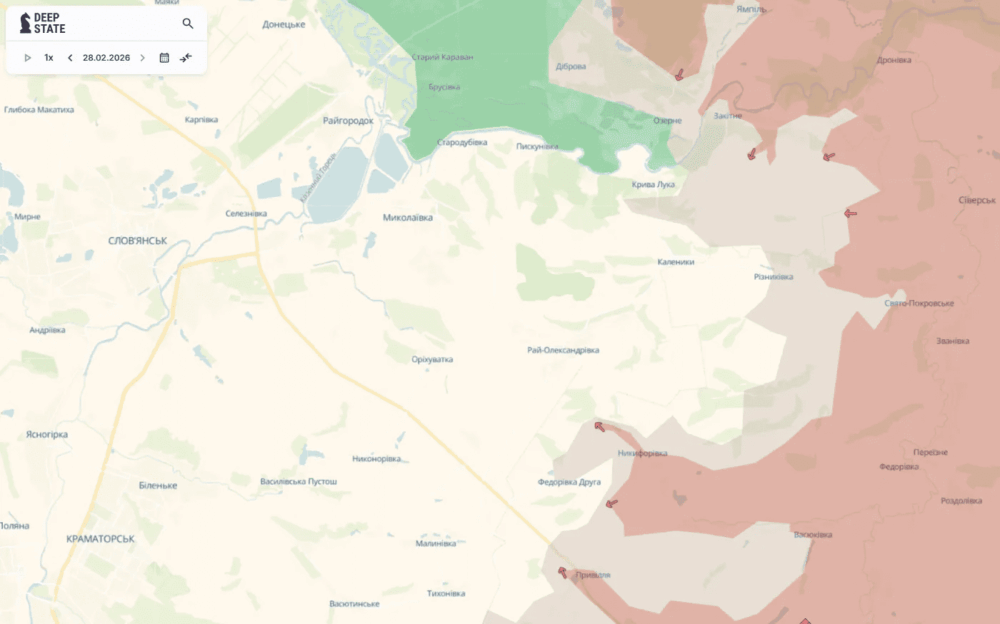
The Sloviansk direction is becoming an increasingly difficult sector, as the enemy considers it a priority. With FPV drones already terrorizing Mykolaivka and the eastern outskirts of Sloviansk, any Russian advance now serves as an opportunity to intensify the city’s terror.
A so-called long curfew has already been imposed in Mykolaivka and nearby settlements — from 3:00 p.m. to 11:00 a.m. The Russians are attacking using KABs, rocket artillery, and drones of various types.
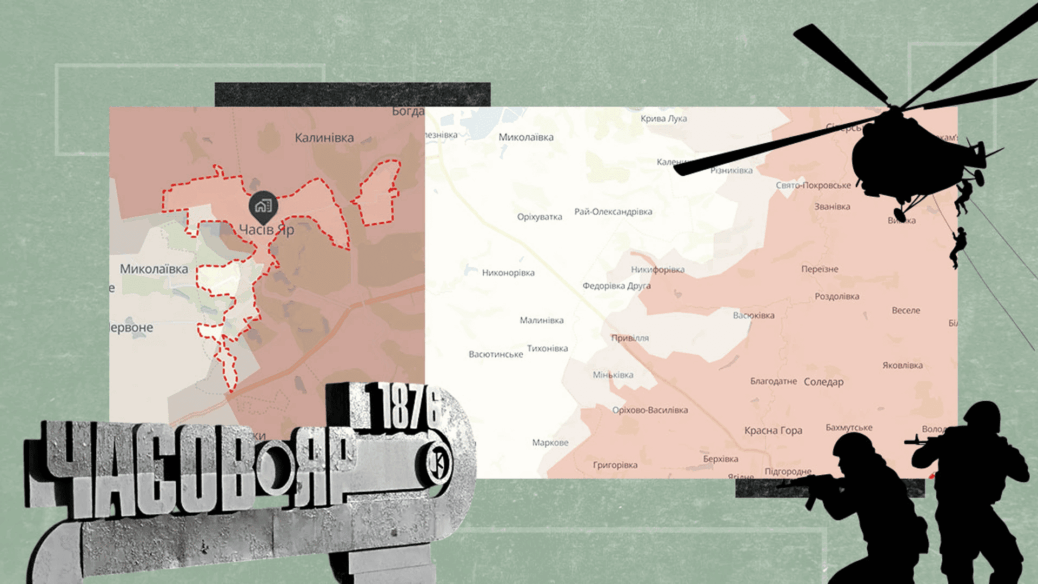
Last week, Russian forces made advances in several areas, primarily near Zakitne and Yampil. They also advanced near Sviato-Pokrovske and Riznykivka.
The situation is particularly difficult along the Bakhmut–Sloviansk highway. There, the Russians have advanced in Nykyforivka, Fedorivka Druha, and Pryvillia in the direction of Rai-Oleksandrivka.
Russians Advance in Chasiv Yar
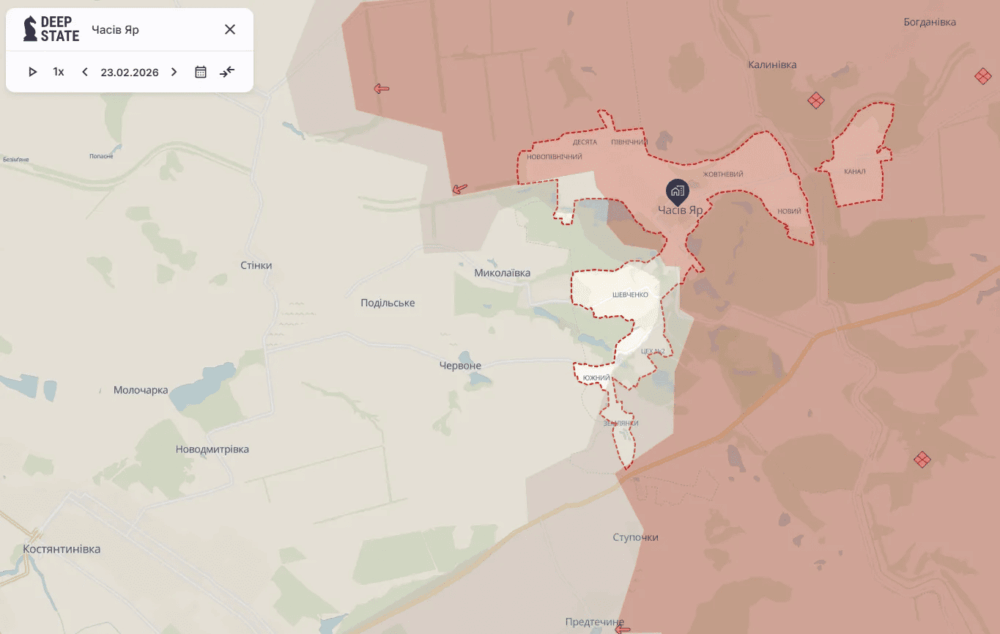
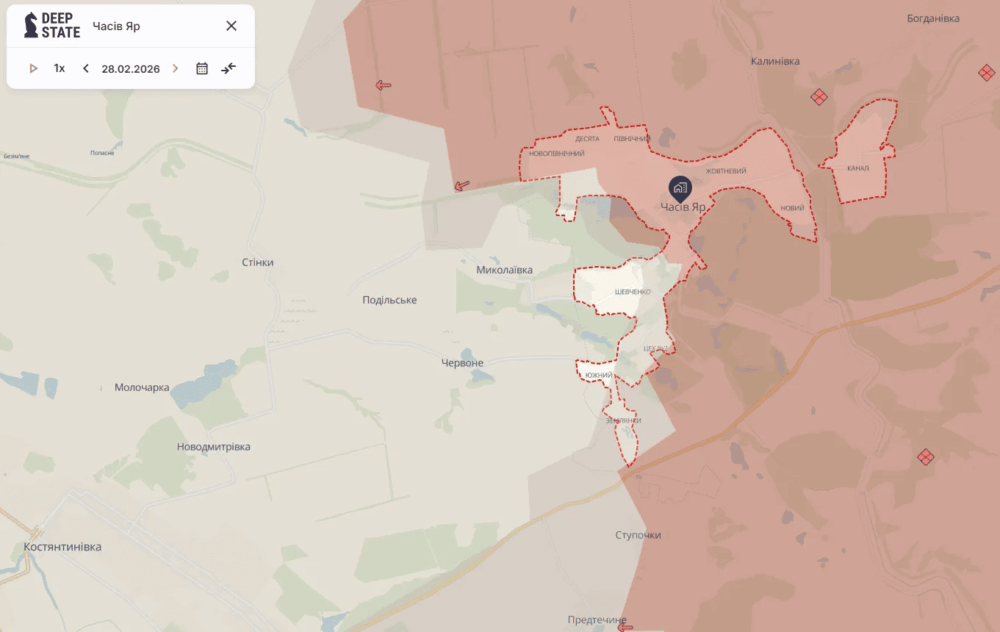
Chasiv Yar is a city on the Kramatorsk direction that Russian forces “captured” last July, although a significant part of the settlement remains under Ukrainian control.
Last week, the enemy managed to advance near the southern outskirts of the city and around the Tsekh No. 2 neighborhood in southern Chasiv Yar. The Russians are trying to take the city, as it poses an obstacle to encircling Kostiantynivka.
Russian Advances in the Pokrovsk Area
The Pokrovsk area remains the most difficult sector along the entire front line. However, every advance by the enemy comes at a high cost in blood. Still, last week in this direction was one of the most stable in quite a long time.
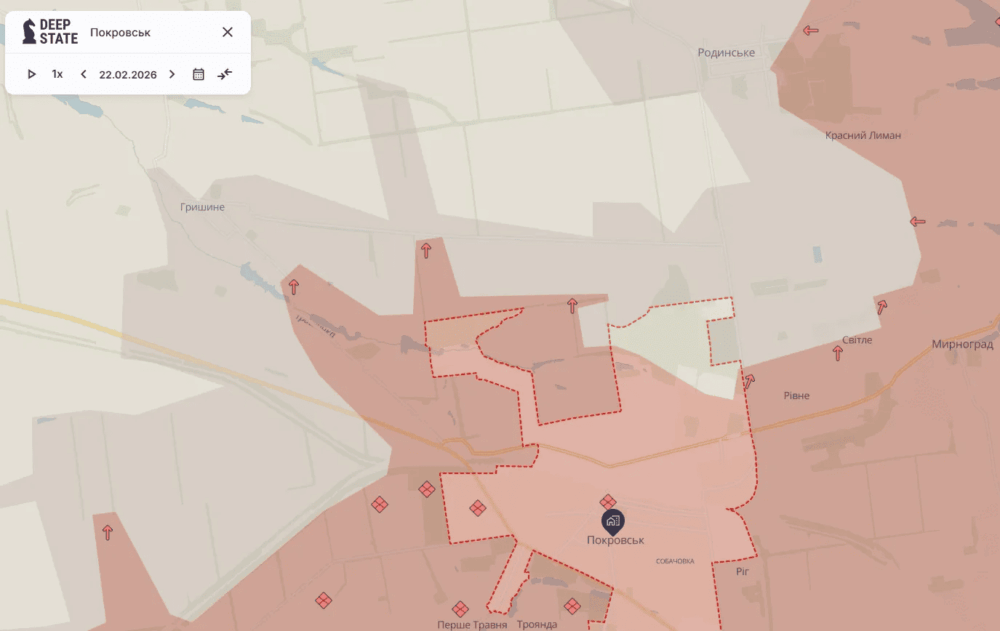
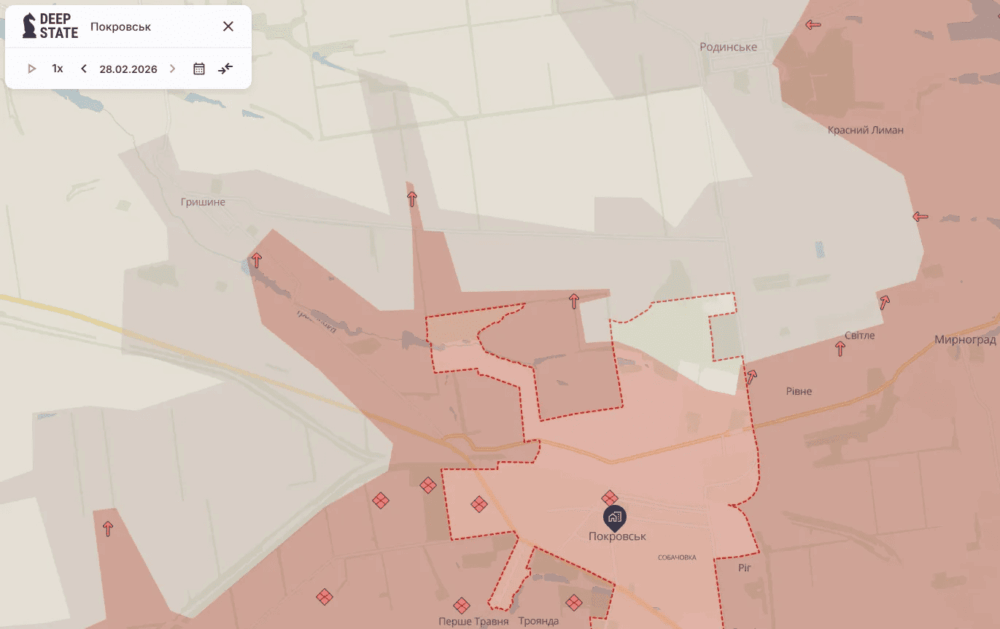
Last week, Russian forces advanced northwest of Pokrovsk toward Hryshyne. The northeastern part of Pokrovsk is in the gray zone, as is the northwestern part of Myrnohrad. Unfortunately, most of these cities remain occupied.
What Will Spring Be Like on the Front Line?
Already in the last days of February, the number of enemy attacks slightly decreased — likely due to warmer temperatures, melting snow, and rainfall, which in some areas created heavy mud. However, in certain sectors, the number of attacks remains high.
In the spring campaign, the Russians will likely prioritize Sloviansk and the Huliaipole direction for advances in the Zaporizhzhia region.
Another key target for the enemy is Kostiantynivka. On the Pokrovsk axis, the enemy will likely try to complete the occupation of Pokrovsk and Myrnohrad, while continuing attacks on Rodynske, Bilytske, Dobropillia, Bilozerka, and further north.
2026 January → February → March → April → May → June
Tags: Chasiv Yar EMPR.media reports frontline shift Huliaipole Conflict Russia attacks Sloviansk Front ukraine war