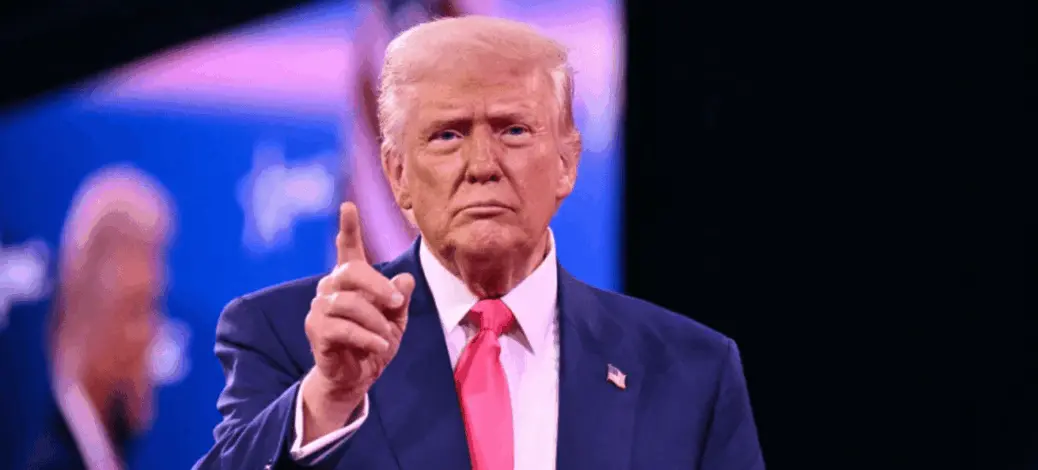
Roman Bezsmertnyy discusses Trump’s pressure on Ukraine, alleged collusion with Putin, threats to U.S. support, Starlink restrictions, Russian diesel supplies, and Europe’s role in safeguarding Ukraine’s sovereignty.
Donald Trump is increasingly tying U.S. support for Ukraine to Kyiv’s willingness to accept terms for ending the war that suit Washington and, above all, Russia. Threats to restrict intelligence sharing, supplies of American weapons, and even access to Starlink are compounded by agreements with Moscow on Russian diesel fuel. According to the respected publication The Atlantic, the White House’s decisions may be driven less by a desire to lower fuel prices than by an attempt to force Ukraine to make concessions to Russia.
Recent developments show that this is no longer an abstract diplomatic dispute. Following another Russian strike on Kyiv, Ukrainian officials said that Ukraine had not received advance warning from its partners about the ballistic missile attack. Reports also emerged that the operation of Starlink terminals had been restricted, resulting in the loss of capabilities needed to carry out certain operations on the front line. Meanwhile, Trump denies that intelligence sharing has been suspended.
Moscow, meanwhile, is gaining room to maneuver. The Kremlin can profit from fuel sales, continue its military operations, and exploit divisions between Kyiv and Washington to its own advantage. Trump’s economic promises have yet to deliver any clear results: diesel prices in the United States remain high, and additional Russian supplies are unlikely to change the situation. The deal has already sparked discontent among some Republicans, who are calling for sanctions pressure on Russia to be restored.
In this situation, Europe has a particularly important role to play as it seeks to mitigate the impact of the U.S. shift in policy. London, Berlin, and Paris advocate maintaining or tightening sanctions, while Brussels is preparing new restrictions on the Russian economy. However, the key question remains: can European allies compensate for a possible reduction in U.S. aid and convince Trump that concessions to Putin will not bring peace closer but instead give the Kremlin additional resources to continue the war?
Ukrainian diplomat and politician Roman Bezsmertnyy shared his views on these and other issues in an exclusive interview with OBOZ.UA.
– Everyone remembers the slogan “Peace Through Strength.” Trump was supposed to negotiate with Putin from a position of strength, but now the opposite scenario is emerging – American power is working in Russia’s favor. During the latest Russian attacks, problems arose with the rapid response. Reports indicate that Starlink operations were restricted, potentially disrupting operations involving Shahed interceptor drones. The deal on diesel fuel also raises questions. Is this an attempt to force Ukraine to capitulate?
– I can say unequivocally that Trump is now on Putin’s side. Moreover, I even agree with the view that if Putin asked Trump for weapons right now, he might provide them. It is obvious to me that, in the current situation, Trump is directing all his efforts toward pressuring Ukraine into capitulation. That is how I assess the situation. Essentially, Trump and the Kremlin are acting in collusion against Ukraine.
The essence of their arrangement is that Moscow continues its attacks while the United States restricts the sharing of information about Russian strikes. This is a key point, because intelligence data is crucial. We are unable to detect ballistic missile launches in time and, as a result, are delayed in responding.
The second factor is restrictions on the operation of the Starlink system, particularly its capacity and speed. There are enough technical parameters that can be used to limit Ukraine’s capabilities, including during retaliatory operations against Russia. In my view, this is a direct order from Trump to Elon Musk to have SpaceX restrict these capabilities. That is how this should be understood.
This package also includes demands for Zelenskyy to resign as president of Ukraine, hold elections, and so on. I can say unequivocally that if Ukraine falters and collapses now, Europe will follow. In about three months, we could find ourselves in a completely different geopolitical reality, in which no one would be left to speak about Ukrainian statehood. The European Union could disappear from the political map, and Europe could simply be carved up between Putin and Trump.
That is why it is critically important to understand now that there is no longer any point in talking to Trump and Washington in the hope of changing their position. He has already made up his mind and can only intensify the pressure. I state this with full responsibility: Europe is the only direction on which we need to focus our efforts.
– Is there any way to change the situation with the United States?
– If Ukraine continues to maintain contacts, it should work with Trump’s Republican circle and the Democrats, while conveying a clear message: Ukraine will not abandon its position. Ukrainian society needs to rally around Zelenskyy. Under no circumstances must the president be forced to resign. Holding elections under the current conditions is equally out of the question.
An important component of everything we do is preserving human lives. We need to change operating procedures wherever possible, move people to remote work, and find ways to protect the population and provide safe accommodation. Despite statements about a possible suspension of intelligence sharing, I, for example, have a schedule at my disposal outlining what will happen and how over the next three to four days. It is clear that Moscow will continue its attacks, while Trump will continue applying pressure.
It is extremely important to take several steps now, but the main focus must be on engagement with Europe. This should also be accompanied by initiating the relevant procedures at the United Nations and the UN Security Council. We must not give in to emotions; instead, we need to follow all formal diplomatic procedures to convey to the world our assessment of the situation and our claim that Trump and Putin may be colluding with the aim of effectively partitioning Ukraine.
– We have grown accustomed to Russia’s actions, but what happened on the American side? Was this an impromptu move, or was it a coordinated operation planned by both sides? On the one hand, we are being deprived of support, while on the other, the attacks are intensifying.
– The current situation is the result of Kushner and Witkoff’s trips in August and September. After their trip to Moscow on the 5th, Dmitriev made an extended visit to Washington. At the time, a scenario was being played out in which Trump was supposed to act in Putin’s favor until the elections in Russia, as elections were approaching and certain processes needed to be completed. After that, Putin was supposed to act in Trump’s favor until the elections.
Initially, an entire spectacle was staged around meetings in Florida, to which Ukrainians, Europeans, and UN representatives were invited. The expectation was that Ukraine would buckle and agree to the proposed terms. But Ukraine did not buckle, and that was absolutely the right decision. The scenario, which was designed to play out until November 3, then began to unravel, and Trump started showing increasing irritation.
The essence of his current actions is to force Ukraine to capitulate by any means necessary, so that he can emerge from the process as a peacemaker before the elections. The date in question is November 3. This must not be allowed to happen under any circumstances, as it would be a catastrophe not only for Ukraine and Ukrainians but also for Europe.
I urge everyone who wants to understand the scale of the threat to watch Donald Tusk’s speech at the Warsaw Security Forum. President Zelenskyy spoke first, followed by Tusk. I also recommend watching the meeting of the European Union’s Foreign Affairs Council in Luxembourg. An important message came through in the speeches: Ukraine must not simply be given as much aid as possible; it must be provided with everything necessary to inflict a decisive defeat on Russia.
In my view, following this diesel deal, the world has finally seen the direction in which the situation is developing. This deal does not solve a single fundamental problem. What does 300,000 tonnes of diesel fuel amount to?
– That is only a few hours’ worth of fuel for American gas stations.
– Exactly. It amounts to roughly half a day, and that is it. Moreover, we are talking about diesel fuel only. To me, this was a signal of a possible collusion. And then, as always, Trump has no strong cards, while they have ended up in the hands of President Zelenskyy. This is how I explain Trump’s fury and hatred toward Zelenskyy.
I have seen similar situations before, when Moscow attacks the president and society struggles to understand what is happening. That is why I want to emphasize once again: Ukraine must not give in on either elections or Zelenskyy’s resignation. We must stand firm, protect people’s lives, and begin systematic work with Europe.
– Senators from both parties have criticized Trump. How significant could this pressure become? Moreover, as Republicans themselves have pointed out, the diesel deal has put them at a disadvantage with American voters. It is difficult for them to explain why such an agreement should be made when it delivers no economic benefits, while the negative political consequences of cooperating with Putin’s regime are obvious.
– As for this diesel deal, Trump has already realized that he has gotten himself into trouble. I think everyone noticed the question he was asked: whether he intended to import fuel from Russia. He replied that Russia does not supply fuel directly to the United States but sells it on the global market. Trump has clearly realized that he made a mistake with these millions of tonnes of Russian diesel. He has started backing down. And what does he have left? Ukraine has become his only argument.
There were two possible scenarios. Either Trump forces Ukraine to capitulate, further alienating both Republicans and Democrats, or he invokes Lindsey Graham’s law, in which case he would be forced to act against Putin. For now, he has chosen his own path. He is interested in Russian billions, Lukoil’s assets, and Nord Stream.
– So, is breaking Ukraine the main goal right now, so that he can finally openly befriend Putin and make money? Is this his primary agenda at the moment?
– Breaking Ukraine to move on to Russian assets and European energy resources. After that, he will put pressure on Europe. He is interested in Russian gas and the ability to control energy flows, including the Nord Stream pipelines.
What is happening will become a stain that the United States will find difficult to live down. I do not even know how the country will be able to carry on after such decisions. American society has not yet fully grasped what Trump has done to the United States. This is about much more than diesel fuel costing six dollars per gallon. That is merely the upper limit of how far the situation has gone.
In effect, the United States is losing its position as the world’s hegemonic power. This signals the end of a certain phase of its global influence.
That is why we must not give in to hysteria now. We need to protect people, stand firm through this situation, and carefully work out all further steps together with our European partners. If Ukraine holds firm and the Democrats win the elections on November 3, they could work together with Republicans to remove Trump from power.
– We are already seeing certain restrictions on cooperation with the United States. Will the pressure on Ukraine intensify? For example, regarding the weapons the U.S. sells to European countries for Ukraine, or will other avenues be used?
– First, Trump will try to exert pressure, but he will do so in a way that avoids making his actions directly visible. The current uncertainty surrounding Starlink operations and the sharing of intelligence on ballistic missiles is an example. Formally, nothing is being suspended. Take note: first, the Ukrainian president reports that the information was not provided, and later he announces that it has been restored.
These fluctuations will continue because Trump does not want to apply pressure openly, even though that is precisely the tool he is using. And we should not expect him to suddenly change his position.
As for weapons, Ukraine does not have direct contracts with the United States in many cases. When it comes to interceptor missiles, the relevant contracts have been signed with European countries. European countries have transferred weapons to Ukraine, while the United States was subsequently supposed to replenish European arsenals. This system continues to operate on that basis.
– Why have Greece and Spain slowed down the process?
– Having heard the statements coming out of Washington, they understand that they would be transferring missiles to Ukraine without knowing when they would receive replacements. At present, the United States does not have sufficient production capacity to supply them with the required number of missiles promptly. At the same time, Greece and Spain need to find a way to use their existing missiles, whose shelf life, according to available information, expires in April. Therefore, they will most likely transfer them to Ukraine.
The situation is different with F-16s and Patriot systems, for which direct contracts or agreements are in place covering maintenance and the replacement of individual components after a certain number of launches. I do not rule out Trump blocking these processes. However, doing so would risk costing him his leverage, as Ukraine could shift to French and Italian weapons systems. That would be the end of the matter: in such a situation, Trump’s position would look decidedly unfavorable.
Second, much will depend in the coming days on Congress, particularly the Republicans in the Senate. I hope that joint efforts by Democrats and Republicans will increase pressure on Trump. His defeat in the November 3 elections already seems entirely plausible. But the outcome itself is not the only thing that matters; the scale of the defeat is equally important. It could lay the groundwork for impeachment or, at the very least, give Congress enough votes to override a presidential veto. These are fundamentally different scenarios. Nevertheless, Trump’s political future is already coming into fairly clear focus.
– If Ukraine were hypothetically to stop striking Russian oil refineries, as Trump wants, could the situation stabilize? Or would that simply be a pretext for another demand to follow?
– No. All this talk about an energy truce, followed by demands concerning the territory of Donetsk region, distracts from Russia’s true intentions. Putin is interested not only in Ukraine but also in restoring Russian influence in Central Europe. It is no coincidence that Donald Tusk speaks of Putin’s desire to return to the order that existed before 1989.
That is why we cannot view this situation as a struggle over individual territories alone. I read the statements of those who call for giving up territory, rushing to Washington, and getting on their knees. But any sign of weakness on our part could lead to the loss of our statehood. Do people really not understand the consequences of such concessions?
Let us look at the situation on the battlefield. Russia is intensifying its pressure, but its resources and capabilities to continue the war on the same scale are limited. When statements were made several months ago about mobilizing 100,000 or 300,000 people, the question arose as to whether those making such predictions understood Russia’s actual capabilities. Concessions to Moscow will not bring peace. On the contrary, they will endanger not only Ukraine but also Europe. By pursuing this course, Trump risks harming the United States itself.
That is why the main priority now is not to give in to fear and to protect people. All decisions, including those concerning the operation of schools, kindergartens, and other institutions, must put public safety first. Our task is to hold out. And finally, November 3 is a key date that could prove decisive for our history.
– Volodymyr Zelenskyy recently met with the British prime minister and the king in London. Why London, specifically, and what should we expect from this visit? Will the discussions also address the policies of the current US administration?
– In my view, the president went to London not so much to meet with Andy Burnham as, above all, to speak with King Charles. The British monarch may be able to help restore dialogue with Washington. If Marco Rubio can be brought into the process, that would be a significant step forward. I believe negotiations with Kushner and Witkoff will no longer yield results.
London should therefore become a venue for substantive talks involving Rubio and European leaders. In my view, European leaders understand that Moscow is behind many of the efforts to destabilize the situation. That is why the growing rapprochement between Trump and Putin poses a threat to Ukraine, Europe, and the world.
– Does Europe have sufficient capabilities to stand up to Russia and increase its assistance to Ukraine?
– First and foremost, support for Ukraine must be secured for the next three months. Europe has the necessary resources, but they need to be mobilized. By the end of February, we will be particularly in need of assistance in countering ballistic missiles.
The next important milestone is January, when the new US Congress convenes. By then, Ukraine’s resilience must be ensured, and we need to assess how the political situation in Washington will evolve. Intelligence on ballistic missile threats and access to Starlink remain critically important. This explains the significance of contacts between Ukraine’s former defense minister, Mykhailo Fedorov, and Elon Musk. Ukraine needs either to find an alternative to Starlink or to reach an agreement to continue cooperation. In my view, Fedorov is the right person to lead such negotiations.