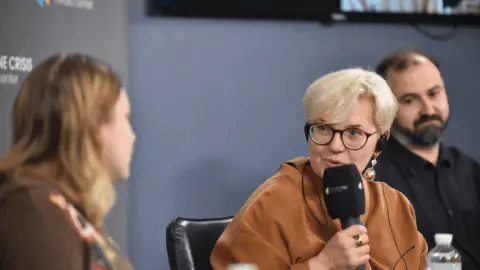
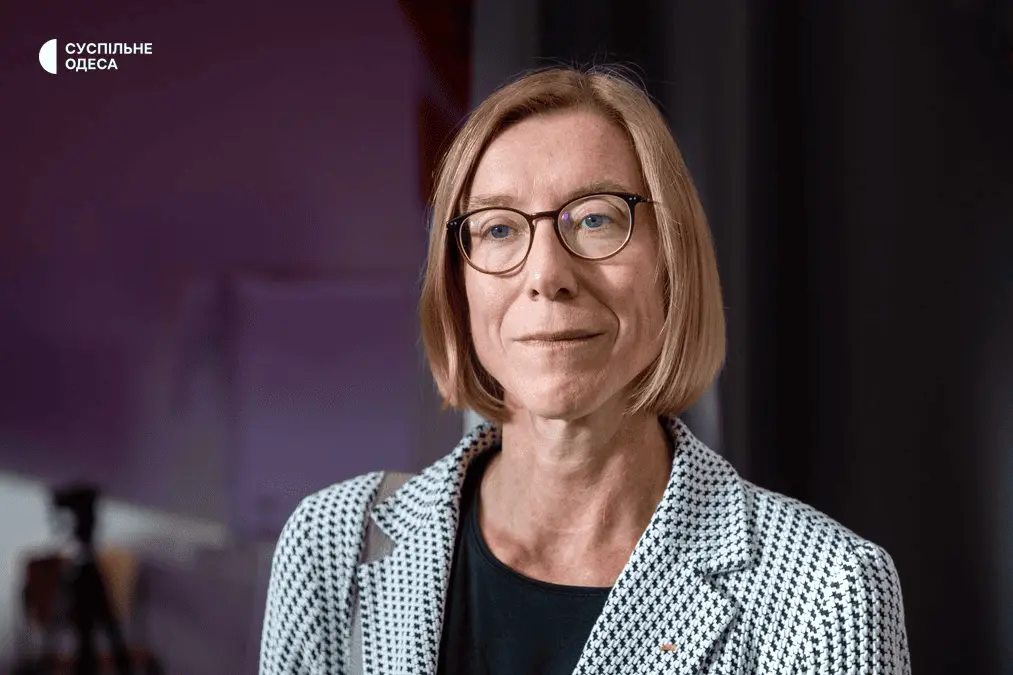
German Deputy Ambassador Katrin Buchholz discusses Russia’s attacks on Odesa, Ukraine’s air defense, energy security, port exports, cultural heritage, and her experience living in wartime Ukraine.
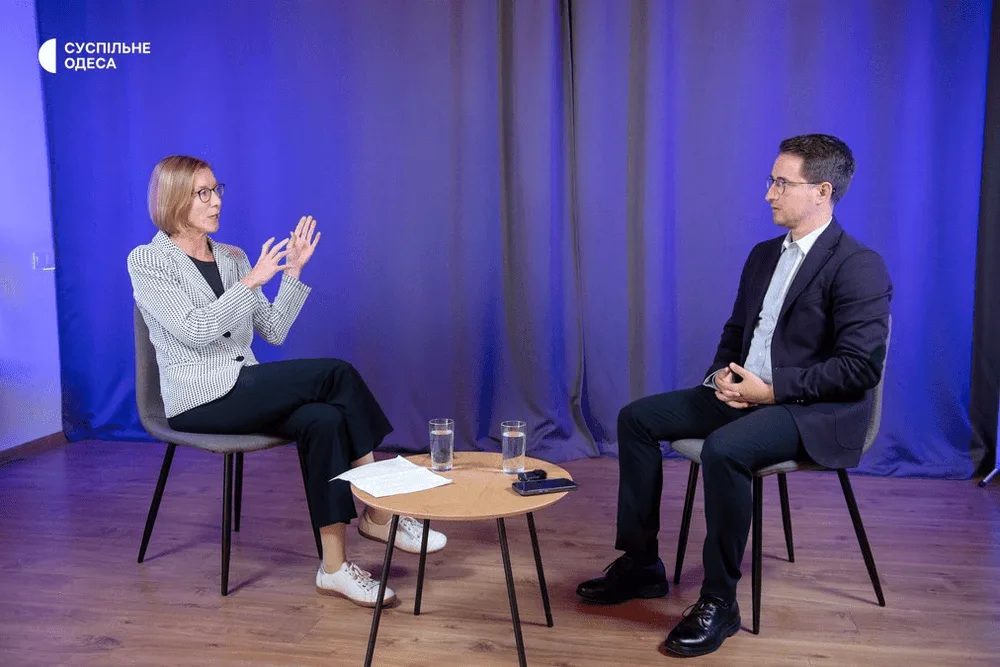
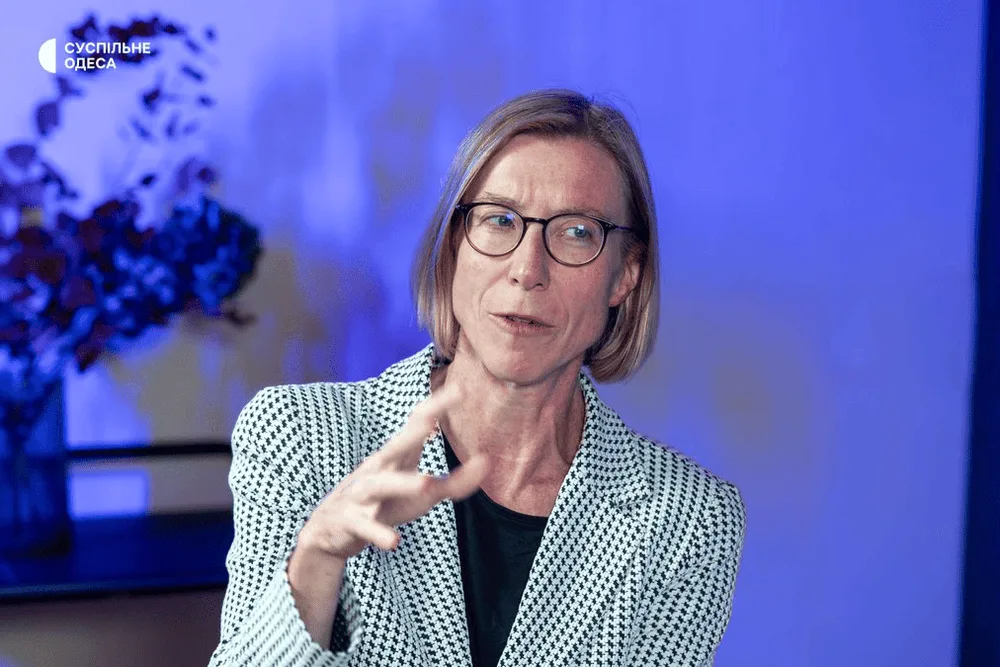
Russia is using strikes on civilian infrastructure to disrupt Ukraine’s logistics and essential services. At the same time, partners must help Ukraine strengthen its air defense and energy resilience. Permanent Deputy Ambassador of Germany to Ukraine Katrin Buchholz said this in an interview with Suspilne.
The diplomat visited Odesa for the first time on a working visit, where she met with representatives of the local and regional authorities. Discussions focused on the security situation, Russian attacks on civilian and port infrastructure, protecting Ukrainian airspace, preparations for winter, Odesa’s needs, and support for the city’s cultural heritage.
This is your first visit to Odesa. What is the purpose of your trip?
I came here with a small delegation that includes, among others, the head of the Embassy’s Economic Department. Our main goal is to get a sense of how things are going in Odesa and Odesa region now, in the fifth year of the war.
Another objective is to establish contacts with cultural figures. As part of their strategic partnership, Germany and Ukraine will launch what is known as the Cultural Season in the middle of next year.
“This Is a Strategy to Try to Wear Ukraine Down”
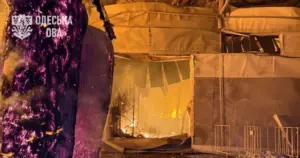
In recent months, Russia has intensified its attacks on civilian infrastructure in Odesa and the surrounding region. Commercial facilities, postal and food warehouses, and pharmaceutical warehouses have come under fire. Does Germany see these attacks as an attempt to paralyze civilian infrastructure?
We came from Kyiv, and we are observing a similar situation there. We see that Russia is trying to disrupt supply networks, damage logistical connections, and bring transportation to a halt.
Ukraine is now facing a major challenge as it tries to counter Russia’s objective of disrupting essential services. This is a strategy aimed at wearing Ukraine down. It is certainly very important to demonstrate strength and not allow ourselves to be weakened.
What should Ukraine and its partners, particularly Germany, do in this situation?
The response must be one of strength. To achieve this, we must help Ukraine defend its airspace, first and foremost, to counter these attacks, which are ongoing and keep happening repeatedly.
Germany is Ukraine’s largest bilateral supporter, particularly in the area of air defense. We know that the German Federal Chancellor recently visited Ukraine and brought a new aid package worth one billion euros. A large part of these funds will go toward protecting Ukrainian airspace. So we must stand strong together.
Ports, the Grain Corridor, and Energy Support for Ukraine
Odesa remains one of the hubs of Ukraine’s maritime exports, while Russia continues to attack port infrastructure and vessels. What options do Ukraine’s partners have to exert pressure on Russia in this situation?
Russia’s willingness to negotiate would be a guarantee of long-term results and an improvement in the situation. That is why Germany’s foreign minister met with the Russian side: partners from the Global South had asked him to negotiate the unblocking of Ukrainian ports.
The blockade of Ukraine’s ports significantly drives up prices on global markets. It has a major impact on food security around the world. However, testing Russia’s willingness to negotiate has been very disappointing, and no constructive discussion came out of it.
What can we do? We can continue our diplomatic efforts to improve the situation and reach a grain agreement, as we did in 2022–2023, or, as happened later, rely on strength — the strength to defend Ukraine, protect its skies, and ultimately get the grain corridor up and running again.
Germany supports Ukraine’s energy sector. What assistance is Ukraine receiving ahead of winter, and what can it expect going forward?
Germany supports Ukraine in this area through the Ukraine Energy Support Fund, which was established to provide assistance to the country’s energy sector. In this context, we cooperate with the Ukrainian government.
The Chancellor’s contribution is particularly significant. During this visit to Kyiv, accompanied by the Minister for Economic Affairs, he brought an additional €250 million in aid.
Odesa’s Needs and Life in Ukraine During the War
During your visit, you met with representatives of the local and regional authorities. What did you discuss?
Yes, we held meetings with the regional leadership, the heads of the city administration, representatives of the military administration, and other institutions.
For us, as an embassy, it is very important to gain insight into how the situation may develop not only in Kyiv but also in other cities. It is also essential for us to understand the specific circumstances in each place so that we can advise our colleagues in Berlin accordingly and help ensure that the right political decisions are made.
What are the main challenges and needs of Odesa that you have observed during this visit?
There are many damaged buildings in Odesa.
I am thinking in particular of a school that was hit. I am also thinking of the Holocaust Museum, which houses many important artifacts. However, it lacks suitable facilities and adequate premises to display them and preserve the memories of this dark chapter in history, including that of Germany.
We are therefore also looking for opportunities and partners to provide more targeted support in the future.
You have been living and working in Ukraine for several months now. How have your perception of the country and your own life changed during this time?
I have actually been living in Ukraine for only three months. But, of course, both my perception of the country and my life have changed significantly during this time. This is the first time I have lived in a region experiencing war. I wake up at night to the sound of missile explosions, and I hear drone attacks throughout the day. This inevitably affects my daily life.
At the same time, my everyday life includes the same experiences as yours and those of everyone here in Odesa. There are wonderful cultural offerings, friendly gatherings, and a thriving culinary scene. It is precisely this coexistence of all these different realities that has had a profound impact on me.