

During the signing of the Law of Ukraine “On Preventing and Countering Anti-Semitism in Ukraine,” which had been adopted almost five years earlier, the President allegedly violated Articles 94 and 24 of the Constitution of Ukraine.
Maxim Golosnoy reveals.

Article 94 of the Constitution of Ukraine:
The law is signed by the Chairperson of the Verkhovna Rada of Ukraine and is immediately forwarded to the President of Ukraine.
The President of Ukraine, within fifteen days after receiving the law, signs it, accepting it for implementation, and officially promulgates it, or returns the law with substantiated and formulated proposals for reconsideration by the Verkhovna Rada of Ukraine.
If the President does not return the law within the established period, the law is considered approved by the President and must be signed and officially promulgated.
If, during reconsideration, the law is again adopted by at least two-thirds of the constitutional composition of the Verkhovna Rada, the President is obliged to sign and officially promulgate it within ten days. If the President does not sign such a law, it is immediately officially promulgated by the Chairperson of the Verkhovna Rada and published under their signature.
The law enters into force ten days after its official publication unless otherwise specified in the law, but not earlier than the day of its publication.
Postscript:
Regarding the Law of Ukraine “On Preventing and Countering Anti-Semitism in Ukraine,” a simple question arises that, for some reason, has not been widely discussed: why is a separate law needed if Article 161 of the Criminal Code already exists, which protects everyone without exception, regardless of nationality or religion, and punishes incitement of hatred against any group?
There is no issue with protecting individuals from hate in a rule-of-law state. However, there is a concern when, instead of equal rules for everyone, a form of selective legal protection is introduced.
Why did the President and the parliamentary majority decide that, during wartime, one ethnic group—described as being particularly close to the President—requires separate legal protection, while others are covered by general provisions?
In my view, the adoption and signing of such a law violates Article 24 of the Constitution of Ukraine.
Article 24 guarantees equality of citizens before the law and prohibits privileges or restrictions based on race, sex, religion, or other characteristics. It ensures equal rights and legal opportunities for all citizens.
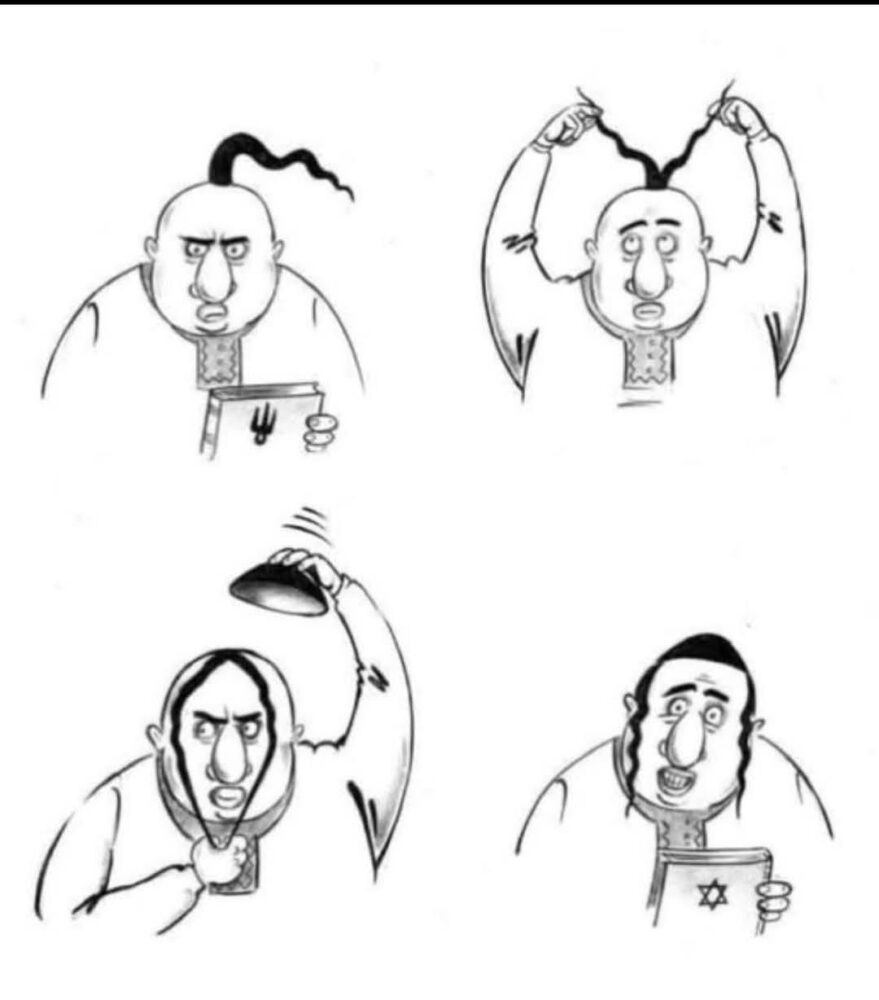
The central question that remains is the following: from whom, other than members of the titular nation, does the President seek to protect his “own people” within Ukraine by allegedly violating the Constitution?
And more fundamentally: protect them from whom?
Tags: anti-discrimination law constitutional debate EMPR media featured-1 Human rights Ukraine legal analysis rule of law Ukraine law Ukrainian Politics