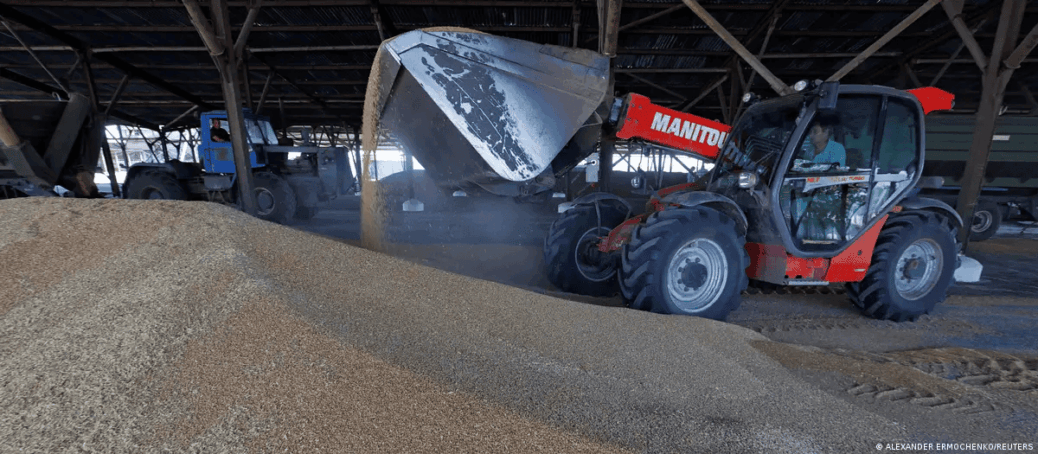
In an interview with DW, Taras Vysotskyi explained how Ukraine tracks allegedly stolen grain from occupied territories using satellite data, laboratory analysis, and international cooperation.
Following the dispute between Ukraine and Israel over the import of grain into Haifa allegedly originating from occupied Ukrainian territories, the question arose of how Kyiv can prove that the grain was indeed grown in the Russian-occupied south of Ukraine. DW spoke with Taras Vysotskyi, Ukraine’s deputy minister of economy, environment, and agriculture.
DW: Mr. Vysotskyi, the recent incident involving a vessel entering the Israeli port of Port of Haifa carrying grain allegedly stolen from occupied Ukrainian territories showed that countries allowing such ships into their ports require Ukraine to provide documentary proof that the grain is in fact Ukrainian. Is it possible to determine the origin of grain through sampling?
Taras Vysotskyi: Together, in partnership with United Kingdom as the owner of the technology and Lithuania, we developed this project and launched the first pilot programs in 2024. The concept is as follows: we have grain samples from Ukrainian territories that are currently temporarily occupied. These samples are stored at a state enterprise — essentially a seed bank.
Each sample contains unique markers linked to the climate, weather conditions, soil, and other characteristics of the area where it was grown. Based on these markers, a database has been developed that makes it possible, with a probability close to 100%, to determine whether specific grain originates from those particular territories.
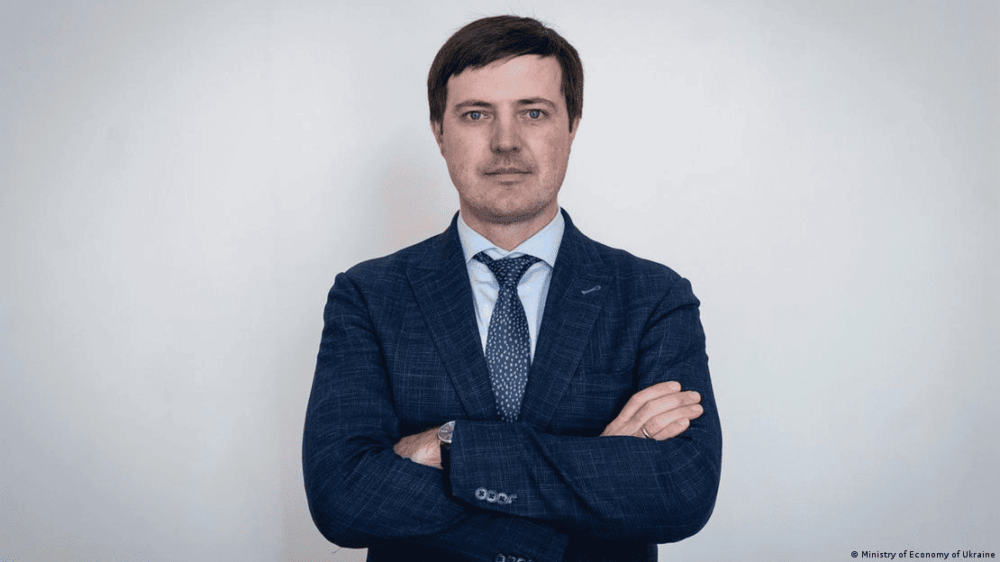
United Kingdom owns the methodology and equipment. We signed a corresponding memorandum with the relevant UK agency. They provided the technology and equipment. The laboratory is located in Lithuania, where there is also port infrastructure that makes it possible to monitor grain shipments, including checking whether they may originate from temporarily occupied territories.
So today, we have laboratory capabilities and markers that allow us to carry out such comparisons. What we need for the analysis is a sample.
DW: And if the Russians mix the stolen grain with their own, does that not make it more difficult to determine its origin?
Taras Vysotskyi: The technology is quite precise, and if the grain is mixed 50-50, it will definitely detect it. If the mix is 5% from occupied territories and 95% from elsewhere, the probability of detection decreases. However, there is no economic benefit in such mixing either — it is too labor-intensive. Practice shows that if the admixture exceeds 10%, the technology detects it. Circumventing detection through mixing while still maintaining economic profitability is very difficult. But a sample still needs to be taken.
DW: Are satellite data also used to determine the origin of grain, for example regarding the loading of ships with grain?
Taras Vysotskyi: Yes, both satellite data and laboratory analyses are used, and they complement each other. For example, if grain is loaded in the ports of Crimea, Berdiansk, or Mariupol, this already strongly indicates that it originates from those territories. Accordingly, officially taking a sample then makes it possible to carry out verification afterward.
DW: How often does Ukraine resort to such laboratory analyses? Who initiates the requests?
Taras Vysotskyi: There are not many requests, because each one is a high-profile case. All of these cases later become public knowledge. Among the participants in this cooperation is the Office of the Prosecutor General of Ukraine. So depending on the situation, the initiative may come from different parties: the state itself or, for example, an independent arbitration certification body at the request of an embassy in a particular country.
If we talk about the total number over this entire period, it amounts to several dozen cases, not hundreds. Over the past year, there have been significantly fewer. It seems they continue stealing grain but are acting more cautiously. In the first years of the full-scale invasion, the exports were more open, but at that time we still did not have these laboratory capabilities for factual verification.
DW: One of the vessels carrying allegedly stolen Ukrainian grain was unloaded in Haifa, while another vessel was ultimately refused entry by Israel. Has the Israeli side provided Ukraine with samples to determine the origin of the grain?
Taras Vysotskyi: There has been confirmation of readiness to cooperate from the Israeli side. The process is not yet complete. I cannot publicly comment on the details until it is finalized. We continue bilateral internal exchanges regarding this case. Once it is completed, we will provide information about it.
DW: Is there any data on how much grain has been exported from the occupied territories overall?
Taras Vysotskyi: We have satellite data. We can estimate the potential harvest on those lands with a high degree of probability — the margin of error is 10–15%, but for macro-level figures this is insignificant. The most common crops in the temporarily occupied territories are wheat and sunflower. According to our estimates, around 8–10 million tons are harvested there annually. This estimate is fairly close to reality because there is no irrigation there, and no one is making serious investments.
It is important to note that we rely not only on internal Ukrainian assessments. There are also independent satellite assessments by NASA Harvest, which since the beginning of the war have effectively become an objective window into the reality of the occupied territories for us.
According to the combined estimates we used in cooperation with NASA Harvest and Food and Agriculture Organization-European Bank for Reconstruction and Development, about 30 million tons of grain and oilseed crops were harvested on temporarily occupied lands during the first three years of the war. So cumulatively, including the current season, up to 50 million tons of agricultural crops may have been stolen.
For us, this is not just agricultural statistics. It is part of the evidentiary base of the large-scale and systematic appropriation of Ukrainian resources.
Tags: food security Global Crisis Russia russia - ukraine war Russia-Ukraine War Ukraine economy Ukrainian Grain War Crimes