
The commander of a mechanized company of the 66th Brigade, “Saper,” speaks about more than 100 combat deployments, the changing role of infantry in modern warfare, and the critical importance of drones on today’s battlefield.
On May 6, Ukraine marks Infantry Day – a day honoring those who carry out the hardest and at the same time the most crucial work in the armed forces. Infantry soldiers are those closest to the enemy, whose presence means that the land is ours. And they are also the ones who, in the end, will put a stop to this war. This is the view of “Saper,” the commander of a mechanized company of the 1st Mechanized Battalion KASSTA of the 66th Separate Mechanized Brigade named after Prince Mstyslav the Brave.
With more than four years in the army, “Saper” has over a hundred frontline deployments behind him. He was among those who stopped Russian forces in the Sumy region at the beginning of the full-scale invasion, and after two injuries returned to service.
As a company commander, “Saper” is responsible for infantry soldiers throughout the entire cycle – from training before deployment to supporting them in positions and extracting them from there. The commander is convinced that infantry remains the most important component of the Ukrainian armed forces, despite all the new technologies that continue to emerge.
Read about “Saper’s” combat path, the preparation of infantry soldiers for deployments today, troop supply supported by drones, and what infantry means for the army now in an exclusive interview for 24 Kanal.
“Way Beyond 100”: On First Deployments and the Experience of “Saper” in the Infantry
The first question may seem banal, but still – how did you join the military, and what were you doing in civilian life?
In civilian life I worked, let’s say, in the trade sector. And on February 25, 2022, I joined the Armed Forces. At that time, like probably everyone else, I went voluntarily.
Do you remember your first combat deployment? What was it like, given the chaos of the first days of the full-scale invasion?
It was on February 28 in the Sumy region. I wouldn’t say I took active part at that moment, but I was on the second line, in reserve support. Back then, a damaged Russian APC reached us, so we destroyed it with my squad. There were no losses on our side. It was such an unforgettable experience.
And when you ended up in the 66th Brigade, what was your first deployment here like?
It was in Marinka, where one of the positions was in a destroyed garage. However, during that first deployment there was no direct contact with the enemy, only artillery shelling. I didn’t see the enemy on that first day.
And when was that?
At that time, we were rotating every other day; we didn’t stay in positions for long. It was the third or fourth rotation. Around 5–6 enemy units came toward us. But we had one machine gunner at the time, and he took them all out by himself.
How many deployments did you have in total?
I can’t say exactly, but it’s well over 100.
Does your experience as an infantryman affect how you work with your subordinates now?
It does. For example, I share my own story with them, analyze situations that have happened, and I can give them advice on how to act in one situation or another. It covers everything – from entering positions and preparing them, to direct contact with the enemy.
Does that calm them down?
Yes. They see that I’ve been through it, that I was wounded and still survived. So they believe that what I tell them works.
How did you get wounded?
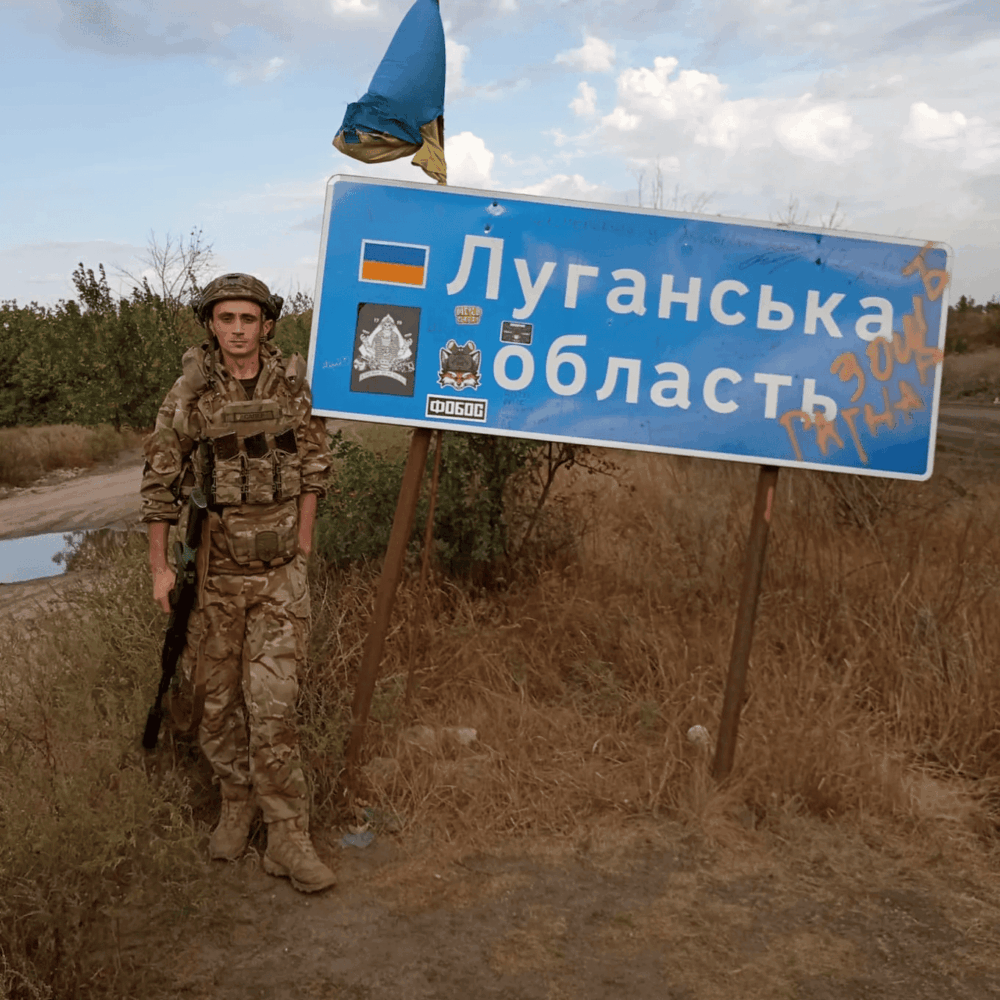
My first injury happened during offensive operations near the village of Makiivka in the Luhansk region. It was a mortar shelling. The wound wasn’t severe – I got a few shrapnel fragments in the soft tissues. They were removed, and I returned to duty.
You’re talking about your first injury, so there was more than one?
The second injury happened at a rest location in 2023 in the village of Novolyubivka. It was either heavy artillery or a guided aerial bomb (KAB) strike.
Fortunately, there were no further injuries.
“Fear Stops Being the Main Thing”: How Infantry Soldiers Are Prepared for Deployment
How do you currently work with new recruits who are about to go to positions?
Right now, we try to train depending on the mission – whether it’s assault tasks or defense. We look for a location that is as similar as possible and work through all the details. As practice shows, this gives good results.
So you try to recreate conditions that will be at the positions?
Yes. For example, if it’s about assault operations, aerial reconnaissance is carried out to study enemy fortifications and positions. Then we try to find the best way to complete the task and keep working on the location until it is performed almost perfectly.
And if a recruit says, for example, that he is afraid or not ready to go, what do you do then?
That happens, but in that case we give him a chance to talk to people who have recently returned from positions. The experience of comrades and personal experience in most cases convinces him.
And once the recruit gets involved and finds himself, so to speak, in the “action,” the fear disappears. Rather, fear stops being the main thing.
If we’re talking about a deployment, what is your role when soldiers go on a mission?
My direct task is to prepare them for it, make sure they are ready and properly equipped.
From the moment they dismount from vehicles, I control where they move, where they take cover, where they wait, and which route they take. If it’s a first deployment, they are either guided by a leader or supported by a drone escort – more often it’s drone support. And we guide them step by step.
If we see that they are approaching the enemy, we relay that information, assess the surrounding situation, and give instructions on what to do, where to move, and how to engage. We also provide support from artillery, FPV drones, and drop munitions. We provide all the support we can.
How long does it take for infantry from the point where they dismount from vehicles to actually reach the position?
On average, it takes about a day. But it depends a lot on weather conditions and how strong the enemy’s fire pressure is. It can be as little as 2–3 hours, or a day or even more.
When soldiers go to positions, do you try to give them an idea of how long they will stay there? Do they have any kind of reference timeframe?
They are prepared for that at the brigade training ground. There they are told roughly how long a deployment lasts, and I repeat that information. So they have a general understanding of how long they will likely stay in position.
When offensive actions by the enemy take place, as I understand, you are also in contact and coordinate the soldiers’ actions?
I am always in contact. However, thanks to our unmanned systems, nowadays very few from their side actually reach our positions. And if they do, it is not large groups like before – 12–15 people; now it is mostly 1–2. As a rule, in good weather they don’t make it, and only in rain or fog is it possible.
Is there any indicator of how many enemy groups set out and how many actually reach our positions now?
If we take the initial stage of their movement, starting from about 10 kilometers out, roughly 1 in 10 can make it through.
Ice Instead of Water, Tetris and Cigarettes: How Infantry Soldiers Are Supplied on Positions
While soldiers are on positions, do you maintain contact with them? How often do you communicate?
Absolutely. I am almost constantly at the command and observation post. They hear me every day, and we communicate at least once an hour.
What about communication with their families? One day without contact is already difficult, and here we are talking about weeks.
Communication is possible through us. We cannot provide direct conversations, but a soldier can record a voice message via radio, and we pass it on to their families. Likewise, families record voice messages, and we deliver them to the positions.
Some really miss their families and record messages twice a day. We practice that.
Now, supply for soldiers on positions is mainly delivered by drones and ground robotic systems. How often do infantry soldiers receive such “packages”?
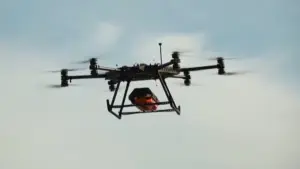
Heavy bombers drop supplies every day, if weather conditions allow. Compared to what I hear about other units, we are in a very good situation.
We’ll come back to that topic later. But there is also a question about these packages. Infantry soldiers, as I understand, jokingly call them “Glovo.” Two soldiers from your brigade, whom we spoke with earlier, said they even ordered ready-made meals delivered by drones.
Yes, we still practice that. Although, unfortunately, we cannot provide it every day. When we have the opportunity to cook, when conditions allow it and there is someone who can do it, we do it.
What was the strangest thing soldiers on positions ever ordered?
Sometimes there are requests that make me wonder why they even need that. But if they order such things, it usually means they already have everything essential covered.
Sometimes they order books or magazines. Occasionally something like a Tetris game, just to pass the time.
Do soldiers still carry huge loads when they go to positions?
We are trying to minimize that now, so that they are as mobile as possible during movement. They go “light” – they have body armor and a backpack. But we don’t overload the backpack; we try to keep it up to around 10 kilograms. Everything else is delivered separately.
As far as I know, there was a period when delivering water was a problem?
Yes. That was when we were using Vampire-type drones. Now we have Heavy Shot systems connected via Starlink, and that has made water delivery easier, because the drone can almost land on the ground – the cargo is dropped from a height of about 2–3 meters. Previously, it was dropped from 70+ meters, and it was quite difficult to package it so that it would land intact.
And how did the soldiers manage in that situation?
We would drop frozen water, and they would collect it even if it broke. Then they would melt the ice. At least there was some water, but it was complicated and difficult.
If we talk about supplies in general, what usually comes in the packages soldiers receive?
Cigarettes, water, ready-made food if possible; if not, canned food. Also change of clothes – if people stay in positions for a long time, then T-shirts, underwear, socks. That’s the basic set.
“5 Days Along a Route Controlled by the Enemy”: How Infantry Soldiers Return From the Zero Line
How long can it take for infantry to return from a position?
It all depends on the weather. It’s the same as with the way in – if conditions allow, it can take 2–3 hours. If weather doesn’t interfere with drone operations, then it can take a day or even longer.
Have there been cases when evacuation took a very long time but still ended successfully?
Just recently. The withdrawal took place along a route controlled by the enemy. Unfortunately, there was no alternative route from that position. The soldiers were moving for about a week – more precisely, 5 days. But everyone got out safely.
When soldiers return, they are met — and what happens next?
In our battalion, it looks like this: they come back from positions, at the rest area they wash, eat, and rest for a day. Then they go to the battalion hub, where they continue resting, work with psychologists, and sometimes receive massage therapy. After that, those who are due for leave go home, and those who are not yet go to the training ground to improve their skills. Then comes the next deployment.
“‘He Understood Himself That It Was Better to Stay Longer’: On the Longest Infantry Deployment”
It is now widely agreed that infantry is the hardest, but at the same time the most important role in the army.
That is true. Being an infantry soldier, even if you do not see the enemy, is extremely difficult. Living in a trench or a basement – if it’s a village or urban area – is mentally and physically exhausting.
What can ease that burden on infantry?
First of all, a soldier must not feel abandoned. They need to understand that they have support, both in terms of combat operations and supply.
Communication with families also plays a role. And, of course, rotation – they should not stay there for too long.
If we talk about your subordinates, what was the longest deployment?
114 days. Unfortunately, circumstances did not allow us to rotate him out earlier.
What was the further fate of that soldier?
He came out, rested, and went on leave. After that, he returned and is currently back on position.
However, mentally he feels fine. Back then, he understood that it was for his own safety and that it was better to stay longer and come out more safely.
Was the leave planned or was he sent outside the queue?
It was planned. But each infantry soldier is entitled to two leaves per year, as required.
As far as I know, you have a practice where if someone has spent more than the norm on positions, they can be reassigned to another role and not go back to the front line. In this case, the soldier went back – was it his own decision?
Yes, we do have such a practice, and we try to find another position if the soldier wants it. However, that infantryman was not against going back again.
In your opinion, how long should an optimal deployment last?
I think up to a month – within that period you can still feel more or less normal.
“Everything Has Become Much More Difficult”: How Infantry Work Has Changed During the Full-Scale War
Obviously, if we compare it to 2022 or 2023, a lot has changed for the infantry. From your observations, what are the most noticeable changes compared to your own experience as an infantryman and what is happening now?
Almost everything has changed. If we talk about the route to and from positions now, it has become much more complicated. The active use of drones has had a major impact on this.
Firefights have almost disappeared. In 2022–2023, there could be 2–3 assaults a day, when the enemy advanced in groups of 7–15 people or even used vehicles. Now this is rare. And even when it happens, it’s usually a situation where there are 3–5 of our soldiers on position and 1–2 enemy soldiers approach. If our fighters are confident in using their weapons, then, as a rule, there are no problems.
So it seems to follow that the work of units supporting infantry is extremely important for infantry soldiers?
Yes, infantry support is extremely important. And right now, this role is largely taken on by unmanned systems. The effectiveness of artillery and mortars has decreased, because there are no longer such large concentrations of enemy forces as before. Drones pick off small groups, and in that way they help infantry soldiers.
The main change is the dominance of drones. However, a friend of mine who served in the infantry for about three years said that no matter what technologies appear, war is fought and won only by people.
That is true, because a frontline cannot exist without an infantry soldier. Someone has to hold that line. And the same goes for an offensive – until infantry enters, that territory cannot be considered ours. The decisive actions are carried out by infantry.
So, accordingly, it cannot be said that, for example, ground robotic systems could replace infantry, but can they strengthen it? We talked about logistics, but what about combat ground robotic systems?
Of course, they can support combat operations. There are also strike ground systems that can deliver an anti-tank mine into a dugout and detonate, effectively destroying an enemy strongpoint. However, in order to actually secure that position, an infantry soldier still has to go in afterward – to control and clear it, and to verify everything.
There is also something else already being used in some adjacent units, although we don’t yet have it – a ground robotic system equipped with a machine gun or a grenade launcher can engage the enemy, and it is quite effective.
Have there been cases where during assault operations drones and artillery worked over a certain area and it seemed that all Russian forces had been eliminated, but when infantry began clearing, they still found enemy soldiers and finished them off?
That happens almost always. Even if the enemy has a well-prepared strongpoint, artillery and heavy bombers are used on it. This helps a lot and can eliminate most of the enemy infantry. But there is always someone who digs in somewhere and waits out the attack. And it is the infantry that carries out the final clearing.
“That Shouldn’t Be the Case”: On the 14th Brigade Scandal and Stereotypes About Infantry
We talked about supply and other units. As I understand, you saw what was circulating around the 14th Brigade, where photos of infantry soldiers spread online. How did you react when you saw it?
That should not be the case. If a brigade cannot properly supply its soldiers, then they are probably not interested in developing heavy drones or ground robotic systems. It shouldn’t be like that.
In the context of this situation, commanders who allowed it are, of course, being suggested to be sent to the infantry. And such suggestions come up often for different reasons, which creates a stereotype that infantry is a form of punishment.
Yes, that is a stereotype. If you talk to our infantry soldiers, you will see that they don’t see it that way. For them, it is work that has to be done, and they do not consider it punishment.
Another, unfortunately common stereotype is that people almost equate infantry with death. You, like many other soldiers, are already a counterexample to that. But before joining the army, were you influenced by this stereotype?
No, I never thought about that. Not at all.
“Not Only a Lack of People: What Are the Main Problems of Infantry in 2026?”
There are currently ongoing discussions about military pay. I won’t ask whether you think infantry pay is sufficient. Instead, what do you think it should be?
Considering the work they do, it should definitely be higher. This topic has already been widely discussed, so I’ll just emphasize that it needs to be increased.
What do infantry soldiers lack the most today?
At minimum – rotations. To remain combat-ready, people need to rest.
Is this only a problem of manpower shortage, or are there other aspects as well?
It is not only about human resources, but also about drone activity. Entering and leaving positions is now the most dangerous stage of a soldier’s time at the front.
It is actually safer to be on the position itself than to move in or out of it. You have to catch the right moment and strike enemy drone operators – it is quite a complex task.
What skills does an infantry soldier need most today?
Lately, drones are widely used, so you need to be able to move in a way that avoids being seen. You also have to properly fortify your position so that you can at least withstand FPV attacks, heavy bombers, and other weapons.
If we look at your subordinates, what is the average age of an infantry soldier?
On average, it is around 45 years old. So these are not young people anymore. There are also those who are well over 50.
Is this kind of work even harder for them?
It has to be approached individually – everything depends on a person’s moral and physical condition.
“Hold and Move the Front”: On the Importance of Infantry in Modern Warfare
What does infantry mean to you, as someone who has gone through the path of an infantryman and whose work is still closely connected to it today?
For me, infantry is the force that primarily holds and moves the front. Without an infantry soldier, there is neither a front line nor defense. Infantry is the foundation of the army – something that is absolutely essential and cannot be done without.
No robotic systems can replace infantry. I cannot imagine war without infantry. And it is infantry that will ultimately put the final point in it. It is impossible to fully destroy the enemy with drones or ground robotic systems without infantry. All these means are support for infantry.
But many people are afraid of infantry.
It has always frightened many people. But if it is a properly organized unit with proper planning of operations, then everyone who ends up there changes their perception and stops being so afraid of it.
Tags: 66th brigade frontline interview infantry warfare military analysis Ukraine soldiers ukraine war war insights