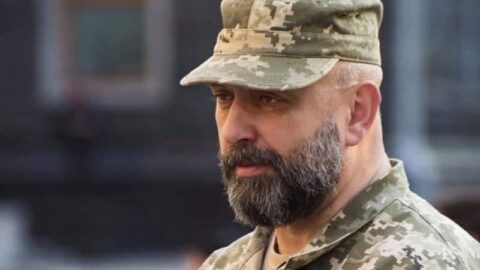

Yuriy Butusov on the war, command issues in the Defense Forces, mobilization challenges, the role of drones, army reform, and the need for systemic changes in military leadership.
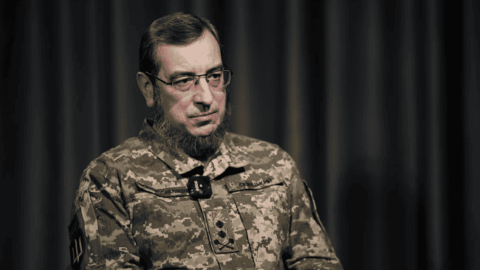
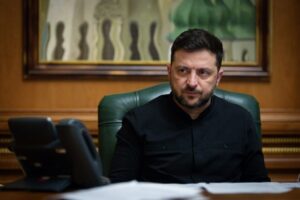
Yuriy Butusov is a platoon commander of unmanned systems in the 13th Brigade of the National Guard “Khartia”, a journalist, and the editor-in-chief of the publication “Censor.net”.
In an interview with Apostrophe, he explained why he considers the situation at the front to be most favorable for stopping the Russians, whether he received any response from the leadership for his criticism of the assault regiments of the Ukrainian Armed Forces, why Ukraine is only nominally moving toward NATO, and why mobilization is not the primary problem in the army.
– You are in the Kharkiv direction. What is the situation in terms of the enemy’s attempts to assault our positions in the area of responsibility of your unit?
– In the area of operations of the “Khartia” brigade, we hold the tactical initiative. All enemy attempts to attack are repelled with no chances for the adversary. Therefore, the situation in our sector is stable.
The overall situation is also stable, as far as I know, across the entire sector of the Second Corps “Khartia”.
– Has the enemy changed its tactics compared to the winter season in any way?
– For us, the winter season has not ended yet; in terms of battlefield tactics, it is effectively still ongoing. Winter is important for combat operations as a season when foliage completely disappears and the effectiveness of thermal imaging sensors on drones increases.
Right now everything has already started to turn green, but there is still a week or two before full foliage cover appears and the ground warms up, and then the conditions for combat operations will change.
– Can you assess whether there is a threat that the enemy is preparing some large-scale offensive?
– The enemy has not stopped its offensive. The Russian strategy of warfare, which has been in place since October 2023, remains unchanged. The enemy continues what I would call a permanent offensive, carried out through small infantry groups and individual soldiers.
This tactic is meant to be applied along as wide a section of the front as possible, because the strategy of a permanent offensive is about applying pressure everywhere at the same time in order to weaken our ability to conduct rotations, maneuver forces, and so on. Therefore, this offensive has continued and is still continuing.
The fact that the enemy was stopped in winter is simply due to the fact that infantry in winter conditions, at low temperatures and without concealment, in modern warfare with intensive drone usage, is effectively doomed to be destroyed.
– What do you say about the state of the enemy army?
– I believe that the combat capability of the Russian army is significantly decreasing. The combat capability of the Russian army is currently much lower. In my view, the conditions for stopping the enemy right now are, in fact, the best since the beginning of the full-scale war overall.
The enemy is exhausted by its continuous offensive. The enemy is indeed demoralized by the increased intensity of our UAV units’ operations, as well as by the improvement in their quality of both command and overall organization at the front. This has a demoralizing effect on the adversary.
The enemy’s active offensive actions continue only because, unfortunately, we still have a significant number of sectors where there are certain problems in the employment of forces, in organizing command and interaction — primarily between infantry, drones, and other support and logistics units. There are indeed issues with this. Where these problems are not resolved, the enemy can still slowly advance.
Looking at the overall situation, the Ukrainian Defense Forces are currently in a position where they can both stop the enemy and defeat them on any section of the front — provided there are competent commanders at the corps and brigade level who are able to organize troop command, structure forces properly, and apply flexible tactics.
– Are these problems related to the quality of unit command?
– First and foremost, they are organizational problems. From these stem command problems, problems of employment, and problems of training.
– Yuriy, tell us more about “Khartia”. How much have your perceptions of the brigade changed from before you became a serviceman, and what do you see now?
– I am often asked what has changed for me since I became a serviceman. In fact, since I already spent most of my time in the military environment, it is impossible to surprise me with anything after so many years. In many matters and situations, I have had experience since 2014 that most other servicemen do not have. So I cannot really be surprised here.
I would say I was only surprised by the fact that certain administrative and bureaucratic processes, certain decisions that I expected to be much slower and more inconvenient, are actually handled quite quickly and without issues. That is about it.
In terms of administration and dealing with military bureaucracy, I have always been a pessimist. In this case, it was a pessimism that did not come true.
– In your opinion, can “Khartia” be a kind of prototype or even a model for other units?
– I think that “Khartia” is a model that can be scaled and should be scaled. In Ukraine, there is no analytical work on the analysis of combat experience, no conclusions drawn, and no strategic plan for the further deployment of forces. A lot is still built on bottom-up initiative rather than top-down.
I believe Ukraine needs to try to systematize and scale different models of successful combat units—several corps, several brigades, several regiments—so that different methods can be selected for different tasks and different types of commanders, and tested in combat conditions.
I think there is a lot to learn from “Khartia”, but we also have other units with their own combat experience and their own models for scaling, which are also interesting to me. So I believe “Khartia” should become a base within a corps for scaling.
I hope that the “Khartia” corps will be formed this year with its brigades, which still has not happened. Because, once again, we underestimate the role of army corps and the importance of properly organized command and control. Unfortunately, this is our problem at the strategic level, and the enemy has been superior to us in force organization at the strategic level, which is regrettable to admit.
I hope that the experience of “Khartia” will be scaled at least at the corps level and within other forces that can be included in this corps. I have no doubt that this is one of the successful models.
– In this context, what do you see as the advantages of the Ukrainian Defense Forces over the enemy?
– First and foremost, it is motivation and intelligence. Ukraine is fighting a war, and behind the Ukrainian army stands Ukrainian society. Behind the Russian army — hired for 200,000 rubles, which goes into assault only under coercion and fights under the threat of execution, torture, and repression in Russia — stands only the Kremlin.
Of course, there are conscious, motivated people on our side who try to apply their intelligence as much as possible for victory, and there are incomparably more of them than in Russia. This is our key advantage.
One of the factors of this advantage is that in Ukraine, different successful models are possible and are being scaled — including models of organizing forces, battalions, regiments, brigades, and corps. This is one of the signs that we are more flexible.
We are flexible because we are fighting for the survival of the Ukrainian nation and an independent state, and because the most intellectually capable people in Ukraine are either in the Defense Forces or actively support them. This is our advantage.
– A difficult topic regarding our assault regiments, which are tasked with completing missions at any cost. Was there any reaction to your critical remarks, which were quite harsh? Did you receive any pushback from the military command?
– Let’s say that officially there was no reaction.
– And unofficially?
– There was a reaction, but since it was unofficial, and I am a serviceman and an official, I do not consider it necessary at this point to disclose unofficial matters that concern me personally.
I said what I said. As for the substance of what was said, I think it is obvious to everyone that there is nothing there that can really be disputed.
– In your opinion, is there an alternative to breakthrough-type assault regiments at the current stage of the war?
– I have said this before and I will repeat it: assault regiments are needed in Ukraine. Ukraine needs air assault brigades and corps, it needs marine infantry, it needs assault brigades within the Land Forces. We already have assault brigades. We have assault units within any combat-ready military unit. They are either part of the regular structure or temporary formations, or an entire unit is designated as assault.
The problems and criticism do not arise because some unit is assault-oriented or carries out assault tasks. These tasks must be carried out. I personally, as a volunteer, took part in four assault operations, so I understand what it is from my own direct experience.
Assault operations are necessary. The key question is how they are done. How people are organized, how they are trained, how they are equipped, how tasks are assigned, what the objectives of the operation are, whether they are realistic, and whether the tactics are suitable and effective for a specific situation, at a specific place, at a specific time.
If all of this is properly planned, with high-quality planning, then losses in assault operations are usually significantly lower than in the defense of many positions. If there are problems with planning and task setting, if completely unrealistic objectives are set in advance that cannot be achieved, then criticism arises.
Assault regiments are criticized simply because almost everyone dares to criticize regiments. But those who assign tasks to the regiments are, in most cases, afraid to be criticized. That’s all.
– What do you think, is it realistically possible today to minimize the risks you mentioned? It requires having a sufficient number of properly trained commanders who can assign adequate tasks and, moreover, have the ability to implement them.
– An “adequate commander” is always a highly subjective matter. Objectively saying whether a commander is adequate or not is only possible after they have completed a specific combat mission, based on which an objective analysis is conducted of the resources spent, personnel losses, enemy losses inflicted, and territory gained, held, or lost.
This is what I have been writing about for the past 12 years, in principle. When an After-Action Review is applied — a professional analysis of conducted operations, one of the standard operational procedures of NATO countries — then, by analyzing the actions of certain commanders, especially over time, you can say: “This person is effective, efficient, and competent.”
At present, it is objectively impossible for us to determine this. One of the main problems of the Ukrainian Defense Forces is that we are moving toward NATO only in words. We have many political slogans about moving toward NATO. In reality, none of the key standard operational procedures for military command used in NATO countries, nor NATO combat doctrines, are actually being applied in Ukraine.
Ranks were renamed, and in headquarters the old Soviet designations were rebranded in a Western style as S1, S2, S3. All of that exists, but there have been no real structural changes corresponding to NATO principles and military procedures. That is why the results are what they are.
That is also why it is difficult to say which commander is adequate or competent. In the army, as in any hierarchical structure, everything depends on context. A good company commander who performed well in that role may become a fairly mediocre or even poor battalion commander, and a completely incompetent brigade commander. Perhaps he did not have time to learn in that position, draw conclusions, or he received the wrong professional experience.
Everyone says that war provides combat experience. The problem is that war gives not only positive combat experience, but negative combat experience as well. If you want to stay ahead, if you want to improve the quality of command, you need to introduce objective criteria for evaluating commanders.
A commander and the methods that worked a year ago may, after a year of modern warfare, become completely outdated, incompetent, and harmful. In other words, in an intensive war, the analysis of actions must be constant. Then you can build a database of competent commanders based on objective factors, criteria, and records.
At the moment, as far as I know, the team of the new Minister of Defense, Mykhailo Fedorov, is trying to build exactly this kind of mathematics of war.
There must be an analysis of the actions of unit commanders, brigade commanders, and corps commanders in order to have an evidence-based foundation for conclusions, rather than simply a subjective opinion that this or that person in uniform has served for a long time, is likable, was wounded, or took part in some battle in some position, and therefore can now be trusted 100 percent.
Life shows that people learn differently from one position to another and prove themselves differently in each role. This has to be measured, because it is a living process. People can make mistakes, they need to be corrected, and they need to be worked with. That is the difficulty of any personnel management, and especially in the army during such a terrible large-scale war.
– How strong is the resistance to attempts to build a new system? You just mentioned the new leadership of the Ministry of Defense and Mykhailo Fedorov. How serious a factor is this for the necessary changes?
– So far, we have not seen any global changes. For now, they are only being announced. The concept itself, which Mykhailo Fedorov presented in the Verkhovna Rada — that there should be a mathematics of war, there should be accounting of all key indicators, there should be After-Action Review, post-action analysis — is the right direction.
In my view, throughout all 12 years of war, this has been, remains, and will continue to be the key unresolved problem of the Defense Forces. Generals talk about it a lot and do nothing. Political leaders talk about it a lot and do nothing.
I hope Mykhailo Fedorov has seen the bitter experience of his predecessors, which led to us continuing to lose territory, to the absence of analysis, and to the lack of strategic changes. I think Mykhailo Fedorov is ambitious enough to try to change something. We will see. I am waiting for decisions.
– Mykhailo Fedorov also spoke about auditing our losses and implementing the relevant protocols in training, during combat, and after combat. Are they being applied in “Khartia”?
– Yes. Analysis is being conducted. Many problems are discussed quite openly. Of course, I cannot say that everything here is absolutely ideal. Serious problems exist everywhere, in every military unit, because times change and the enemy changes. You must constantly be ready to solve new, new, and new tasks.
But such basic things as After-Action Review are being carried out — I see that myself. I personally take part in it, and in my unit it works the same way.
– Then in your opinion, what may be preventing the implementation and use of these protocols in most units of the Defense Forces?
– First, there is simply a complete absence of clearly defined goals that the army needs to be reformed. No one is thinking about this, and it is of no interest to the people who make decisions. No one wants to solve the problems — that is the first point.
Second is the cowardice of leaders. They understand that they are unable to competently organize command and control of troops on a certain scale, and they are simply afraid that any criticism or any mistakes will be used by politicians against them.
Instead of learning from mistakes, a Soviet approach still dominates in our Defense Forces — that any problems, any criticism, and any shortcomings must be silenced.
Unfortunately, this mindset prevails in the heads of many leaders on whom people’s lives depend. They do not want to learn anything, do not want to change anything, and want to continue waging war the old way — by guesswork, by chance, the way they were taught.
– Do you have any ideas on how to change this?
– This is not really my idea. People have been thinking about it throughout the last 2,000 years of military history, and every country’s solutions are known. Commanders have written biographies and memoirs about it. There is nothing especially new to invent here. Everything has already been thought of before us.
– But you yourself say that war is changing too quickly. And the solutions that were successful some time ago may now even be harmful.
– Absolutely. I am saying that the problem of the speed of personnel advancement in conflicts where everything changes is one of the key problems in organizing the defense of any country, in any war.
Of course, hundreds and thousands of prominent political and military figures around the world have written a huge number of books, studies, monographs, and practical solutions about this. The same problems existed in the armies of the United States, United Kingdom, Israel, Germany, in the Russian army, and in the Soviet army. These are all well-known issues.
There are proven methods for building an army where capable commanders are promoted. The only question is whether political leaders have the desire to change the army, to carry out military reforms, and to use the experience humanity has accumulated over 2,000 years of warfare.
So far, unfortunately, global experience does not work for us because of the very low educational level of leaders. This is a problem of the low level of education among the people who should be making the relevant decisions.
For example, we are now in the fifth year of the full-scale invasion and the twelfth year of war, yet the troops still do not fight as part of army corps. Any person with military education, anyone who at least reads books on military organization, understands that it is absurd to deploy a million-strong army without a permanent force structure at the operational and strategic levels. We only have tactical units.
At the moment, many army corps have been created, but only one — the Third Army Corps — has been fully deployed in its own sector. One corps out of eighteen.
– Perhaps this is because the Third Army Corps has a certain degree of autonomy in command, and its commanders have the authority to solve combat tasks in the way they consider most rational. Or am I mistaken?
– We are not talking about individuals right now. What I want to tell you is that one day military historians and political historians around the world will study our war. They will say: “The Ukrainians were significantly inferior to the Russians in organizing forces at the strategic and operational levels throughout the war. The Ukrainians completely ignored all NATO doctrines on force organization, ignored all military experience, and demonstrated a very low level of competence at the strategic level of command.”
Unfortunately, that is what any military historian will note. And the people who are making decisions now — lightly and thoughtlessly — will be remembered that way.
– Can the introduction of the corps system be implemented through the appropriate orders so that there is no misunderstanding or sabotage? In essence, this reform has been discussed in Ukraine for a long time.
– Of course, in the army everything must be determined by orders. There are no other options.
– What is needed in order to change and adopt an effective system of military command?
– Political will, and simply the desire to do it. That is all.
– Speaking of politicians, do you follow what is happening regarding discussions about changes to the mobilization system? I am interested in what you think about this topic.
– I do not have the opportunity to follow all of the discourse currently taking place in the information space, since time is quite limited.
As for mobilization, I deal with it myself, so of course the issue of mobilization interests me.
– What are your thoughts on the changes that need to be made?
– Comprehensive changes are needed — so extensive that I do not think they could be fully explained even in 30 minutes, or even in an hour. Systemic measures are needed, not simply regarding mobilization in the sense of how to send people from the street into the infantry so they do not resist the Territorial Recruitment Centers. That, as I see it, is currently the main subject of discussion. It is presented in the media exclusively in that way.
In reality, we have a problem consisting of several components: how to reduce the outflow of people from the army, how to reduce the number of non-combat losses, how to reduce combat losses, how to create incentives for people to return to service after being wounded, how to retain experienced personnel who, in the fifth year of war, are simply losing their health and trying to transfer to rear positions or be discharged on legal grounds because service does not allow them to preserve their health, family life, or their own lives. This is the problem that must be solved first.
Secondly, what sources do we have for replenishing the forces, how much infantry we need on the front line, how many reinforcements are required for that infantry, and where we can obtain these people from. Different sources.
We need to look at how to reduce the burden so that we do not need such a large number of people as we do now. We cannot wage war the way Russia does. For that, we need proper accounting. What exactly is our current number of personnel doing? How many infantrymen do we have? In what situations can we reduce the presence of people on the battlefield, and how can this be done?
This should include increasing the number of drones, both aerial and ground-based. It should include command systems and sensors. There are very many factors involved. And somewhere among them, one important factor is the recruitment of volunteers, the recruitment of foreigners, the involvement of convicted persons, and the return of those who left their units without authorization.
One of twenty issues that should generally relate to mobilization is how to attract those who have not yet been included, and how to register everyone. There must be a comprehensive solution. We need to improve the conditions of combat employment, force organization, and training. These are systemic issues.
It is necessary to improve the quality of work with people. There must be responsibility for a person from the moment someone approaches them and says: “You must report to the Territorial Recruitment Center, you must receive your notice, you have been mobilized.” There must be responsibility from the very first minute of contact with the army, and responsibility for a person’s service in the army — even after that person leaves it.
If there are comprehensive solutions and a large number of components are taken into account, there will be results. If everything is reduced merely to PR — how to make sure there are fewer negative videos online of someone fighting with recruitment officers — if it is reduced exclusively to that informational dimension, there will be no result.
– Using “Khartia” as an example, how relevant is the problem of AWOL?
– AWOL exists in every military unit and every subdivision. It is impossible to avoid completely. People are all different, and mobilization is mass-scale. There are many reasons why a person goes AWOL. It is not always because of a bad commander or terrifying missions.
Very often there are completely different everyday or personal reasons. They make up a large share — perhaps half—of all AWOL cases. Someone wants to rest. Someone does not want to fight, someone is afraid, and you cannot simply persuade them with words.
For some, harmful habits begin to take control: gambling addiction, alcoholism, drug addiction — anything is possible. Some have illnesses. There can be a million reasons why a person says: “That’s it, I don’t want to continue.”
This is a very systemic and constant issue that changes all the time. It also requires constant work, taking all risks into account.
This does not mean that AWOL can be completely eliminated with 100% effectiveness. That has never been achieved in any army during mass mobilization. Deserters have existed everywhere, even in strong democratic countries that won wars and went on the offensive against the enemy. There were still people who did not want to fight, who ran away, or committed crimes.
The question is not whether this can be completely avoided, but how to minimize the problem — how to reduce it at every stage and for every underlying cause of AWOL. This can be addressed. Compared to the current situation, it is entirely possible to reduce it several times over.
– It is well known what the basic salary of a serviceman is. Of course, there are payments, bonuses, and combat allowances. In your opinion, should the state focus on understanding its resources and reserves in order, first of all, to index military salaries and increase financial rewards for those in the Ukrainian Defense Forces?
– I think that if the state is interested in keeping people in the army for a long period of time and attracting new ones, then yes, it is definitely in its interest to increase the salaries of those who deliver results in the army, those who are in the greatest shortage, and those under the highest workload.
First of all, we must establish an absolute priority for the infantry. Everyone should know that an infantry soldier is the most supported serviceman in the Defense Forces, with the longest leave and the greatest opportunities for recovery. If you are in the infantry — you are number one.
Then come the units on the front line in the kill zone — primarily UAV operators and other combat support and combat service support units operating in that zone, where there is constant risk. After that come other priorities.
Money is needed everywhere, of course — there is not enough funding for everyone. There must be prioritization; this is managerial work that is complex, important, and necessary. It requires proper attention and systematic work.
– Would prioritizing this issue improve the mobilization situation, in your opinion?
– It is only one component. In no country in the world has mass mobilization ever been fully voluntary. Mobilization in the United States and in the United Kingdom, during both World War I and World War II, was compulsory and enforced. It started as voluntary and later shifted to compulsory. There are no other solutions.
– You are a platoon commander of unmanned systems. Can we say that we are ahead of the enemy in the field of new drone technologies?
– We are ahead of the enemy in certain elements of UAV development, primarily, as I said, in motivation and intelligence.
As a result of this advantage in intelligence and the quality of people fighting for Ukraine, including in such high-tech weapon systems, we have an advantage in developing certain technologies that create battlefield superiority, in the use of certain types of drones, and in scaling positive combat experience. All of this combined works in our favor.
Tags: defense interview EMPR media opinion geopolitics Ukraine military strategy Russia offensive Ukraine war analysis ukrainian army