
Orthography, feminatives, and the language exam: how Ukraine is shaping modern language standards and integrating into the European educational space.
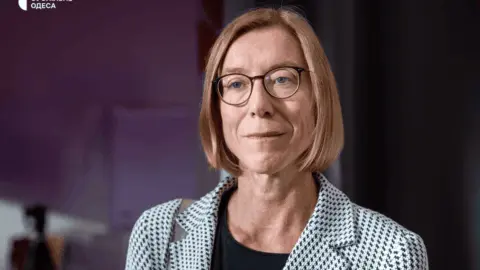
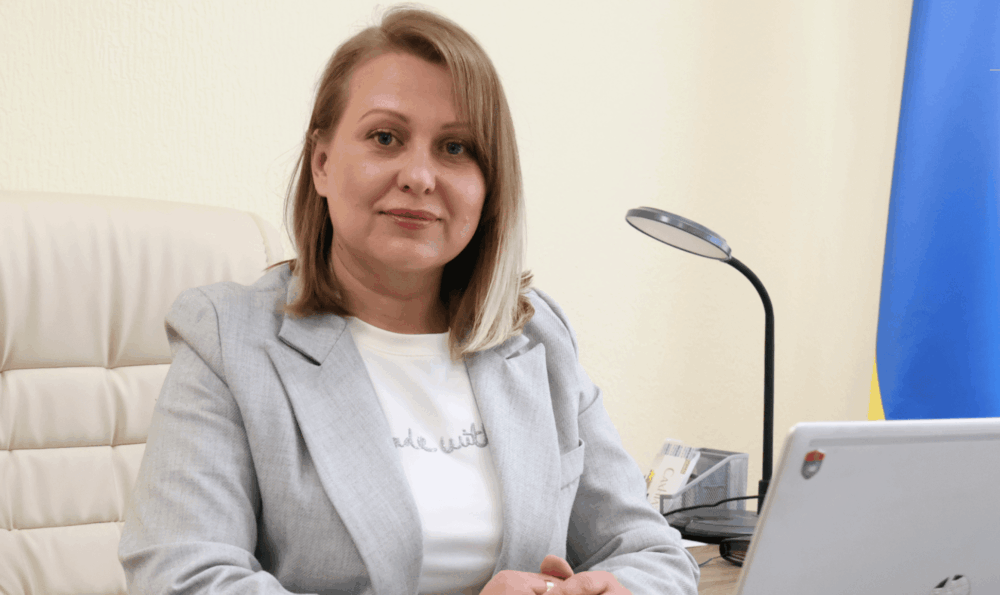
Recently, a state language standard came into force in Ukraine, officially establishing the Ukrainian Orthography as mandatory for use in all areas of public life defined by law. This decision did not change the existing spelling rules, but it has reignited discussions around language standards, their observance, and practical application. Ukrinform spoke about this, as well as the use of feminine forms and changes to the state language proficiency exam, with Yuliia Chernobrov, Head of the National Commission on State Language Standards.
Ukrainian Orthography as a State Language Standard
— Let’s start with the Ukrainian Orthography. On March 28, the state language standard came into force. What changes does it introduce?
— In fact, the approval of the Ukrainian Orthography as the state language standard on March 1, 2026, did not change any of the existing spelling rules adopted in 2019. However, this decision officially established the obligation to strictly adhere to them in all areas of public life defined by law, in particular by the Law of Ukraine “On Ensuring the Functioning of the Ukrainian Language as the State Language.”
The Commission worked on this for a year. We analyzed the problematic aspects of the 2019 orthography and aimed to introduce purely editorial and technical corrections, since the text contained many inaccuracies and even errors. In particular, we added a section “Ukrainian Alphabet,” which was not included in the 2019 version; clarified stress patterns, as there were discrepancies with orthographic and orthoepic dictionaries; removed repetitions and basic typos; excluded examples that were either inappropriate or related to the aggressor state and its allies; and corrected cases where the examples did not correspond to the rules themselves. In other words, extensive technical work was carried out, and its result is a revised version of the orthography.
Meticulous work on each paragraph, clause, subclause, and note revealed many problematic areas and made it clear that this process cannot be stopped. During the public consultation, we received many proposals from the professional community. Those that concerned changes to the norms were not taken into account at this stage, but they have been compiled, and work on them will continue.
At the same time, nothing has changed for users — the rules remain the same.
— You mentioned that the text was reviewed over the course of a year. Who exactly worked on this?
— A working group was established. It included representatives of the Institute of the Ukrainian Language, the Institute of Linguistics, the Ukrainian Language and Information Fund, as well as educational institutions. The group worked until the end of 2025, prepared the text with editorial corrections, and submitted it to the Commission. We then put it out for public discussion, received a large number of proposals, and summarized them.
— Are there mechanisms in place to monitor compliance with orthographic standards?
— The Commission does not have the authority to enforce compliance with language norms. However, it is important to understand that orthography is a single reference system that ensures clear and high-quality communication, especially in written form. Unified language standards are also a matter of national security.
— How can we avoid situations where norms formally exist but are ignored in public communication?
— A language norm is a social contract. It works when the majority sees value in it. Institutional leadership is important here: if the state and all public authorities use the orthography, others will follow. Prestige through culture also matters — films, TV series, media. High-quality content encourages adherence to the norm far more effectively than the strictest control. Ultimately, each person must understand that correct speech, good writing, and a rich vocabulary are signs of a responsible citizen of a free Ukraine.
Feminatives in the Ukrainian Language
— Is the use of feminatives mandatory in public and official communication?
— No, it is not mandatory. And the absence of feminatives is not considered a mistake. After the approval of the orthography, many people became concerned that they would be forced to use them. However, the orthography only states that such forms have a certain tradition in the Ukrainian language, and that there are word-formation means capable of creating nouns denoting female persons according to their roles. The appropriateness of their use, however, is a matter of style.
It is important to understand why feminatives are needed. If women are present in various professions, there should also be words that name them. This is not a new phenomenon, but a long-standing tradition in the Ukrainian language. Unlike Russian, where such forms can sometimes carry a derogatory connotation, in Ukrainian feminatives are the norm. At the same time, today we see very different attitudes toward their use, ranging from full acceptance to outright rejection.
— Why does resistance arise then?
— The resistance is not caused by feminatives themselves, but either by awkward forms or by the fear that they are being imposed. However, language is a self-regulating system. It selects on its own what will remain.
— Are you considering creating a dictionary or guidelines for forming feminatives so that users have clear reference points?
— The Commission does not create dictionaries. This is something the professional linguistic community can help with. Relevant publications and recommendations already exist today. Moreover, we can see that some public authorities are also developing their own guidelines. At the same time, it is important to understand that language is not governed only by formal means. It is not always possible to form a feminative and obtain a fully equivalent pair. For example, words may not be semantically identical, and you cannot always place an equal sign between them. In other words, full parallelism does not exist in language. Therefore, it is also necessary to use other means — analytical forms (“pan”, “pani”), syntactic constructions, and not only word formation.
As for recommendations: in 2021, the Commission worked on a standard for feminized professional titles in the medical field—these were lists of equivalents. However, the Institute of the Ukrainian Language did not support this approach, emphasizing that full parallelism does not exist in language and that various linguistic means should be used instead of purely formal lists. Therefore, creating a universal list for all words is difficult. It is hard to imagine a user working with such a reference book — constantly consulting it in search of equivalents.
At the same time, some forms have already become common, such as “likarka” and “vchytelka,” while others are perceived differently. A sense of balance and aesthetics is also important here. And once again, gender-sensitive language is not only about feminatives. It can be achieved through a whole range of linguistic means, and it is important not to forget this diversity.
— If a person wants to use feminatives but forms them incorrectly, is this not a distortion or “pollution” of the Ukrainian language?
— Yes. And today the orthography merely states that such words can be formed using a range of suffixes, but it does not regulate every specific case. At the same time, the language does not accept everything that is artificial or uncharacteristic. We already see how feminatives denoting certain job titles are gradually entering usage and becoming established.
It is important that this process does not require directives or coercion — language is a self-regulating system and responds to social needs. What takes hold will remain in linguistic practice, and what does not will eventually fall away.
Public Inquiries
— Do you receive inquiries or complaints from citizens regarding language issues? And what do they most often concern?
— Yes, we receive a very large number of inquiries from citizens. Most often they concern orthographic rules: questions about the spelling of foreign-origin words, the use of words in specific contexts, compound vs. separate spelling or hyphenation, the use of capital letters, and so on. We also receive complaints about inconsistencies in spelling — for example, when a word is written one way on one public authority’s website and differently on another, and people ask why such discrepancies occur.
At the same time, the Commission does not have the authority to enforce who writes what and how. However, we hope that after the approval of the orthography, the situation will gradually stabilize, since from now on the Cabinet of Ministers of Ukraine, the Verkhovna Rada of Ukraine, all central executive bodies, and local administrations are required to use a unified orthography.
— And approximately how many such inquiries and complaints do you receive?
— On a monthly basis, it is difficult to calculate precisely. But, for example, in one quarter there were about 270 inquiries. This increase is likely connected to the fact that we were reviewing proposals for the orthography. In total, about 1,500 inquiries were received over the past year. A significant number of them concern place names. This is related to the Commission’s approval of a list of city, town, and village names that do not comply with state language standards, as well as work on the list of territorial communities in 2025. Therefore, communities often reach out to clarify whether a particular name complies with the standards.
At the same time, providing explanations on orthographic issues is not a direct responsibility of the Commission — we develop and approve standards. However, when people contact us, we guide them to the relevant paragraphs of the orthography and explain where they can find the necessary information.
Language Proficiency Exam
— I would like to talk about the state language proficiency exam. How is it organized today, and have there been any changes since its introduction?
— This is indeed an interesting question. Today, the state language proficiency exam is significantly different from the format that existed in 2021. Initially, it was a comprehensive two-hour written exam covering listening, reading, writing, and speaking. In particular, candidates had to listen to an audio recording, summarize it, and express their own opinion, as well as complete oral tasks — a monologue and a dialogue. Later, due to the large number of applicants, the exam was shortened to 30 minutes, leaving only a test section and a monologue.
In 2024, the format was updated again: the written component was restored and assessment opportunities were expanded. Today, the exam lasts one hour and consists of three blocks: tests, including reading comprehension, writing a text based on a listening task, and an oral monologue. Importantly, the exam assesses not theoretical knowledge but practical skills: the ability to understand information, analyze it, and express oneself clearly. This is directly related to the work of a civil servant.
Also, since 2024, the conditions of administration have been updated: the exam is held in 53 authorized institutions with due regard to safety and accessibility, and special accommodations have been created for people with disabilities. Registration opens monthly, and results are determined collegially by the Commission. Upon successful completion, candidates receive an electronic certificate in an open registry.
Thus, the current format is more balanced: it is shorter, but at the same time allows for a comprehensive assessment of Ukrainian language proficiency.
— How many people currently take this exam? What percentage of participants do not pass it on the first attempt?
— Overall, the percentage of those who do not pass the exam at all is very low—it does not exceed 0.1% of all participants.
At the same time, if we talk about the quality of performance, the picture is different: around 80% of candidates confirm a fluent level of language proficiency, while approximately 20% do not.
There is also a separate exam for individuals who wish to acquire Ukrainian citizenship. This is essentially a Ukrainian language exam as a foreign language at the B1 level. In this case, results vary depending on preparation, as applicants include both those who have lived in Ukraine for a long time and those who have only recently started learning the language.
— Are there many appeals against the results?
— No, there are relatively few — about 1% of all participants. The reasons vary: sometimes they are technical issues (in particular due to the war—power outages, lack of internet), and sometimes disagreement with the evaluation.
To ensure objectivity, the exams are assessed by several examiners who do not know whose work they are evaluating. In rare cases, a third examiner is involved. In addition, there is a separate commission for reviewing complaints.
— What is the trend in the number of participants?
— Over five years, more than 322,000 people have taken the exam, of whom about 262,000 confirmed a fluent level of proficiency.
As for foreign applicants, their number decreased after the start of the full-scale war: if in 2022 the exam was taken by 745 people, in 2024 it was only 118, and in 2025 — 178. In total, over five years, more than 2,000 foreigners have taken the exam.
The total number of participants has also fluctuated. For example, in 2022 about 63,000 people took the exam, in 2023 — 73,000, and later the figures slightly decreased. This is partly due to the fact that during martial law, competitions for public service positions are limited.
At the same time, demand for the exam remains, and the Commission adjusts the number of available slots depending on needs, also taking into account budget funding levels.
— Are there any restrictions on retaking the exam?
— The exam can be taken an unlimited number of times, but not more often than once every four months. The certificate, in turn, is valid indefinitely.
— The Ministry of Education and Science previously announced the introduction of a state language proficiency exam for third-year PhD students. What stage is this initiative at now?
— At the moment, I am not aware of the current status of this regulation or whether it has been adopted. We have not received any relevant information, so I cannot say whether this initiative will be implemented in the near future.
— Do you plan to introduce any changes to the exam in the near future?
— At the moment, we do not plan any changes either to the format or to the procedure of the exam. Our main focus is on developing the already implemented elements: improving the test item bank, expanding cooperation with authors and reviewers, and building analytical evaluation of results.
— What are the overall plans and priorities of the Commission’s work in the near future?
— One of the key directions is Ukraine’s integration into the European educational space. This involves the development of the system of Ukrainian language exams as a foreign language and their alignment with European-wide standards.
The Commission cooperates with ALTE — the Association of Language Testers in Europe. We are an associate member of the organization, and in 2025 we transitioned to the ALTE Plus programme. Our strategic goal is to obtain the ALTE quality label, which would mean international recognition of the exam and confirmation of its reliability.
In January 2026, we completed consultations with ALTE representatives regarding the compliance of the citizenship exam (B1 level) with the Common European Framework of Reference and quality standards, including alignment with 18 criteria.
Another important achievement has been the implementation of a comprehensive information security system within the exam platform.
In the future, these developments are intended to become the basis for full certification of Ukrainian as a foreign language.
At the same time, the development of language policy in the state requires a systemic approach. Priorities include the development of standards (in particular terminology), research expansion, creation of dictionaries and educational programs, as well as improved coordination between institutions.
Language policy should function as a fully developed state policy area, rather than being treated as a residual one.
Tags: Culture education European integration language policy linguistics Ukraine ukraine war