
Ukraine risks losing billions as it misses Ukraine Facility and IMF program targets. Hetmantsev warns against populism, urging systematic work over cashback or Instagram-friendly solutions.
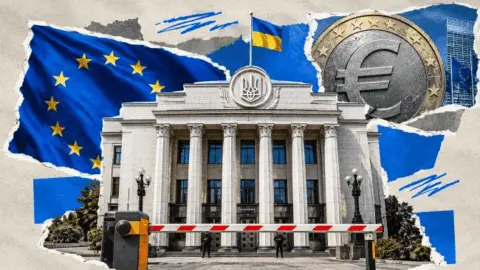
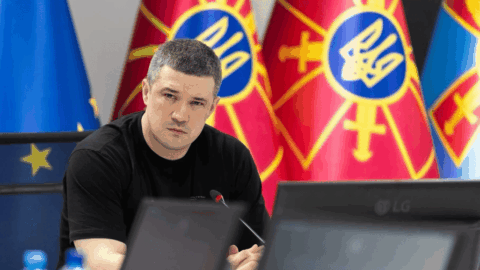
The head of the Financial Committee of the Verkhovna Rada of Ukraine, Danylo Hetmantsev, stated during his speech that in 2025 Ukraine failed to meet 14 indicators of the Ukraine Facility program and, as a result, did not receive €3.9 billion — part of these funds has already been lost.
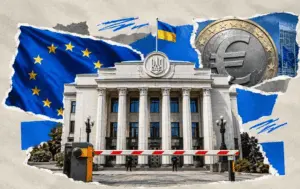
Ukraine risks losing billions in international financial support after failing to meet key reform targets under programs with the EU and the International Monetary Fund, according to Danylo Hetmantsev, head of the Verkhovna Rada’s Finance Committee.
Speaking in parliament, Hetmantsev said that in 2025 Ukraine failed to meet 14 indicators under the Ukraine Facility program, resulting in the loss of €3.9 billion, part of which is already irrecoverable. He added that in the first quarter of 2026, none of the required benchmarks have been fulfilled.
According to the lawmaker, additional funding from the World Bank, a €90 billion loan package, and IMF program tranches are now also at risk.
“Now is not the time for populism — not the time for popular solutions like cashback or Instagram photos. It is time for systematic work,” Hetmantsev said.
He warned that Ukraine could face a shortage of funds for essential state expenditures as early as April. At the same time, parliament has yet to pass draft laws agreed with international partners that are necessary to unlock further financial assistance.
“The situation with adopting critical financial decisions is extremely difficult. Not all colleagues — not only in parliament but also in government — feel the approaching financial crisis. I do, and so does the finance minister, because he understands that in April there may be nothing to finance expenditures with. We are already using funds that were allocated for the second half of the year,” Hetmantsev said in an interview with Forbes Ukraine.
He stressed that the IMF’s position on agreed benchmarks remains unchanged: they are mandatory, regardless of whether they are formally classified as prior actions.
“We are waiting for proposals from the Cabinet of Ministers and will then consider them in committee. The situation looks rather strange: the government agrees to benchmarks in negotiations with partners, but then insists on postponing them,” he said.
Hetmantsev noted that parliament is now expecting the so-called “Big Beautiful Bill,” a comprehensive draft law that combines provisions on taxation of international parcels, income from digital platforms, and the introduction of VAT requirements for sole proprietors.
At the same time, he criticized the government’s policy inconsistency.
“On the one hand, the government agrees to IMF benchmarks, including VAT for sole proprietors. On the other, it expands an inefficient national cashback program, offering 15% reimbursements on purchases,” he said.
According to Hetmantsev, this contradiction contributes to a lack of urgency among officials.
“Everyone assumes things will somehow work out, because it has in the past. But this time the situation is different,” he warned.
The IMF Executive Board is expected in the coming days to review a new $8.1 billion loan program for Ukraine aimed at supporting economic stability and government spending during the war.
The Fund has noted that Ukraine has met several prior conditions for advancing the program, including submitting a draft labor code and adopting the state budget.
Prime Minister Yuliia Svyrydenko said the IMF had agreed to ease requirements for introducing VAT for sole proprietors, proposing a new threshold of UAH 4 million in annual turnover, which would allow most small businesses to avoid mandatory VAT registration.
Tags: budget deficit Ukraine empr.media politics EU aid Ukraine financial instability IMF funding risk populism policy Ukraine economy crisis