Ukrainian troops and war analysts paint a stark, evolving frontline picture — intense clashes, manpower strain, drones dominating battle and tactical shifts worldwide.
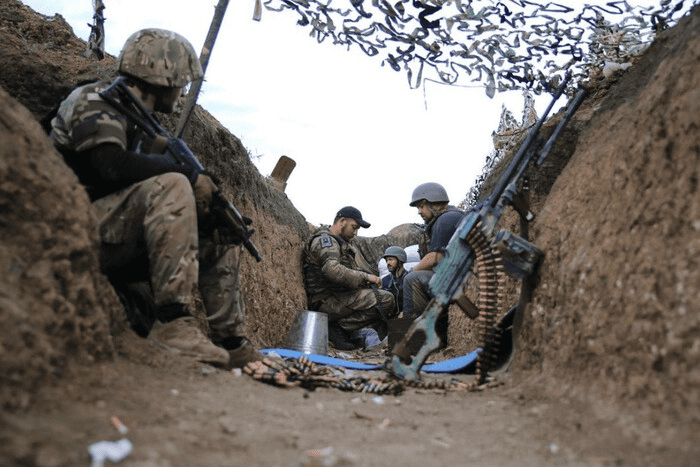
Military personnel with the call sign “Muchnoy”.
Sloviansk direction
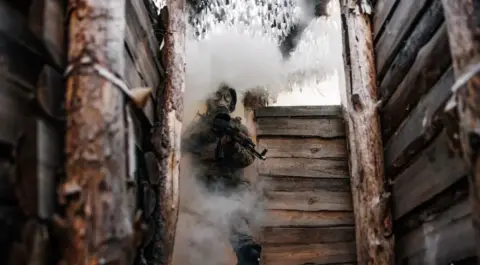
After the battles for the Kostiantynivka junction, this is one of the hottest sections of the front! The enemy is trying to shake the defense systematically, but cannot break through quickly — our units hold the lines firmly, without chaotic retreats and without losing control over key strongpoints.
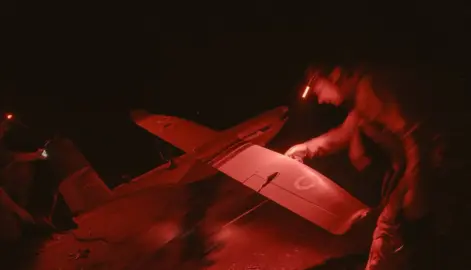
The initiative here is not slipping due to weakness or mistakes, but because of the simple mathematics of war: the enemy has brought in a sufficient number of strike assets. Artillery fires in volleys, but the main factor is the increasing density of drone strikes. FPV and reconnaissance UAVs are constantly hovering over the front line, disrupting logistics, attempting to isolate positions, and putting pressure on company- and platoon-level strongpoints. The pace of drone use is increasing, creating constant fire pressure.
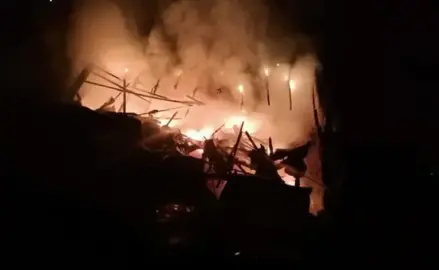
The enemy does not strike randomly — they saturate the defense zone with attacks, look for weak points, shake the flanks, and gradually prepare conditions for future pressure toward Sloviansk. Exhaustion is occurring: shelters are being destroyed, equipment knocked out, supply and rotation routes pressured.
Likely, the active phase of attempts to advance in this direction will unfold after the intense battles for Kostiantynivka conclude. If the enemy frees up some forces there or evens out the front line, the next step will be to increase pressure on the Sloviansk arc.
They expend resources just to maintain the pace of strikes; our task is to approach this carefully and sometimes “wake up” the heads in the headquarters for decision-making. The key is to cleverly break the backbone of the enemy machine!
Ukrainian military correspondent Bohdan Myroshnykov.
And again, the spokespeople “control” what is, in fact, lost. This time — Mynkivka and Zakitne.
Sorry, but when only a couple hundred occupiers are in part of these two villages, and the other parts are a total kill zone, what kind of control can we talk about? Maybe fire control? Even that is questionable, because due to earlier withdrawals, our “flyers’” positions have also shifted, and they cannot always strike the enemy effectively. At a new location, they simply need to set up first.
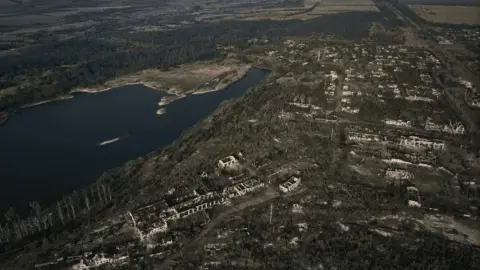
De facto, Mynkivka and Zakitne are not controlled by our troops. Small assault groups are still present in the villages, but they are not there to hold territory; they conduct strike-and-search raid operations.
Mynkivka, during the ATO period, was legendary, remembered by most people involved in that sector.
The village was supposed to hold for months and become another symbol of the war. But the loss of Siversk, unfortunately, destroyed those plans.
Senior Lieutenant of the Armed Forces of Ukraine with the call sign “Alex.”
After the dam explosion in the Kostiantynivka direction, the enemy confirmed its priority direction in Donetsk region.
Effectively, the boundary between directions (Kostiantynivka and Chasiv Yar) is increasingly blurring — and in the end, it all converges toward the battle for Kostiantynivka, which is already one-quarter infested with enemies.
Logistics there via Oleksiievo-Druzhkivka has long been a game of roulette, as the enemy conducts active assault actions from the Chasiv Yar side.
Unfortunately, a classic scenario is unfolding for another city by the standards of this war, and it is very difficult to do anything about it.
2026 January → February → March → April → May → June
Tags: battlefield realities combat report Drone Warfare frontline situation military analysis russian invasion ukraine war