38 people were killed and 52 injured, including 5 children after a Russian drone struck an ammunition depot in Myla, Kyiv region, causing explosions and devastating nearby homes and a nursing home.
Read Daryna Polishevska investigation for Hromadske to find out what local residents say about the tragedy that claimed so many lives.
“There wasn’t enough tragedy in Vyshneve — now there’s Myla too. I can only guess, based on what happened here, that they weren’t storing potatoes there. Because those potatoes have cost me dearly,” says Andrii, the owner of a hotel in the village of Myla.
According to him, everyone knew that some kind of facility was located on the village grounds: “special-purpose” vehicles frequently drove there. However, the locals did not have time to discuss the matter with the village council.
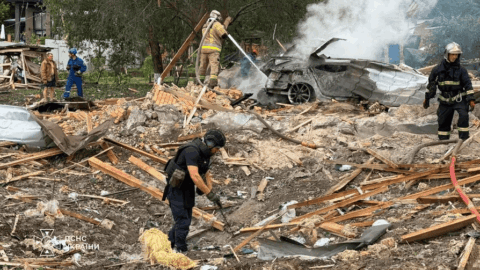
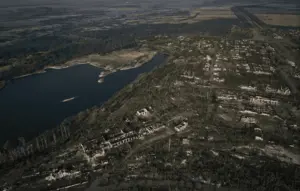
In Myla, Kyiv region, residents are repairing their damaged homes themselves. On the evening of August 28, a Russian drone struck an ammunition depot, triggering explosions that continued for a day.
“Those Potatoes Have Cost Me Dearly”
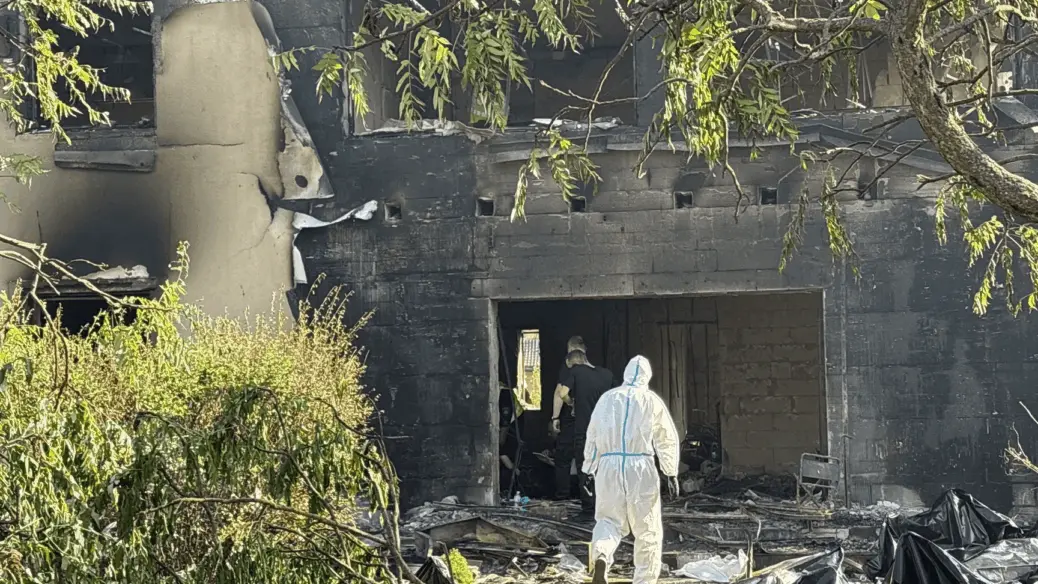
The owner of the former Citadel hotel, Andrii, meets us near the site. What was once a three-star hotel is now a ruin — it burned down during the overnight attack. We are not allowed inside the building for safety reasons, as its roof could collapse at any moment. In addition, the hotel grounds have not yet been fully inspected, and there may still be unexploded shells there that were propelled from the depot.
Andrii says he traveled about 1,000 kilometers to see the aftermath of the attack with his own eyes:
“An air raid alert began at around 8:30 p.m. When all this started, there were about 15 people in the basement, along with our staff. After the second strike, chaos broke out here… People were evacuated from the shelter, and they made their way in short bursts to the underground passage.”
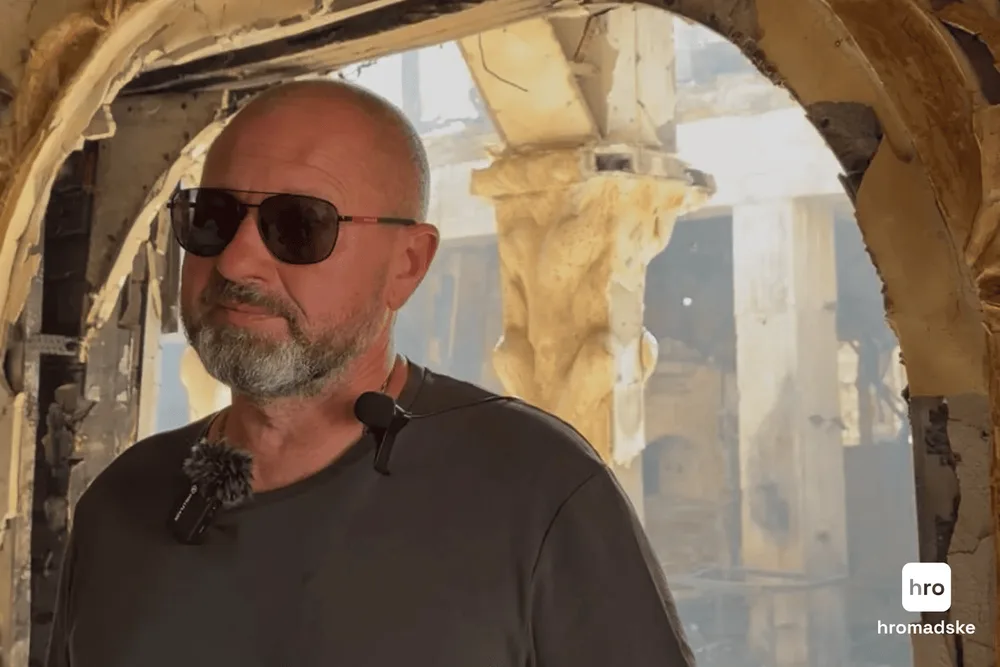
According to him, local residents knew that some kind of facility was located on the village grounds: “special-purpose” vehicles frequently drove there.
“The relevant authorities will answer the questions of what hit the site and where exactly it hit. I know one thing: an unauthorized operation had been set up there. Very serious mistakes were made. This is not something amateurs should be dealing with — as if the tragedy in Vyshneve wasn’t enough, now there’s Myla too. I can only guess, based on what happened here, that they weren’t storing potatoes there. Because those potatoes have cost me dearly,” Andrii says.
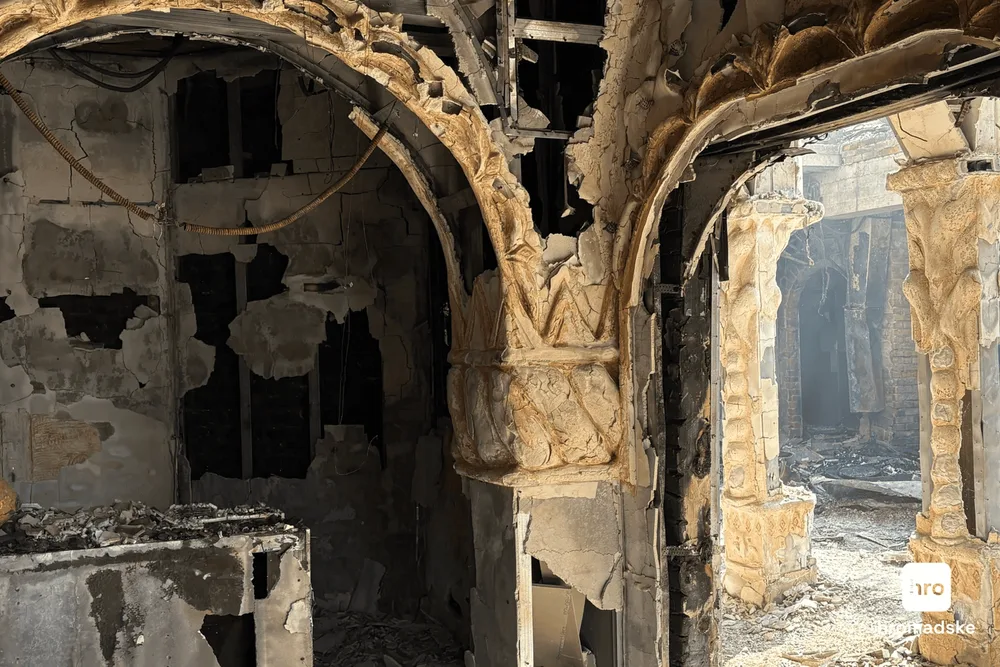
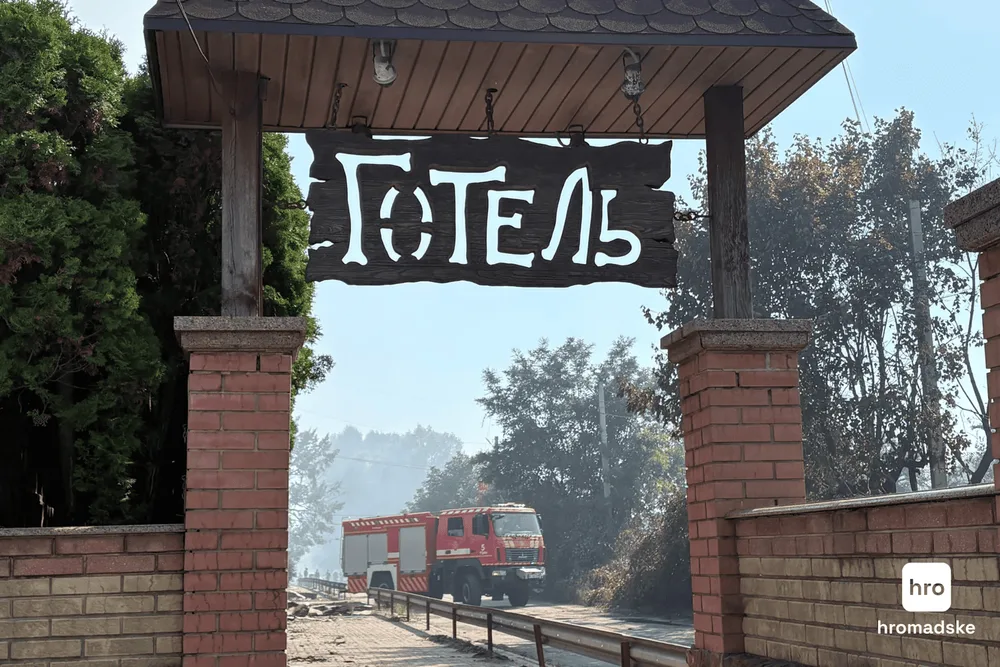
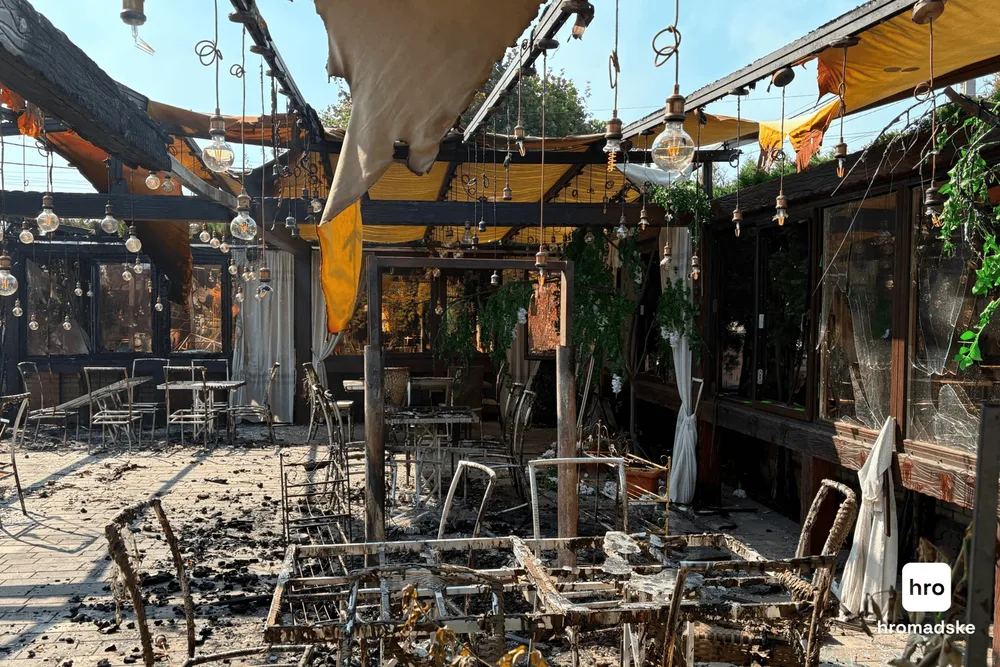
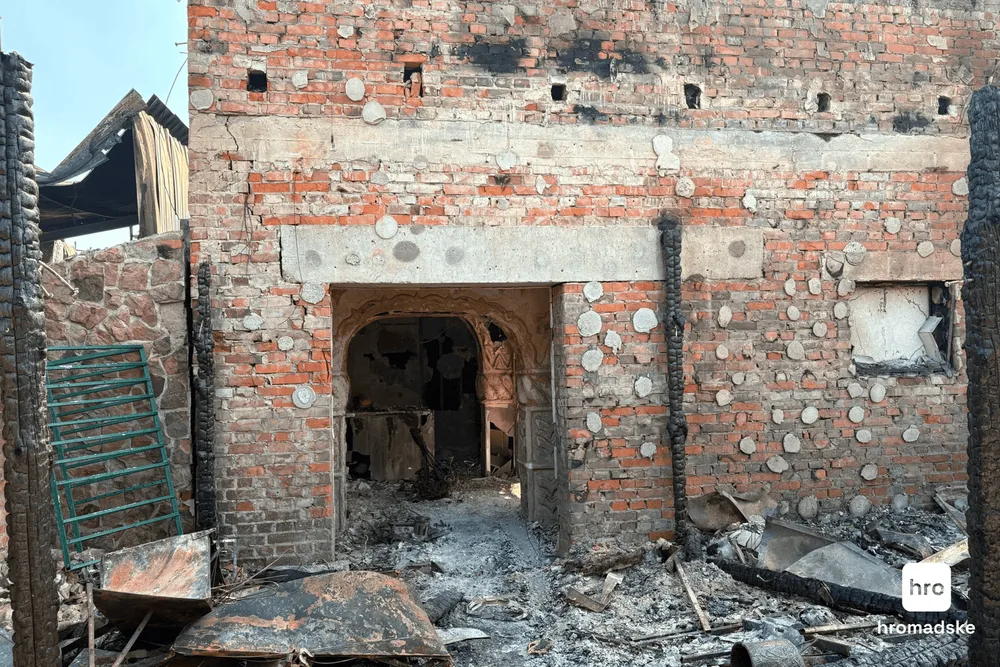
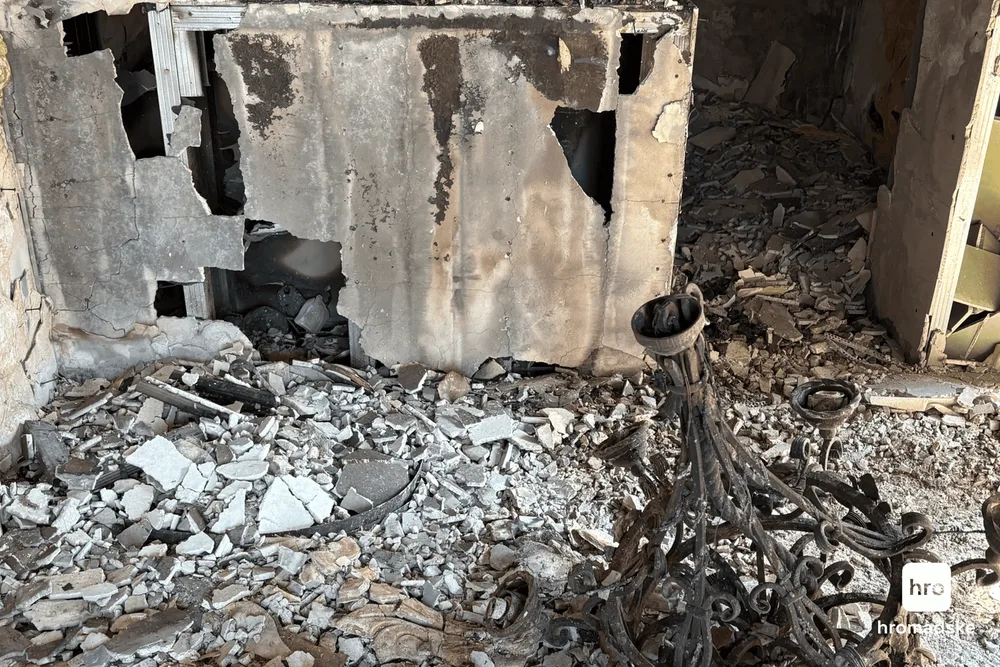
A large number of rescuers and law enforcement officers are gathered near the hotel. An ambulance has also arrived. A police officer tells us that we will not be allowed any farther down the street and points to a white body bag in the grass — he says it contains the body of Taras Didych, the head of the Dmytrivska territorial community.
The man was killed in his car when he was among the first to arrive at the scene of the attack to help people.
“I Was Late”
It takes about 20 minutes to walk from the Zhytomyr Highway to the street that was hit the hardest. Along the way, I see people patching holes in roofs, picking up shattered glass, and repairing damaged fences. In one of the damaged houses, the Ukrainian national anthem and “We Were Born in a Great Hour” are playing.
At the intersection with Prorizna Street, we meet Zhanna. On Friday evening, she was on her way home, where her husband was waiting for her. He was killed.
“My husband went down into the basement. A stranger who was driving by in a car asked to join him, and they stayed there together. There was also a dog… A shell hit the car, and they suffocated from the smoke. Everything was torn apart so badly that you still can’t even go near the place… I was supposed to arrive at 8 p.m., but I was late. Otherwise, I probably would have been there too…” Zhanna says.
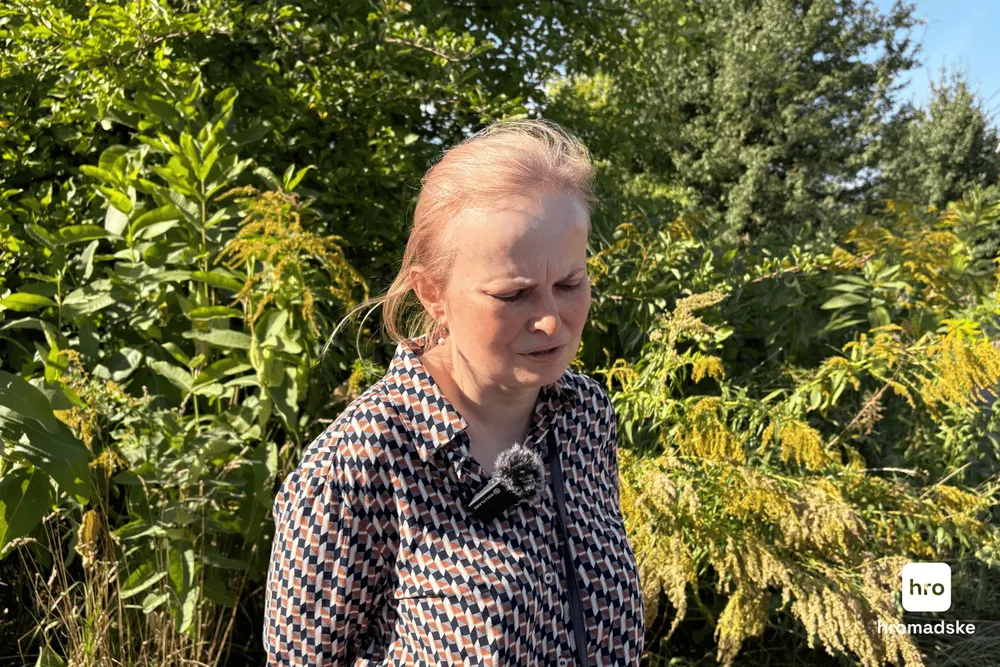
The woman says that large trucks had been driving to the depots even before the war began, and local residents had grown accustomed to them. Previously, she says, such vehicles were used to transport bottled water.
“They [the shells] keep detonating. Everything is scattered around: huge rockets, grenades, shell casings… The big question is, why was all of this stored there in the first place? I don’t know who allowed the depots to be built here, in such a densely populated area,” she adds.
Hear more of her story from the video.
“Zhanna: This is opposite the nursing home. This was essentially the epicenter of the explosions. My house was hit the hardest, and my husband was in the basement. A person he didn’t know at all joined him — he was running down the street, stopped a car and simply asked if he could come in. Maybe they shouldn’t have gone down into that basement. There was also a dog. All three of them died; they suffocated.
Because there was a massive impact — there was a garage nearby, and there was a car inside, and it was hit. It was torn apart so badly that you can’t even approach the place now. So I’m asking you, please, don’t go there. The two depots opposite us that haven’t exploded yet are still detonating constantly.
The debris is scattered everywhere — huge rockets, grenades and shell casings. Can you imagine how much had to be there for so much of it to end up here? That means there must have been an enormous amount of it stored there.
I have a very big question: why was all of this there in the first place? Of course, given my position now, I’ll probably tell the whole world about this. I don’t know. But this kind of negligence toward us… We didn’t know, because it was Dobra Voda, which supplied bottled water to all of Kyiv, and those trucks and large vehicles — they had always used big trucks, even before the war. So none of this seemed suspicious to us.
And then there were these constant detonations. As you can see, they were happening constantly, and they’re still happening now. But the most intense detonations lasted until about… We were only able to come in around 10 or 11 hours after the explosions began. That’s when the rescue operations finally started.
Before that, everything was still detonating, so nobody could go in. It’s extremely dangerous there. And, as I understand it, they’re also afraid that if something explodes now, no one even knows exactly what is there.
I can show you which rockets exploded here.
Daryna: So you didn’t know until the very end that there was a depot there?
Zhanna: No one knew about it. Not even the neighbors who survived, even though their house burned down completely. They somehow managed to escape. They just ran outside, their car started right away, and they drove off because they were on this side. My husband was in the basement on the other side, basically opposite Dobra Voda.
They survived. They said that… Well, this video is all over the internet now — I saw it. What really surprised me was the way the State Emergency Service handled it. I asked them to at least explain to me, at least tell me what was happening, but they did nothing. I spent the whole night calling everyone I could, from the very beginning, trying to get them to start looking for him.
Because I knew — he managed to tell me that he was going down into the basement because there had been the first explosion. But the explosions kept coming one after another, and then there was no signal anymore.
Daryna: You weren’t at home, right? When did you arrive?
Zhanna: I did arrive, but I had to turn back because my friends told me I wouldn’t be allowed in here. I only managed to get here now by chance because I know how to get here. No one else knows how to get in.
I was coming from Lviv, where I had been working. I was already close by. I was supposed to be here earlier, before eight, but unfortunately, I was about 40 minutes late. I probably would have been here too, on the other side.
I don’t know who allowed these depots to be built here, in such a populated, densely populated neighborhood where people actually live. To store such a quantity of weapons there, especially these kinds of weapons.
And, on the other hand, you know, I was here recently when there were explosions at the shooting range. We knew about the shooting range.
Daryna: That’s nearby, right?
Zhanna: It’s nearby. It’s literally behind these depots. If you look, the shooting range is right behind them. And perhaps it could have detonated back then as well.”
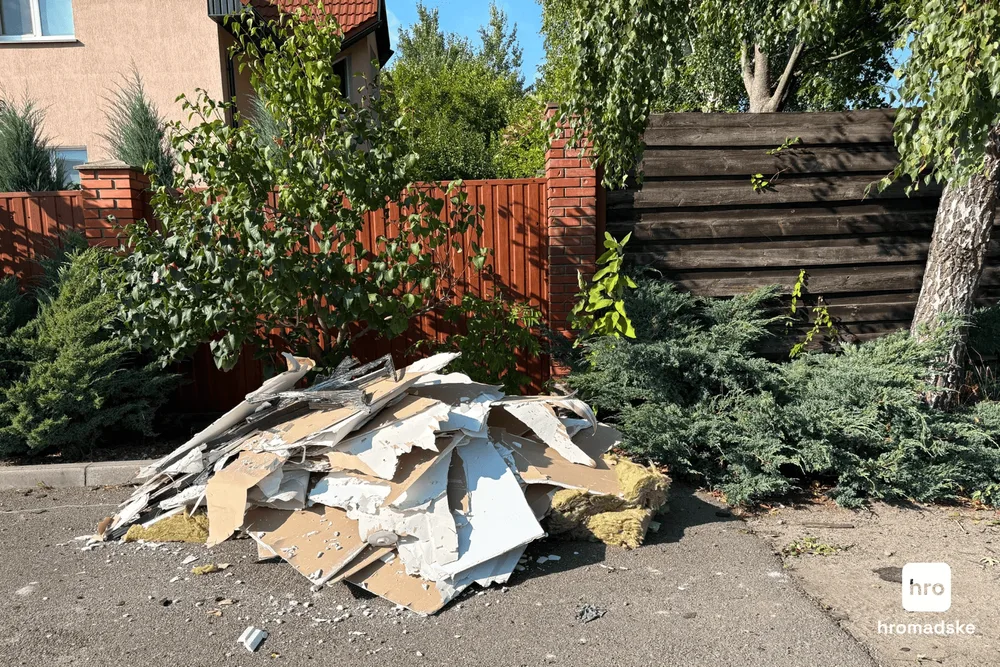

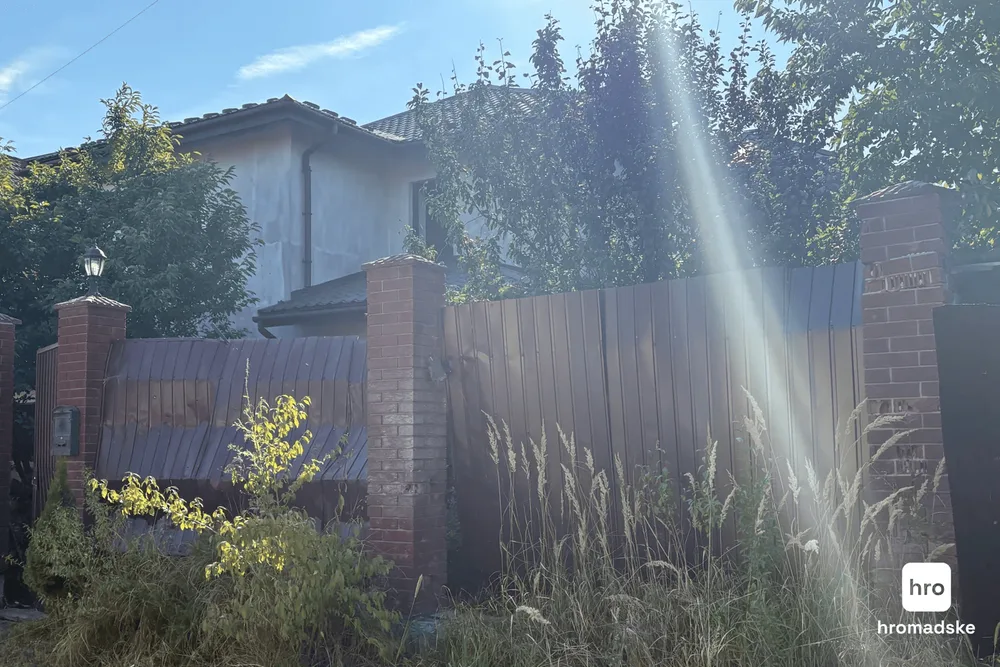
Zhanna’s house is located opposite the Dobryi Dim nursing home for elderly people, which suffered the most damage. Its light-colored walls have been turned black, the windows have been blown out, and the roof is completely gone.
At least 27 bodies wrapped in bags are lying in the yard. According to State Emergency Service spokesperson Svitlana Vodolaha, that is how many people died here. However, the final death toll will only be known after the identification process is completed.
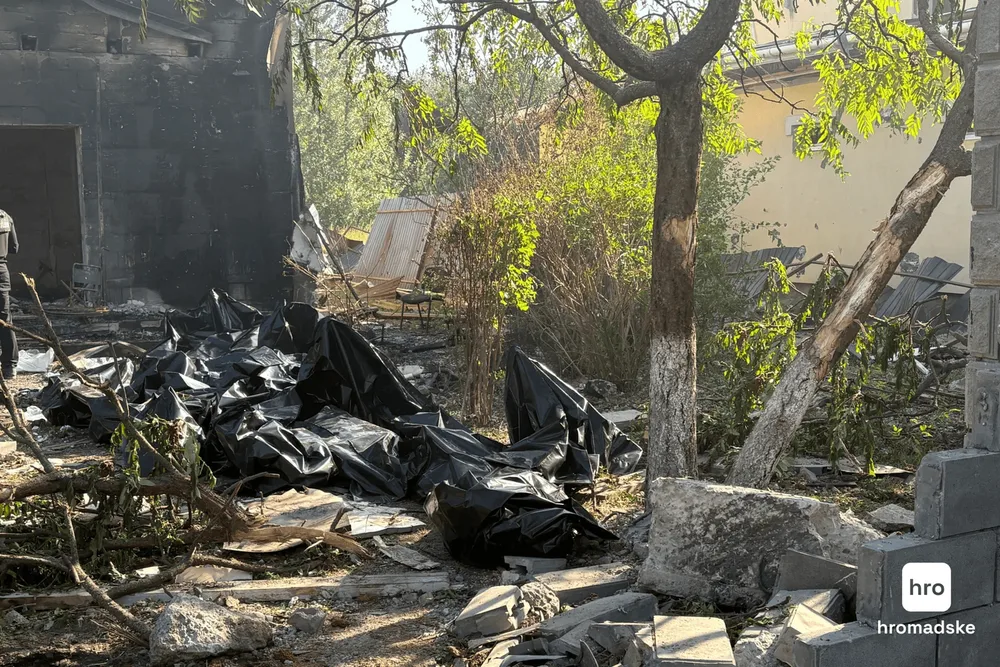
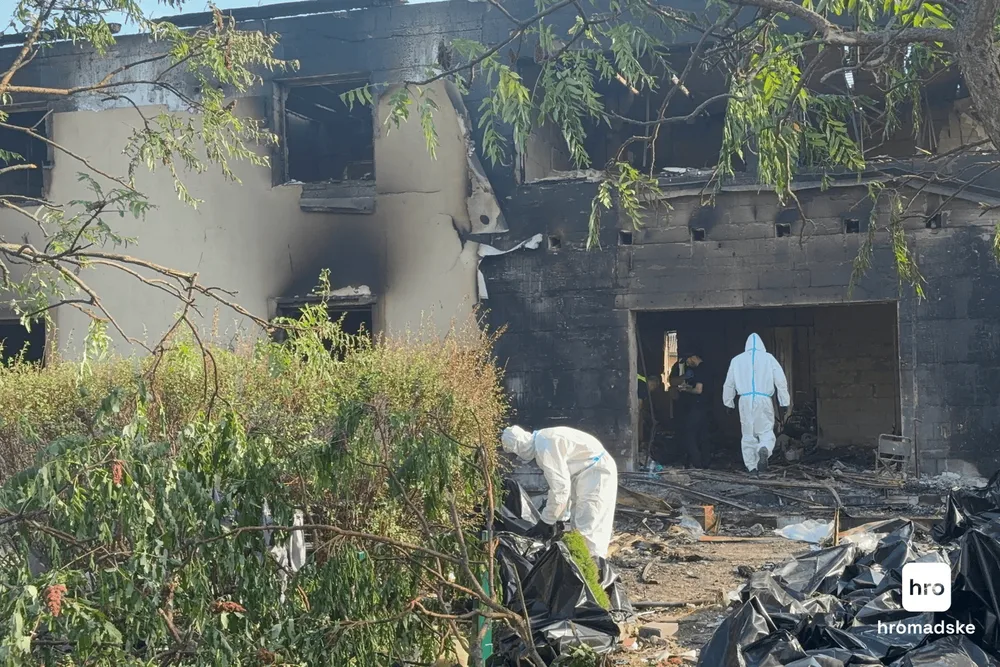
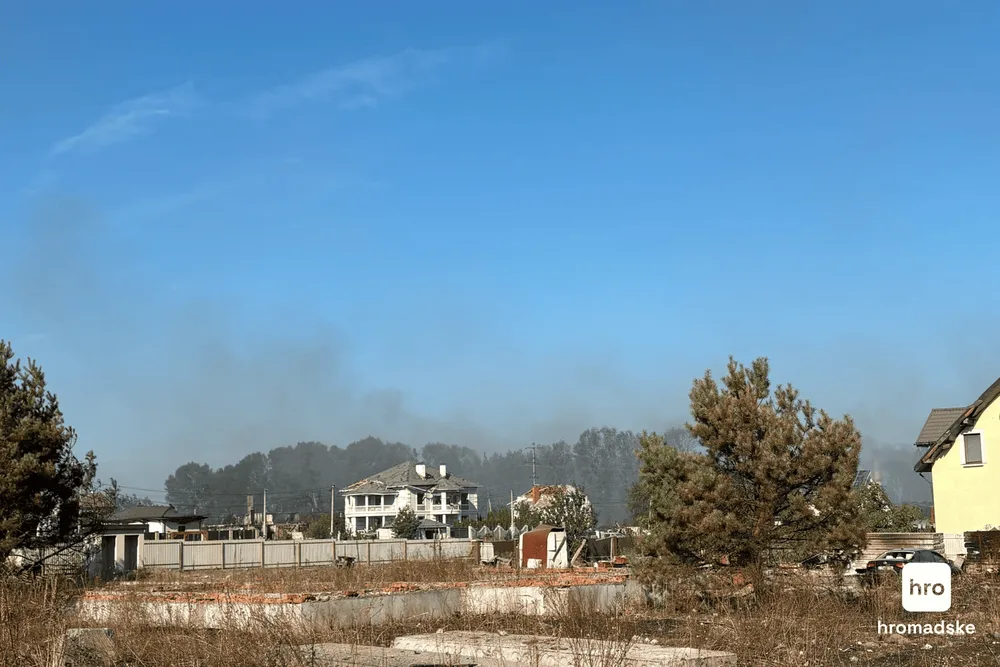
A little farther down the street, the ruins of the depots are visible — after a Geran drone strike, nothing remains of them. The only remnants are pieces of debris scattered all along the street.
“F*ck, There’s a Lot of Emotion Here”
Mark approaches the nursing home, swearing. He says he also lives on Prorizna Street, though fortunately, the damage to his home is not as severe. Shards of glass and pieces of metal are scattered across his yard. A projectile crashed through the roof of their three-story house.
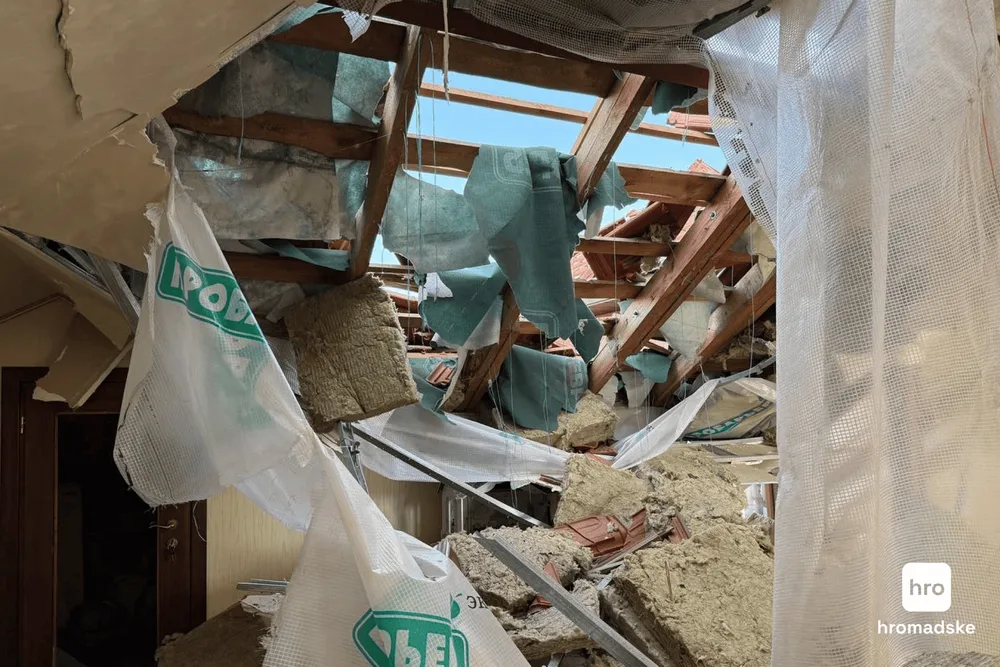
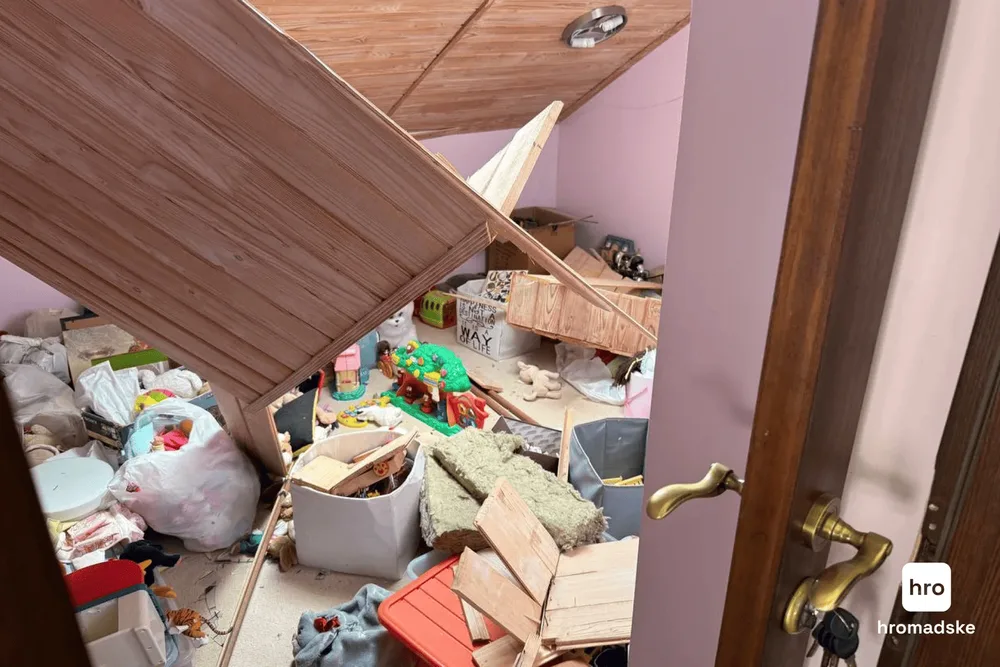
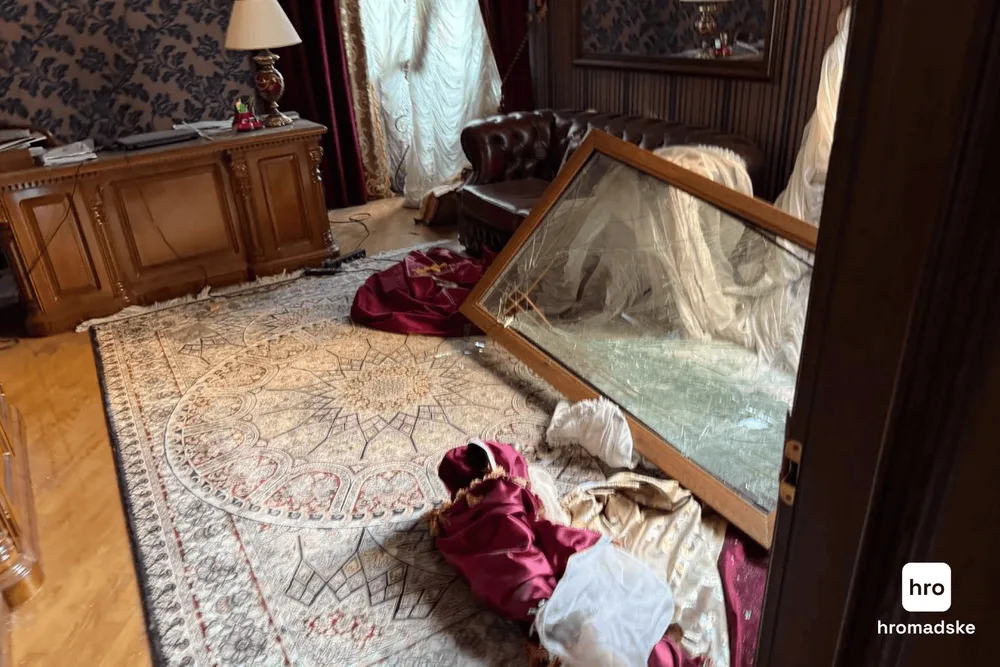
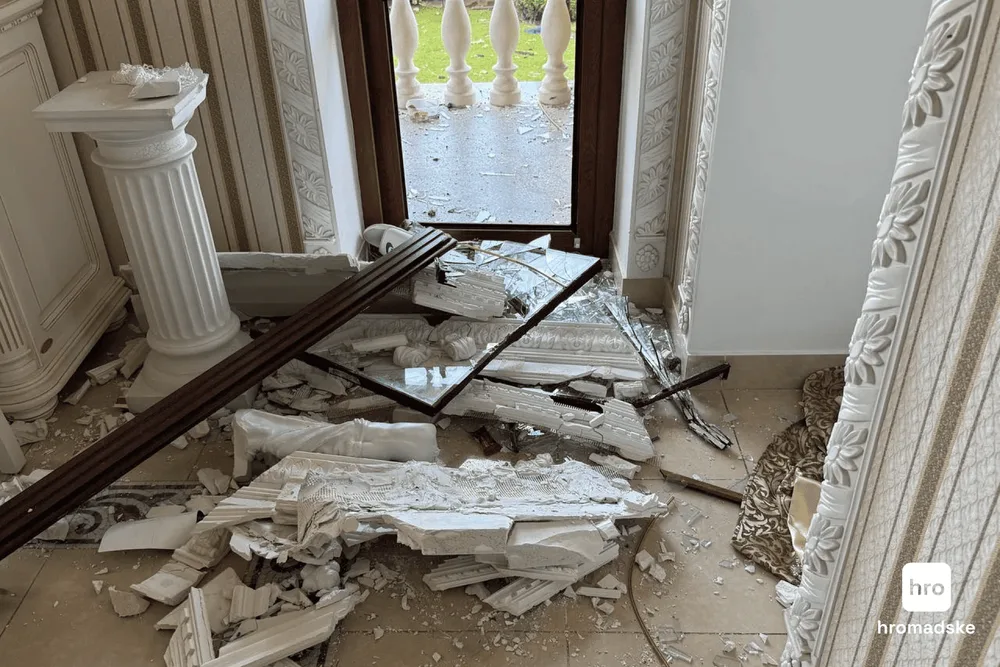
There are usually many children in the house — the many toys are evidence of that. This time, he says, they were lucky.
“My father was staying here. He was injured. F*ck, there’s a lot of emotion here… The main question is, who will be held responsible for all this? So far, it looks like an ‘imitation of vigorous activity’: everyone comes, asks something, takes notes, but there are no concrete answers,” he says.
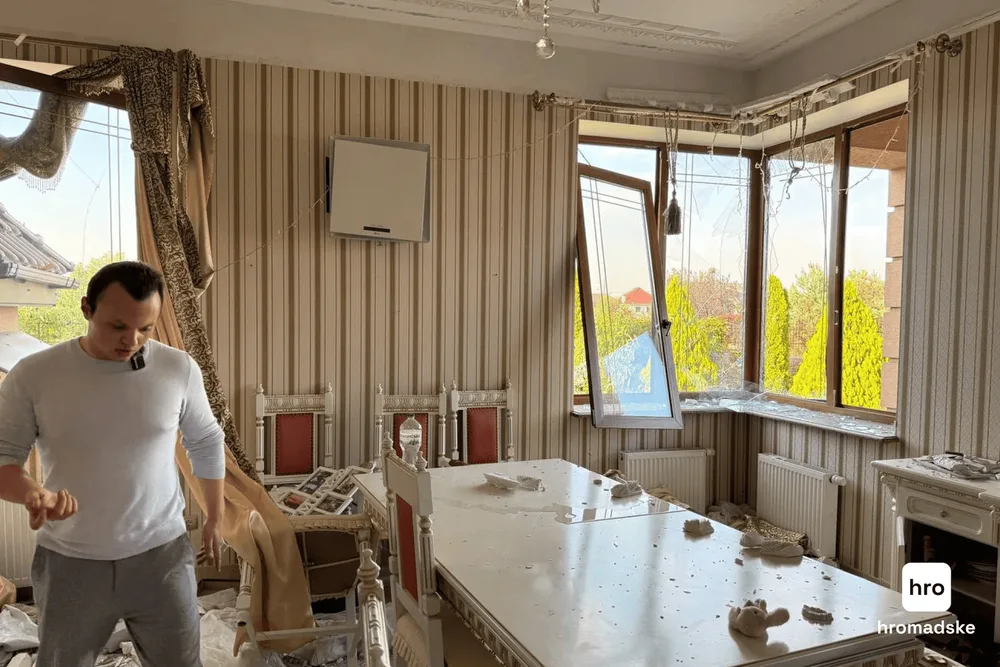
According to the latest figures, at least 37 people were killed in the attack. The Security Service of Ukraine has opened criminal proceedings over the strike on the depots and the subsequent detonation.
President Volodymyr Zelenskyy said that “those who allowed” the detonation to occur “must be held accountable for their decisions.” He also stressed that “ammunition cannot be stored near homes or other residential buildings.”
A similar situation occurred in Vyshneve in July. Seven people were killed and another 26 injured as a result of a detonation at a depot. Law enforcement agencies also opened criminal proceedings into that tragedy.
Prepared for publishing in English by Sofia Pentiukhina,
Tags: ammo depot detonates myla nursing home vyshneve