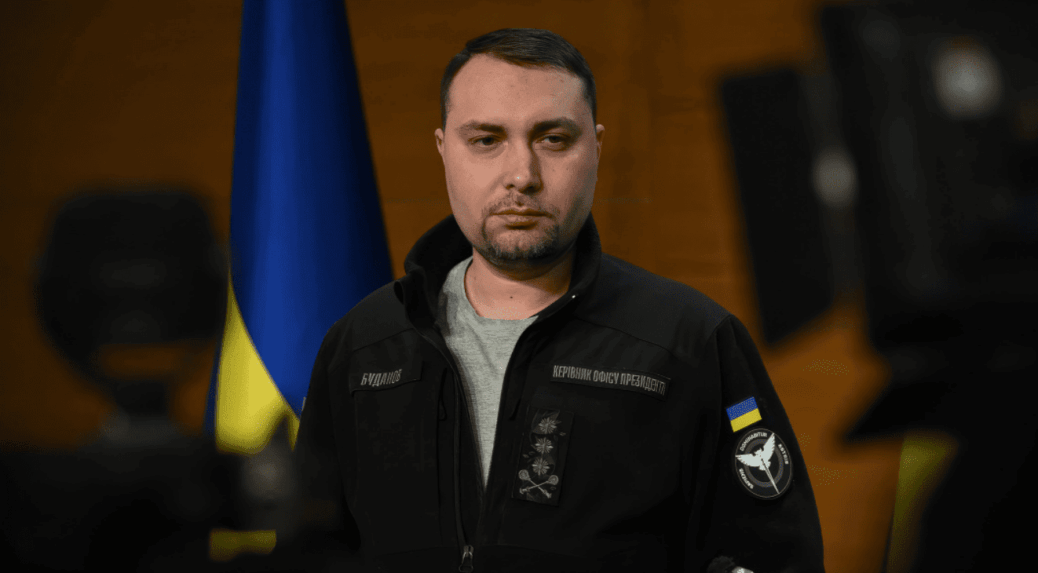
Ukraine expects a possible Easter prisoner exchange, continued talks with the US and Russia, and faces unity challenges, as Budanov warns division could threaten the country’s future.
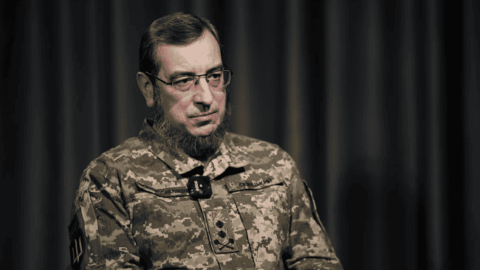
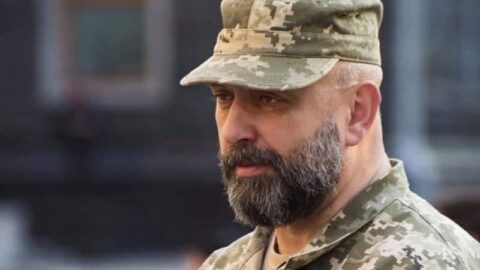
Expectations of a large prisoner exchange at Easter, continued attacks on Russian infrastructure, and overcoming the political crisis in parliament — these and other topics were discussed by Lieutenant General, Head of the Office of the President of Ukraine Kyrylo Budanov in a joint interview with correspondents of Ukrinform and Novyny.LIVE.
Why drones will not replace infantry, how the war in the Middle East is helping the aggressor, and whether a meeting between Volodymyr Zelenskyy and Vladimir Putin is possible to bring the war to a “final point” — read more in the Ukrinform article.
US representatives will arrive in Ukraine in one to two weeks
Halyna Ostapovets: The main questions for you, of course, concern the negotiation process: you previously said it is ongoing and not frozen. At what stage is this process now?
Kyrylo Budanov: In principle, you have already answered your own question: it is ongoing, it is not frozen. It will continue. We hope for and are awaiting the arrival of the American delegation — today, the President of Ukraine also announced this publicly during the official part of the event. So we hope for the best.
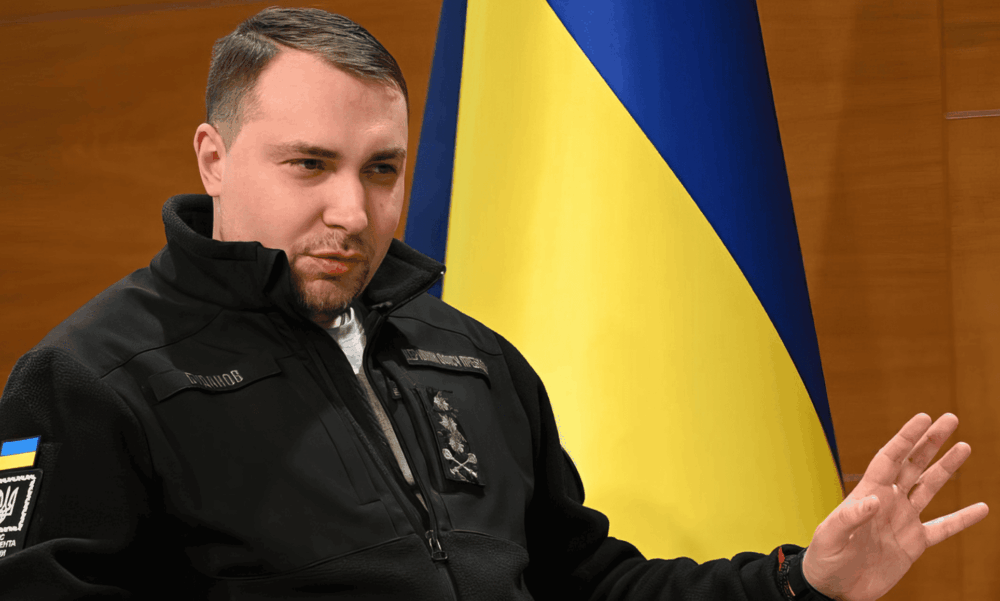
Tetiana Kohutych: The President said at the Congress of Local and Regional Authorities that members of the American delegation involved in the negotiation process will likely come to Ukraine after Easter. That’s a rather vague timeframe. Could you clarify what period this refers to?
Kyrylo Budanov: Yes, roughly a week after Easter. That’s not long.
H.O.: It’s clear there are contacts with the Americans, but are there any contacts with the Russians at the moment?
Kyrylo Budanov: Yes.
H.O.: What are they about?
Kyrylo Budanov: About the issues we are dealing with. At the same time, we all hope for an exchange in the near future. So that is part of it as well. An exchange does not happen by itself — it has to be arranged.
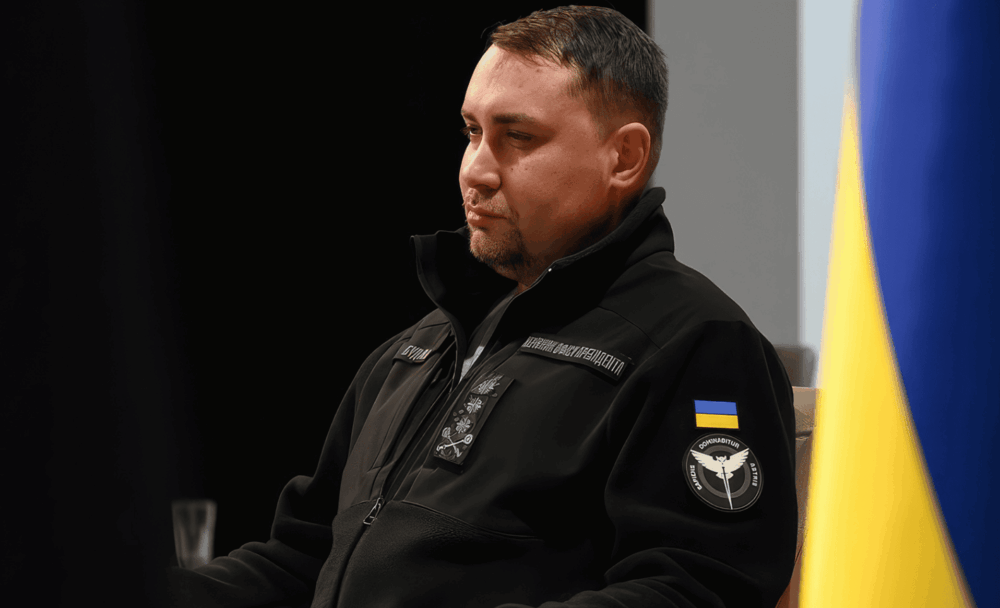
Expecting an exchange at Easter
T.K.: Easter is also a time when Ukrainians expect good news regarding prisoner exchanges involving Ukrainian servicemen held in Russia. We know such exchanges are never announced in advance, but should we expect positive news during this holiday?
Kyrylo Budanov: We hope so. A day before or a day after — it can be expected. We are all expecting it.
T.K.: Kyrylo Oleksandrovych, you are a member of the negotiation group — in your opinion, is there a chance that talks will resume in a trilateral format?
Kyrylo Budanov: Yes.
T.K.: How high is that chance?
Kyrylo Budanov: You understand that we cannot put a final point — neither positive nor negative — without a personal meeting (of the countries’ leaders — ed.), and the Russians understand this as well. Believe me, it will happen anyway.
T.K.: Do you mean a meeting between Volodymyr Zelenskyy and Putin?
Kyrylo Budanov: The leaders must ultimately put the final point. Let’s hope for that.
Russians cannot afford to complain about our deep strikes
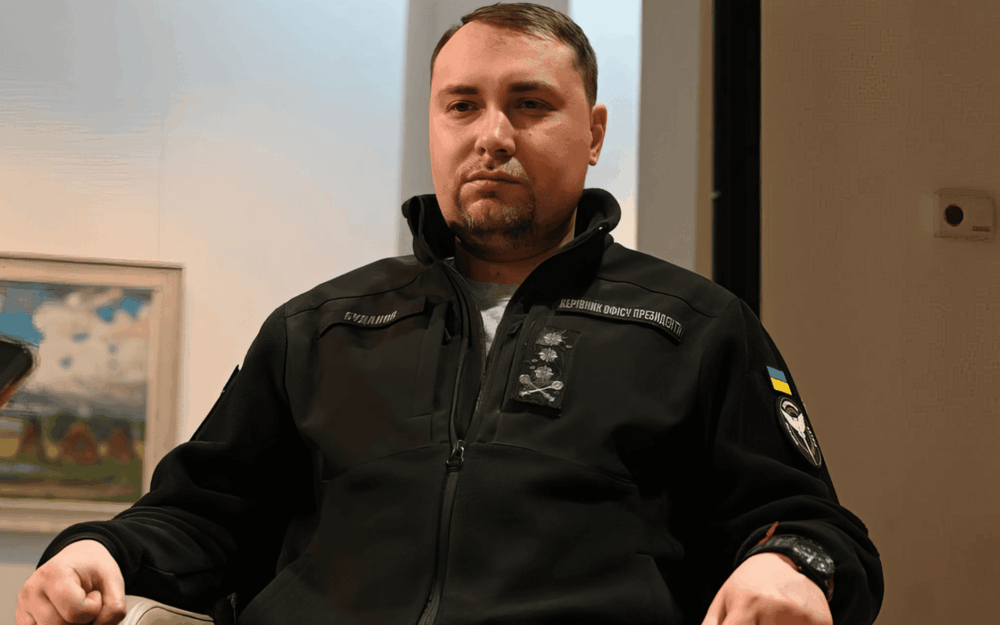
H.O.: Our deep strikes are happening daily — we are hitting Russian infrastructure every day. How does this affect the overall dynamics of the negotiation process? Do the Russians complain that there are too many strikes and that, therefore, they cannot sign a peace agreement?
Kyrylo Budanov: No, they do not complain. They simply cannot — because that would mean admitting their weakness. But it does have an impact — in their reports, they constantly point to it. It is a problem. Just like their strikes are a problem for us.
T.K.: A question about other negotiations — namely, the €90 billion tranche that we are all waiting for, which is currently blocked and also requires negotiations. Could you tell us what stage this process is at now?
Kyrylo Budanov: You understand that this involves negotiations with many participants, not just Hungary. That is all I can say on this matter — and the process is ongoing. It is a very difficult issue, extremely complex, but I think we will find a solution. Perhaps not an easy one — but we will.
T.K.: Can you give any hint as to what direction this difficult solution might take?
Kyrylo Budanov: As long as the negotiation process is ongoing — no. That would create conditions for its collapse.
T.K.: Understood. Still, regarding this negotiation process and, in particular, our neighbors who are blocking the allocation of funds — is there a way to counter them? And who should have more influence now: our European partners or we ourselves?
Kyrylo Budanov: Well, you know, I will give you my subjective opinion: our problems are, first and foremost, our own problems. And if we do not work on them ourselves, I am far from convinced that anyone else will do that work for us.
The war in the Middle East has worked “in Russia’s favor”
H.O.: How has the war in the Middle East affected Russia’s ability to continue fighting against us?
Kyrylo Budanov: To some extent, it has worked in their favor — you understand this as well — primarily due to the sharp increase in oil product prices. Some of their, let’s say, legal entities have effectively slipped out from under sanctions, which has also added to their optimism. And, in general, the sharp rise in oil prices is a huge advantage for them. Unfortunately, our strikes on their refineries cannot match the scale of that price surge. However, they do have an impact on Russia’s oil and gas sector.
H.O.: And we are not going to stop them, as you said…
Kyrylo Budanov: …We cannot afford to stop them as long as the war continues.
I am not a fan of the idea that drones will win the war for us
H.O.: Russia suffers heavy personnel losses every month — we have approached 30–35 thousand, and our strategic goal is 50,000. How far are we from that now?
Kyrylo Budanov: You have already named the figure yourself.
H.O.: What do we need to reach this goal — more drones?
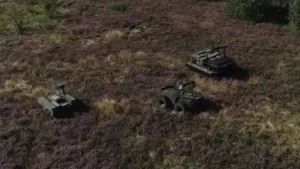
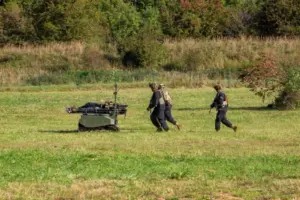
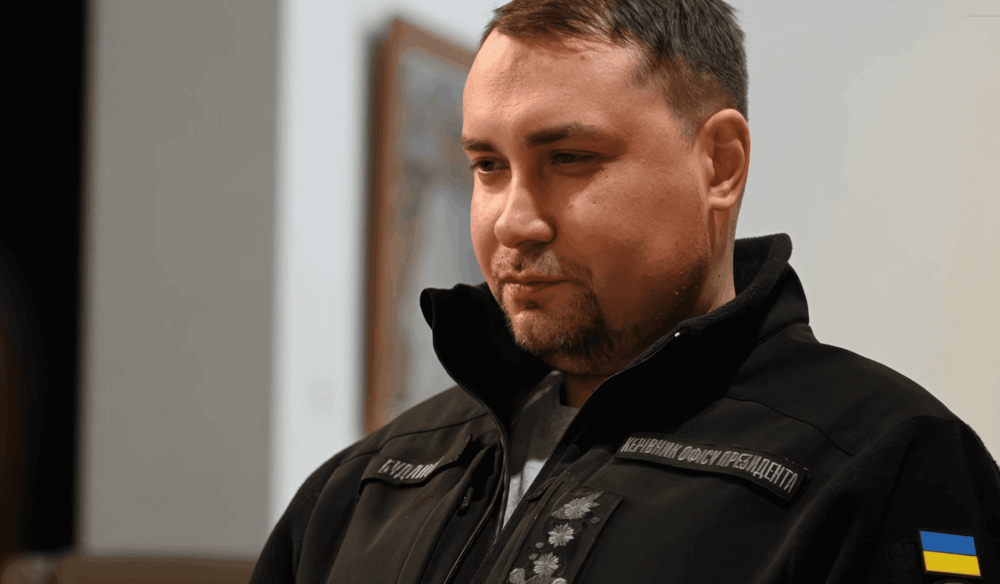
Kyrylo Budanov: You know, I am probably not a fan of the idea that drones will fight this war for us. Sorry, but wars are not won without people. Without people, wars are lost — that does happen. But winning without people — that simply does not happen.
T.K.: Speaking of people and war: just yesterday, there were reports in Zakarpattia about a serviceman being beaten. A day or two before that, we saw similar cases in other regions. And a week or two earlier as well… This is quite a troubling trend for a country that, as you said, needs unity to withstand the war. How do you assess this?
Kyrylo Budanov: That is why I spoke today at the meeting (before our interview, General Budanov met with clergy in Zakarpattia — ed.) about unity. On this issue: first, human stupidity has no limits and never will; second, there are real problems — mental, so to speak — within our society. On the one hand, everyone says we must fight until victory — and on the other hand, many avoid mobilization. And this is happening simultaneously. It is a major, enormous problem. At the same time, we must remember that when a person evades mobilization (yes, they may justify it to themselves in various ways), there is a very real human issue to keep in mind. These are our guys on the front line, and they also need to be replaced by someone. And they certainly do not understand this. It will become another huge problem when the time comes, when the war ends and they all return and begin asking questions directly to their neighbors who did not go. To prevent this, everyone needs to express their civic position and not be afraid to fulfill their duty. Not everyone who is mobilized goes into assault units, let’s be honest. Some serve in air defense or in other roles, at warehouses…
T.K.: In general, there are options.
Kyrylo Budanov: Yes, there is, so to speak, room for maneuver. But simply being a draft evader and then living with that shame, wondering what you will say to your neighbor who returns from the war and asks where you were… What you say officially — that is one thing, people are not very afraid of that. But what will you say to your children, to your neighbor who comes back and simply asks: “So… who are you after that?”
I have seen Ukrainians’ unity three times
T.K.: In the first year of the full-scale war, our unity was extremely high. Where can we find it now, in the fifth year?
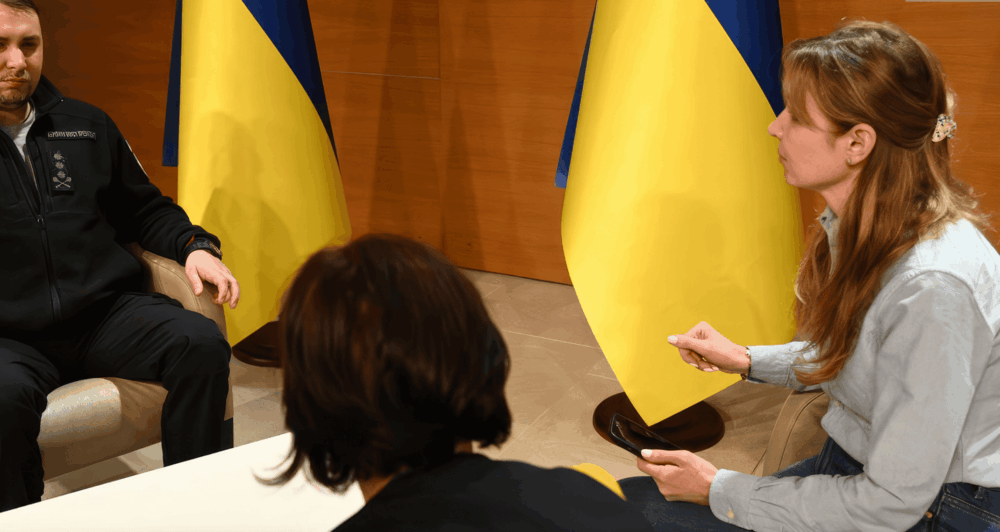
Kyrylo Budanov: Within ourselves. As I said, we are currently in a negotiation process and will reach some kind of outcome. I repeat: it will either be a very good option for us or a very bad one — but that does not matter. Even if it is a very good outcome, without unity we will not be able to implement any decision.
Unity — I have personally analyzed this — I have essentially seen it strongly three times. The first time was in 1991, when the Soviet Union was collapsing — there was unity in Ukraine. It was a huge challenge, but it existed, and it allowed decisions to be made.
T.K.: And the second time? The Maidan?
Kyrylo Budanov: The second time was in 2014. The Maidan and the events that followed: the beginning of the war, Crimea, and the events in Donbas. Back then, there were queues at military enlistment offices, remember? And the third time was at the beginning of 2022 — the same situation. There were no problems with mobilization in the initial period because the number of volunteers far exceeded what the army could process.
T.K.: But almost five years have passed, and this is only declining.
Kyrylo Budanov: We are now approaching another so-called trigger event that will require unity from us again. And unfortunately, if that unity is not there, it could lead to disaster. There have been many cases when we approached such trigger events without unity, and this led to enormous problems. I will not name examples, because it would be very sad and unpleasant — but if you analyze our recent history, you will quickly find all the answers.
In our country, a hero is both the one who fights — and the one who evades mobilization
H.O.: By difficult decisions, do you mean agreements on the peace track? Obviously, they could concern territories or something else?
Kyrylo Budanov: They could concern anything — I will not comment on that. But just imagine: even if there is a very good agreement, there will still be a large number of people saying that “everything is lost.” That is wrong. What are we supposed to do with that? It will create even more pressure on the political leadership, and so on. And what will we get? Rejection of any decision. None at all — neither good nor bad. And where will that lead us?
To an unpleasant ending. Because an opportunity is not unlimited.
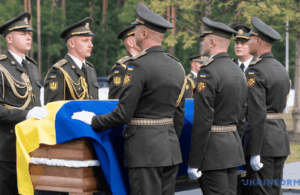
Look, we have a serious problem in society. A hero is someone who is fighting, who is actually on the front line, shedding blood. Everyone kneels when coffins are carried. And at the same time, a “hero” is someone who posts videos like “how I, excuse me, told the recruitment office to go to hell” or “how I ran through the ‘green zone’ across the border — and you idiots stay here.” And both are considered heroes at the same time. This is a terrible problem. It shows a lack of unity.
T.K.: What should be done about this?
Kyrylo Budanov: I am working on it, and there are many others who will be working on it as well. This is not the time when we can afford to take sides — some supporting one group, others supporting another. Right now, there is the President, and this vertical of power must be maintained and supported.
We will figure out what to do next later. But in times of turmoil, we must all unite.
T.K.: Speaking of the vertical: it has been almost three months since you took office — how do you assess this period yourself? Have you been able to strengthen this vertical from your side?
Kyrylo Budanov: I’ll answer you with a bit of humor: I recently looked at a sociological survey (on Ukrainians’ trust ratings — ed.), just a few days ago. The Office of the President was always second from the bottom, with the Verkhovna Rada always last. Now we are already fourth from the bottom. So we must have done something right (laughs). And the Verkhovna Rada is still in last place.
Maybe this (Budanov’s personal rating — ed.) has some influence. But don’t forget about the problem of our society: some people like you, others hate you. I am completely calm about that. It is normal. Meanwhile, the institution is functioning steadily: look, there are no scandals, no problems, meetings are being held, decisions are being made…
H.O.: …the parliamentary crisis has finally almost been resolved.
Kyrylo Budanov: Two weeks ago, I said there was no crisis — there was a problem. I said: “We will overcome it.” Did I lie to you? No. The decisions we needed are there. Yes, one can look at it in different ways — that perhaps we did not achieve quite as much as some of our international partners would have liked. But there is a national interest. And we did what needed to be done. This will now allow us to obtain the necessary funds, let’s be honest, for the functioning of our state — so that there will be no cuts to budget programs.
H.O.: How did you manage to do it?
Kyrylo Budanov: Well, I’m sorry, but you won’t get an answer to that — some things must remain behind the scenes. Over my life, I have dealt with such a wide range of people that, believe me, our members of parliament are like angels compared to those with whom I have had to conduct various kinds of negotiations.
Dialogue with the Verkhovna Rada will continue on a systematic basis
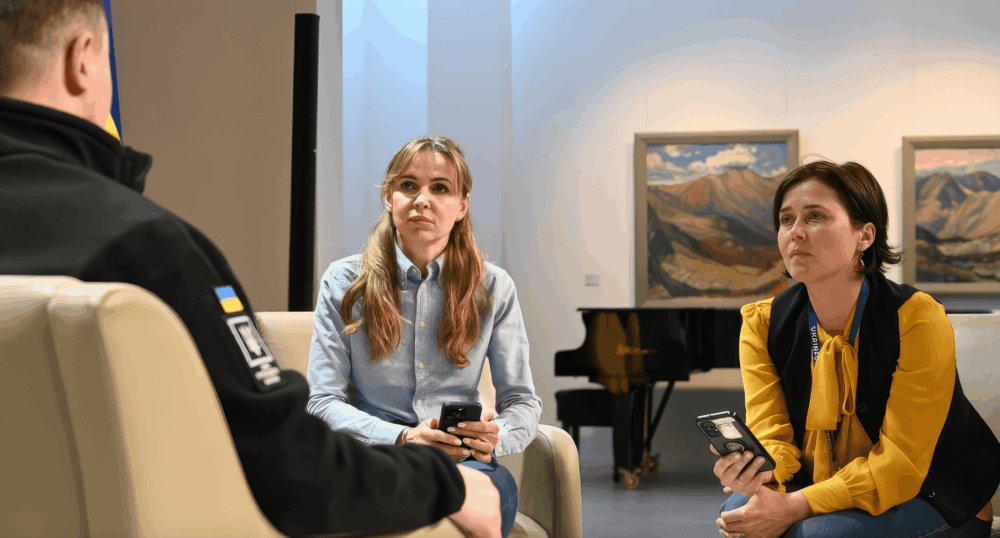
T.K.: Mr. Kyrylo, how do you currently assess the cooperation between the Office and the parliament? You said the problem has been overcome, but perhaps you could add some nuances. And at what level is this dialogue now?
Kyrylo Budanov: I hope that this dialogue will continue on a systematic basis. We agreed with them at the last major meeting on the next one, which should take place soon.
T.K.: Will these be regular meetings?
Kyrylo Budanov: I hope so. A systematic approach is needed here. I believe in systematic approaches. You can achieve anything reactively — but only once, you see what the problem is? And one time will not help us. Unity is needed. We come back to this again.
T.K.: Unity — starting, among other things, with the Verkhovna Rada?
Kyrylo Budanov: Unity starts with the individual citizen and ends with the Verkhovna Rada, the Office of the President, the President of Ukraine, the ministries, the Cabinet of Ministers, and so on. All of this must be in harmony. If we continue to have a situation where at the same time a hero is a warrior, a defender, but also a “hero” is a draft evader, we will not get far.
T.K.: Based on your characteristic Budanov-style experience, what would you advise a society like ours — where, so to speak, there is this split, where heroes are both those who fight and those who swim across the Tysa River to escape — on how to find and achieve unity?
Kyrylo Budanov: It’s very simple: grow up, please. Look at the world — try to see it from the outside. What will happen if everyone becomes a draft evader? Will Ukraine remain on the political map of the world? No, it will not.
So that there are no illusions at all: no, it will not remain. It will not exist — even the name will disappear. And there will be no one left to live here. Many people think it will somehow pass, that some will leave and others will come and things will be sorted out. No, they will not. Absolutely not. Everything will be taken.
Tags: EMPR.media energy crisis Geopolitics global security Kyrylo Budanov military strategy Russia oil ukraine war